Gardenias bloom mainly in late spring through summer, typically May through August depending on your climate, with the heaviest flush in early summer. Some varieties give you a smaller repeat show in early fall. That is the honest range, but the answer for your particular plant depends on a few things most people never check.
Where you live, how old the shrub is, whether it got pruned at the wrong time, and even what happened to its roots last winter all shift that window earlier, later, or into almost nothing at all. There is also one very common mistake that quietly cancels an entire bloom season before a single bud opens, and most people blame the wrong thing when it happens.
Stick around for how to read what your own plant is telling you right now, plus the aftercare that stretches the flower show longer than it naturally wants to go. There’s a save-able quick-reference card at the very bottom once you’ve got the full picture.
The Bloom Window and How Long It Actually Lasts
A healthy, established gardenia blooms for roughly six to ten weeks in a good year, not all at once but in waves. Buds form in cooler spring weather and open as temperatures climb, so the show tends to build through late spring and peak in June or July for most growers.
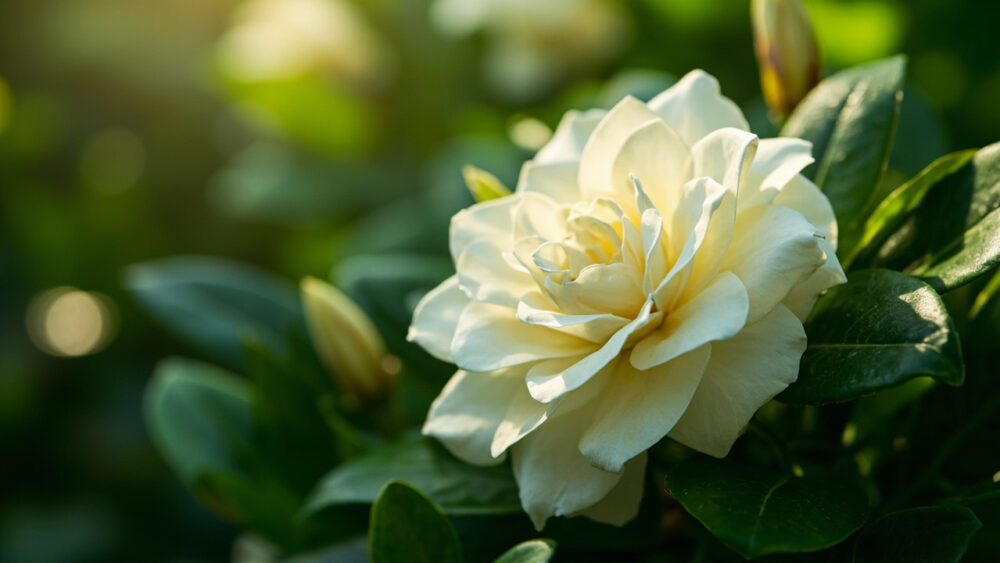
Individual flowers only last two to five days once open, browning fast, especially in heat or if touched. That short single-bloom life is normal, not a sign of trouble.
Warmer climates (zones 8 to 11, where gardenias are hardy outdoors) often get a light second flush in early fall as temperatures ease back down. Cooler zones growing gardenias in containers usually get one solid spring-into-summer push and that’s it for the year.
Next, the part that actually decides whether any of that happens on schedule.
What Controls the Timing
Bud formation on gardenias is triggered by a specific combination: nighttime temperatures dropping into the low 60s Fahrenheit for a few weeks, paired with plenty of bright light. This usually happens naturally in early to mid spring outdoors.
Indoor and container plants are where timing gets unreliable. A gardenia kept in a warm house all winter with steady 68 to 72 degree nights often never gets the cool trigger it needs, and bloom time slides later or skips entirely.
Light matters just as much. Gardenias want at least four to six hours of direct sun, morning sun especially, plus bright indirect light the rest of the day. Deep shade delays buds and can suppress them completely even if temperature is fine.
Soil pH plays a real role too. Gardenias need acidic soil, ideally in the 5.0 to 6.5 range. Alkaline soil locks up iron and other nutrients the plant needs to push flowers, which shows up as pale, yellowing leaves alongside a weak bloom season.
So temperature and light set the calendar, but there’s still a way to push more flowers out of the window you get.
How to Get More Blooms, or a Longer Show
If you assumed more fertilizer means more flowers, that guess backfires more often than it helps. High-nitrogen feeding pushes leafy growth at the expense of buds. What actually works is feeding with an acid-loving plant fertilizer formulated for gardenias, azaleas, or camellias, applied in early spring and again right after the first bloom flush fades.
Consistent moisture matters more than most people expect. Gardenias want soil that stays evenly moist, never bone dry and never waterlogged. Swings between the two are one of the fastest ways to get buds that form, then drop before opening.
Humidity helps indoors especially. Gardenias are native to humid climates, and dry indoor air, particularly near heating vents, causes bud drop even when temperature and light look fine.
A layer of mulch over the root zone, two to three inches, holds moisture and keeps roots cool through the exact stretch when buds are forming.
Get all of that right and you still might not see flowers, so here’s the troubleshooting.
Why Your Gardenia Might Not Be Blooming
The single most common cause is pruning at the wrong time. Gardenias set next year’s buds on the current season’s growth not long after this year’s flowers finish. Prune in late summer, fall, or winter and you cut off buds that were already forming, wiping out next season’s show before it starts.
The fix is simple going forward: prune only right after flowering ends, never later in the year.
Other common causes worth checking:
- Not enough sun, especially plants moved indoors for winter and left in a dim corner
- Temperature swings, particularly a heater vent or drafty window near an indoor plant
- Underwatering or a recent transplant shock, which makes a stressed plant drop buds to conserve energy
- Alkaline soil or tap water high in minerals, gradually raising pH over months
- A plant that is simply too young, since gardenias often need two to three years to bloom reliably
Fix the cause and most gardenias recover within one to two growing seasons, not overnight.
Once you do get flowers, a little aftercare stretches the show noticeably longer.
Deadheading and Aftercare That Extends the Display
Snip spent blooms off as soon as they brown, cutting back to the first set of healthy leaves. This isn’t strictly necessary for rebloom the way it is with roses, but it keeps the plant looking clean and redirects energy away from seed production.
Handle blooms gently while they’re open. Gardenia petals bruise brown at the lightest touch, so this is a look-don’t-touch flower in the garden.
After the main flush fades, that light feeding mentioned earlier helps fuel any secondary buds still coming. Keep watering consistent through summer heat, since a gardenia that dries out mid-bloom will drop unopened buds fast.
Everything above adds up to one simple card worth saving.
Gardenias: Quick Reference
- Main bloom window: late spring through summer, typically May through August depending on climate
- Individual flower life: two to five days per bloom, opening in waves over six to ten weeks
- Bud trigger: a few weeks of nighttime temperatures in the low 60s Fahrenheit, plus bright light
- Sun needs: four to six hours of direct sun, morning sun ideally, bright indirect light the rest of the day
- Soil: acidic, roughly pH 5.0 to 6.5, evenly moist, never soggy or bone dry
- Pruning rule: only right after flowering ends, since next year’s buds form on new growth soon after
- Common non-bloom causes: low light, temperature swings, drought or transplant stress, alkaline soil, or a plant still too young
Match your plant’s conditions to that list and you’ll usually spot exactly where its bloom season is going right or wrong.
From there it’s just patience, since gardenias reward steady care more than any single fix.