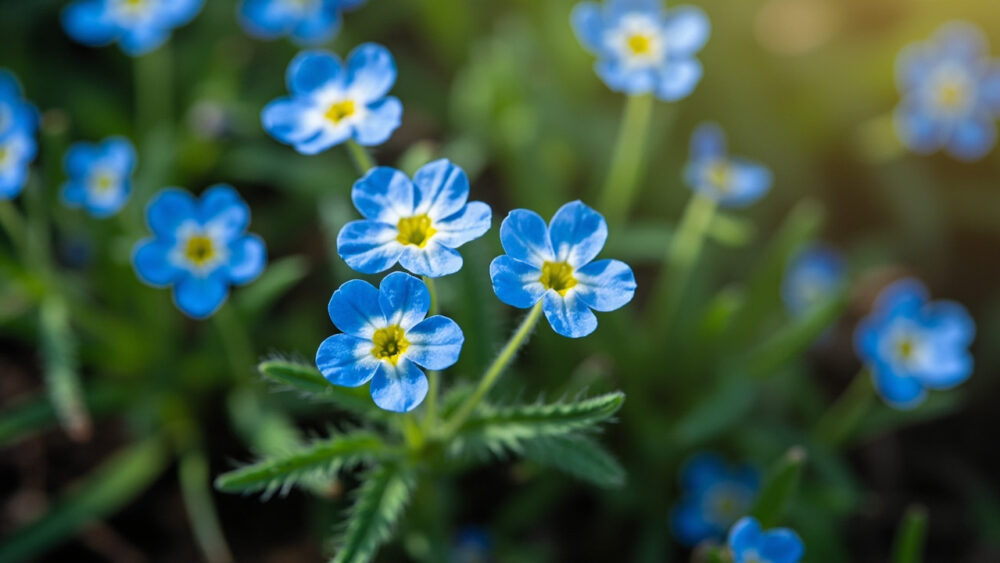
Forget me nots come back on their own most years, but not usually because the same plant survives. They are short-lived perennials or biennials that self-seed so freely they act like they’re coming back, dropping seed in midsummer that germinates in fall and blooms the following spring. In cold zones they behave more like biennials that die after flowering and reseed, while in mild, damp climates the original plants can persist for a few years.
That answer changes depending on your zone, your soil, and honestly, whether you deadhead them or let them go to seed. There’s also a sign a lot of people misread in early spring that makes them think their forget me nots died when they actually didn’t.
Stick around for the zone-by-zone breakdown, what your yard is actually telling you right now, and the quick-reference card at the bottom you can save before you close this tab.
So Are They Perennial, Biennial, or Annual?
Botanically, most garden forget me nots (Myosotis sylvatica) are short-lived perennials that gardeners treat as biennials. The seed germinates one year, the plant forms a low rosette of leaves, overwinters, then flowers and sets seed the following spring before dying back.
In zones 5 through 9, this cycle runs like clockwork. You’ll see flowers in spring, seed drop in early summer, and a fresh crop of seedlings by fall that repeats the show next year.
In zone 3 and 4, hard winters can kill both the mature plant and the young rosettes if snow cover is thin, so the return is less reliable and depends more on reseeding than on the original plant surviving.
In zone 10 and warmer, summer heat is the bigger problem, not cold. Plants often decline in the heat and behave more like a cool-season annual.
The zone tells you the odds, but your own soil tells you what’s actually going to happen.
What Actually Happens Over Winter
Here’s the part most people misread. After the spring bloom fades and the plant looks ragged and half-dead by midsummer, that is normal, not failure.
The visible plant is finishing its life cycle, but the seed it dropped is already germinating nearby. Those new seedlings spend fall and winter as small, low clumps of fuzzy green leaves, easy to mistake for weeds or to accidentally weed out.
If your winters stay above about 0°F with reasonable snow or mulch cover, those rosettes sail through fine and take off again once soil temperatures climb back into the 40s and 50s in spring. If winters swing hard between freeze and thaw with no snow cover, the rosettes can heave out of the soil and die, and that’s the real reason a bed that had forget me nots one year has none the next.
Knowing what’s happening underground changes how you should treat the bed the rest of the year.
How to Help Them Come Back Stronger
If you want a thicker patch next spring instead of hoping self-seeding works out, you can help it along.
- Let some seed drop: resist the urge to deadhead every faded flower stalk in early summer, since that seed is next year’s plant.
- Mulch lightly in fall: a thin layer of straw or shredded leaves over the young rosettes protects them through freeze-thaw cycles without smothering them.
- Avoid heavy fall cleanup: raking too aggressively in autumn can pull out seedlings you can’t see yet.
- Keep soil consistently moist: forget me nots dislike drying out, and stressed plants produce less seed and weaker rosettes.
- Divide congested clumps: if a patch gets too thick after a few years, thin it in early spring so plants aren’t competing for water and light.
Do that much and most yards will have a self-sustaining patch within two seasons.
When Treating Them as an Annual Is the Smarter Move
If you garden in a hot-summer climate, or you want a specific, controlled look in a border rather than a spreading colony, plant forget me nots as an annual and be done with the guesswork. Buy or start fresh seed each year, set transplants out in early spring while nights are still cool, and enjoy the bloom without worrying about winter survival at all.
This is also the honest answer if you have a formal bed where volunteer seedlings would be a nuisance rather than a bonus. Self-seeding forget me nots do not respect garden edges, and in loose, moist soil they’ll show up in gravel paths, pots, and neighboring beds within a couple of years.
One more honest note: forget me nots are mildly toxic if eaten in quantity, and while serious poisoning in pets is uncommon, watch for drooling or stomach upset and call your veterinarian if a pet eats a large amount.
Whichever way you decide to grow them, here’s everything worth remembering in one place.
Forget Me Nots: Quick Reference
- Core answer: forget me nots usually return year after year through self-seeding, not because the original plant survives long term.
- Life cycle: short-lived perennial or biennial, blooming in spring, setting seed in early summer, then dying back while new seedlings take hold in fall.
- Best zones for reliable return: zones 5 through 9, where winters are cold enough to trigger the cycle but not so harsh they kill young rosettes.
- Riskiest zones: zone 3 and 4 for winter heaving without snow cover, and zone 10 and up where summer heat kills plants outright.
- To encourage return: let some flowers go to seed, mulch lightly in fall, avoid aggressive raking, and keep soil consistently moist.
- Better as an annual if: you garden in hot summers, want a tidy formal bed, or don’t want volunteer seedlings spreading into paths and pots.
- Pet safety: mildly toxic in large amounts, watch for drooling or stomach upset, and contact a veterinarian for any suspected ingestion.
Save this list before your next trip to the garden center.
Either way you grow them, you now know exactly what your patch is doing underground, and what to do about it.