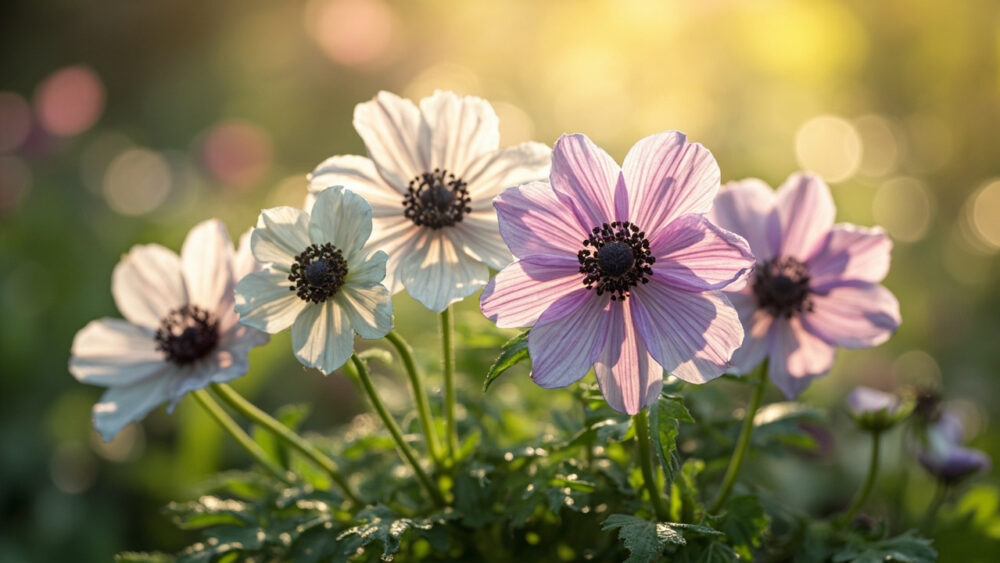
Most anemones bloom in spring, from early to late spring depending on the type, though a few fall-blooming species flower from late summer into autumn. Which one you have and where you garden changes that answer more than most people expect. Anyone asking when do anemones bloom is usually staring at a bare pot or a leafy clump with zero flowers, wondering if something is wrong.
It probably isn’t. But there is one mix-up that trips up almost every new anemone grower, a light condition that quietly shuts down flowering for good, and a couple of aftercare habits that genuinely stretch the bloom season by weeks.
Stick around for the quick-reference card at the bottom. It’s the save-and-check version of everything below, built for the next time you’re standing in front of the plant trying to remember the details.
The Bloom Window, and Why “Anemone” Means Several Different Plants
The honest answer depends on which anemone you’re growing, because the name covers several unrelated garden plants with different bloom clocks.
Spring-blooming anemones (De Caen and St. Brigid types, grown from knobby corms, plus woodland species like Anemone blanda and Anemone nemorosa) flower for roughly 3 to 6 weeks sometime between early and late spring, depending on your climate and planting time.
Fall-blooming anemones (Japanese anemone, Anemone hupehensis and Anemone x hybrida) are a completely different plant that flowers from late summer through mid autumn, often for 6 to 8 weeks.
If you bought a bag of corms in fall or spring, you almost certainly have the spring bloomer.
If you bought a potted perennial in summer with tall wiry stems, you likely have the fall type.
Knowing which one is standing in your yard is the first thing that makes the rest of this useful.
What Actually Controls When Your Anemone Blooms
Bloom timing comes down to three things: type, planting date, and soil temperature, and soil temperature usually wins the argument.
Corm-grown spring anemones need cool soil to root well before they push top growth, which is why fall-planted corms in mild winter climates often bloom earlier and longer than spring-planted ones in cold climates. In zones 7 and warmer, plant corms in fall for a late winter into spring show. In zones 6 and colder, plant in early spring after the ground has thawed, and expect bloom 8 to 12 weeks later.
Japanese anemones are perennial and bloom on a fixed seasonal clock tied to day length and temperature, not planting date. A newly planted one may skip its first fall or bloom lightly, then come on strong the following year once it’s established.
Your calendar matters less than your soil does.
How to Get More Flowers, and How to Make Them Last Longer
If you assumed more fertilizer means more flowers, that’s the guess that leads a lot of anemones astray. Overfeeding, especially high-nitrogen feed, pushes lush leaves at the expense of buds.
What actually increases bloom count is full sun to light shade for fall types, and dappled or morning sun for spring woodland types, consistent moisture without soggy soil, and a topdress of compost in early spring rather than a heavy synthetic feed.
For corm types, planting in generous drifts, a dozen or more corms per square foot, does more visual work than any single fertilizer trick, since these are small flowers that read as a show only in numbers.
To stretch the bloom window itself, stagger planting: put in a batch of corms now and another 2 to 3 weeks later, which spreads flowering over a longer stretch instead of one dense burst that’s over in three weeks.
Mulch keeps roots cool and soil moisture even, which directly extends how long each flush of blooms holds up.
None of that fixes a plant that isn’t blooming at all, though, and that’s a different problem.
Why Your Anemone Isn’t Blooming
Give it time first. Corms can take a full season to establish, and Japanese anemones often need a full year before they bloom well.
Too much shade is the most common real cause for fall-blooming types. They tolerate part shade but bloom noticeably less in it. Move a container into more sun, or accept a lighter show if the bed can’t change.
Corms planted upside down or too deep stall spring types entirely some years. Plant corm-type anemones about 2 inches deep, and if you genuinely can’t tell top from bottom on the knobby, irregular corms, plant them on their sides; they’ll find their way up.
Wet feet over winter rots corms before they ever get a chance to sprout, which reads to the gardener as simply “never came up.” Soil that stays soggy after rain is the fix to make, not the corms to blame.
A hard late freeze after buds have formed can blast spring flowers before they open, which is a weather problem, not a plant problem, and next year’s crop is usually fine.
Once flowers do show up, what you do next decides how long you get to enjoy them.
Deadheading and Aftercare That Extends the Show
Snip spent flowers at the stem base as they fade, before they go to seed. This is genuinely worth the five minutes, because seed production signals the plant to stop investing in new flowers.
For corm-type spring anemones, let the foliage die back naturally after bloom instead of cutting it early. That foliage is recharging the corm for next year, and cutting it too soon is a common way to get one great year followed by a disappointing one.
For Japanese anemones, deadheading through the season keeps new buds coming, and a light fall cutback after frost cleans up the bed without hurting next year’s growth.
Skip heavy fertilizing after bloom finishes. A thin layer of compost is plenty, and it feeds the plant’s recovery without forcing it.
Get the aftercare right and you’re not just extending this year’s flowers, you’re setting up a better bloom next season too.
Anemones: Quick Reference
- Bloom season: spring types flower early to late spring for 3 to 6 weeks, Japanese anemones flower late summer into mid autumn for 6 to 8 weeks.
- Planting time: corms in fall in zones 7 and warmer, corms in early spring in zones 6 and colder, perennial Japanese anemones any time soil is workable.
- Light needs: full sun to light shade for Japanese anemones, dappled or morning sun for spring woodland types, deep shade means fewer flowers.
- Planting depth: corms about 2 inches deep, sideways if you can’t identify top from bottom.
- Common no-bloom causes: too much shade, waterlogged soil rotting corms, first-year establishment, a hard late freeze on open buds.
- Aftercare: deadhead spent blooms promptly, let corm foliage die back naturally, feed lightly with compost rather than heavy fertilizer.
Once you know which anemone you’re growing, the bloom time stops being a mystery and starts being a schedule you can work with.
Get the light, drainage, and timing right, and most anemones reward you with more flowers than the tag ever promised.