Growing alyssum is close to foolproof once you get two things right: cool soil at planting time and full sun to light shade after that. Direct sow or transplant after your last hard frost when soil has warmed to at least 50 to 55 F, space plants 6 to 12 inches apart, and you will have flowers in as little as 4 to 6 weeks. That is the whole system, but there are a few places people trip badly enough to lose the whole planting.
The biggest one is treating alyssum like a summer annual and planting it in the heat, which is exactly backward from what this plant wants. There is also a bloom slowdown that hits almost everyone in midsummer, and most people misread it as a disease instead of what it actually is. And if you have ever wondered whether you should cut it back or just let it sprawl, the honest answer depends on your climate more than your patience.
Stick around for all of it, including the mistake that quietly kills more alyssum plantings than pests ever do. At the bottom you will find a save-able Alyssum at a Glance card with the exact numbers, so you can plant this weekend without scrolling back through the whole guide.
When to Plant Alyssum
Alyssum is a cool-season flower, not a heat lover, and that single fact drives every timing decision. Direct sow or set out transplants 2 to 3 weeks before your last expected frost in most zones, since alyssum tolerates a light frost once established and actually prefers cooler air. Soil temperature matters more than the calendar date: aim for at least 50 F, ideally 55 to 65 F, for reliable germination.
In zones 8 and warmer, skip spring planting stress entirely and plant in fall or even winter for bloom through the cool months. In zones 3 to 7, spring planting is standard, and a second sowing in late summer gives you a fresh fall flush once the worst heat breaks.
Sweet alyssum acts as a short-lived perennial in zones 9 to 11, often self-seeding and returning on its own.
Get the timing right and the rest of the plant’s care gets a lot easier.
Choosing the Spot and Prepping the Soil
Alyssum wants full sun for the heaviest bloom, though it will tolerate light afternoon shade in hot climates without complaint. Drainage matters more than fertility here. This plant will rot in soggy soil far faster than it will suffer in soil that is merely average.
Work the top 6 to 8 inches loose and mix in an inch or two of compost if your soil is heavy clay or compacted. You do not need rich soil. Alyssum actually blooms harder in soil that is only moderately fertile, since too much nitrogen pushes leafy growth at the expense of flowers.
A slightly alkaline to neutral pH, roughly 6.0 to 7.5, suits it fine, and it is forgiving of most garden soils that drain.
Once the bed drains well and sits in sun, the actual planting takes about ten minutes.
Planting Alyssum Step by Step
Whether you are direct sowing seed or setting out nursery starts, the technique is simple and unforgiving only if you bury the seed too deep.
Direct sowing seed
- Scatter seed on the soil surface and press in lightly, covering with no more than 1/8 inch of soil, since alyssum seed needs light to germinate well.
- Keep the top inch of soil consistently moist until seedlings appear, usually in 5 to 10 days at 55 to 65 F.
- Thin seedlings to 6 to 12 inches apart once they have their first true leaves.
Setting out transplants
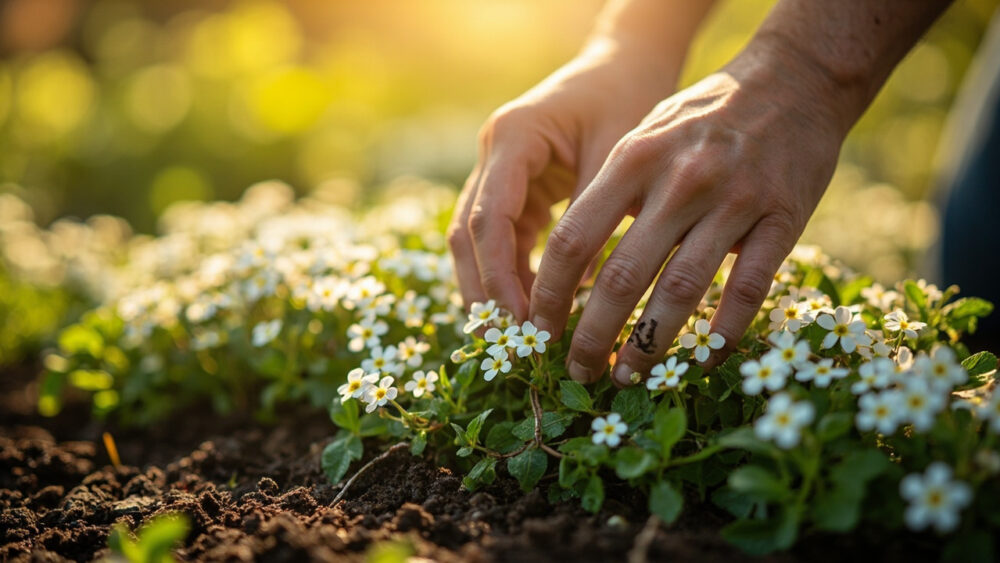
- Dig holes just deep enough to sit the root ball level with the surrounding soil, no deeper.
- Space plants 6 to 10 inches apart for a fast-filling groundcover look, or up to 12 inches if you are patient and want less crowding later.
- Water in immediately after planting to settle the roots and remove air pockets.
That shallow planting depth is the detail most people get wrong, since instinct says to bury small seed the way you would a bean.
Get plants in at the right depth and spacing, and watering becomes the next thing to dial in.
Watering and Feeding Through the Season
Alyssum wants steady moisture while it establishes, then turns genuinely drought-tolerant once roots are in. Water when the top inch of soil feels dry, which in the first two to three weeks after planting might mean every 2 to 3 days. After that, established plants often coast on rainfall alone in most climates, needing supplemental water only during real dry spells.
Overwatering is the more common failure. Soggy, poorly drained soil rots the shallow root system quickly, and a wilting plant in wet soil is being killed by too much water, not too little, even though the symptom looks identical to drought stress.
Feed lightly. A balanced fertilizer at half strength once a month is plenty, or a single application of slow-release fertilizer at planting time. Skip heavy nitrogen feeding, which trades flowers for leaves.
Water and food are the easy part; the real test comes when summer heat arrives.
The Midsummer Slowdown Everyone Misreads
If your alyssum stops blooming heavily in the peak of summer heat, that is not disease and it is not a nutrient problem. It is heat stress, plain and simple, and it is completely normal in temperatures consistently above 80 to 85 F.
The fix is not more fertilizer or a fungicide. Shear the plants back by about a third with clean scissors or shears, water well, and they will typically rebound with fresh growth and a new bloom flush once temperatures moderate in late summer or fall.
Watch for a few real problems too. Aphids can cluster on new growth in cool weather, damping off can hit dense seedling patches in soil that stays too wet, and root rot shows up as sudden wilting and yellowing in poorly drained spots.
For aphids, a strong water spray or insecticidal soap handles most infestations. For damping off and root rot, improving drainage and airflow prevents far more than any product cures after the fact, and if a patch collapses badly, thinning and replanting in drier soil is usually faster than trying to save it.
Handle the summer slump correctly and you will get a second wave of bloom that often rivals the first.
When Alyssum Blooms and How to Keep It Going
Alyssum typically blooms 4 to 6 weeks from seed, faster from transplants, and once it starts it does not stop on its own. There is no single harvest moment here since this is a bloom-for-cutting-and-viewing flower, not a food crop, and the honest answer to when it is done is that it keeps going until frost, or year-round in mild climates.
If you want cut flowers for small arrangements, snip stems in the morning when blooms are fully open, and expect only a few days of vase life since the stems are short and delicate.
Deadheading is optional but helps. Shearing spent flower clusters lightly every few weeks keeps plants tidy and encourages continuous rebloom rather than letting the plant go entirely to seed.
Let a few seed heads mature late in the season if you want volunteers next year, since sweet alyssum self-seeds readily in most gardens.
That self-seeding habit is exactly why so many gardeners plant it once and then have it show up, uninvited and welcome, for years afterward.
Alyssum at a Glance
- When to plant: 2 to 3 weeks before last frost in cooler zones, or fall through winter in zones 8 and warmer, once soil hits 50 to 55 F.
- Spacing: 6 to 12 inches apart, with 6 to 10 inches for a fast, dense groundcover look.
- Planting depth: seed no deeper than 1/8 inch, transplants set level with the surrounding soil.
- Sun and soil: full sun to light afternoon shade, well-drained soil, moderate fertility, pH 6.0 to 7.5.
- Watering: keep evenly moist while establishing, then water only during dry spells once mature.
- Bloom time: 4 to 6 weeks from seed, continuing until frost or year-round in mild climates.
- Midsummer care: shear back by about a third if bloom stalls in heat above 80 to 85 F to force a fresh flush.
Get the planting depth and drainage right and alyssum genuinely takes care of itself from there.
Everything else is just knowing when to give it a haircut and get out of its way.