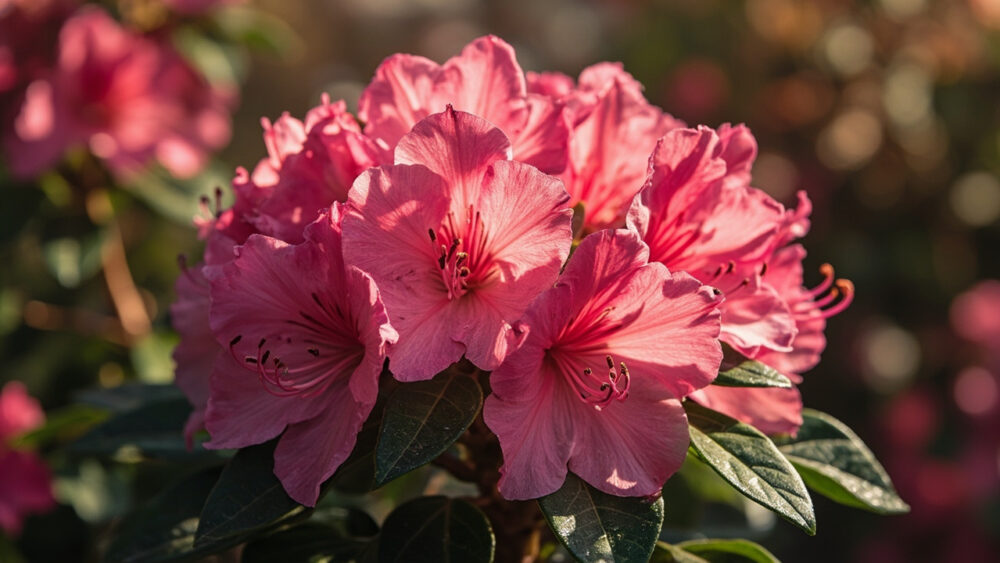
Yes, azaleas come back every year. They are woody perennial shrubs, not annuals, and a healthy one will leaf out, bud, and bloom again next season without you replanting a thing. But whether “coming back” means a spectacular flush of flowers or a shrub that survives but sulks depends entirely on your zone, your winter, and one pruning mistake that quietly cancels next year’s blooms.
That mistake is the biggest loop worth opening here, because it has nothing to do with cold or soil. It is timing, and almost nobody guesses it right on the first try.
Stick with me through the zone breakdown and the winter care basics, and I will also flag the specific situation where treating an azalea like a one-season plant is actually the smarter call. There is a save-able quick-reference card at the bottom that sums up all of it in one glance.
The Plain Answer: Perennial, With Zone Limits
Azaleas are perennial shrubs in USDA zones 6 through 9, and many evergreen types handle zone 5 with a protected spot and winter mulch. In those zones, the plant does not die back to the ground and regrow like a perennial flower does. It keeps its woody structure year round and simply adds growth and flower buds each season.
Below zone 6, and especially in zone 4 and colder, azaleas struggle to survive winter outdoors without serious protection, and many varieties simply will not make it through a hard freeze in an unprotected spot.
Deciduous native azaleas tend to tolerate cold better than the glossy evergreen garden center types, so the variety you bought matters as much as your zip code.
Next, the part that actually determines what next spring looks like on your specific plant.
What Happens Over Winter
In its hardy zone range, an azalea does not go fully dormant the way a hosta does. Evergreen varieties hold their leaves through winter, sometimes taking on a purplish or bronze tint in cold weather, which is normal and not a sign of dying.
Deciduous types drop their leaves and look bare, which alarms first-year owners every single time.
Flower buds for next season are already set on the plant by late summer or fall, tucked at the branch tips, waiting out the cold. This is exactly why winter pruning or a late, hard frost after bud set can wipe out a bloom season even though the shrub itself is perfectly fine.
That bud timing is also the key to the mistake I mentioned up top, so let’s get into it.
How to Help It Return Strong Next Season
The single biggest bloom-killer is pruning at the wrong time. Prune azaleas only within a few weeks after they finish flowering, not in fall and not in late winter, because that is when next year’s buds are already forming on the new growth. Cut in fall or winter and you are removing next spring’s flowers before you ever see them.
Beyond timing, azaleas want acidic, well-drained soil, a spot with morning sun and afternoon shade, and consistent moisture without standing water. Mulch 2 to 3 inches deep to protect shallow roots from freeze-thaw heaving, which is a real winter killer in borderline zones.
If you assumed more fertilizer means more flowers, that guess backfires more often than it helps. A high-nitrogen feed pushes leafy growth at the expense of buds. Use a fertilizer formulated for acid-loving shrubs, and only in spring after bloom, not late in the season.
Pots need extra help too, and that is where the answer gets more honest.
Containers and Marginal Zones: When Annual Treatment Is Honest
A potted azalea has far less insulation around its roots than one in the ground, so container plants in zone 6 or colder often need to come into an unheated garage, shed, or against a sheltered wall for winter. Left exposed on a porch, the roots can freeze solid even when an in-ground plant nearby survives fine.
If you gardened in zone 4 or 5 without a way to overwinter a potted azalea indoors or in a sheltered space, it is genuinely reasonable to treat it as a one-season plant, enjoy the bloom, and not chase a comeback you cannot realistically deliver. That is not failure, that is matching the plant to the setup you actually have.
The same goes for the florist azaleas sold as houseplants around late winter. Those are forced greenhouse varieties, tender and not reliably hardy outdoors in most climates, so most people get one great bloom cycle and call it done.
Know which category your plant falls into before you invest another season into it.
Reading Your Own Plant Right Now
Scratch a stem lightly with a fingernail. Green underneath means the branch is alive; brown and dry all the way through means that section is dead and can be pruned out.
Check for firm, plump buds along the stems versus shriveled, blackened ones, which usually point to a hard freeze after bud set.
New growth at the base or along healthy stems in spring is the clearest sign your azalea is coming back on schedule, even if last year’s bloom was disappointing.
Now for the card that puts all of this in one place.
Azaleas: Quick Reference
- Perennial status: azaleas are woody perennial shrubs, not annuals, and return year after year in the right zone.
- Hardy zones: most types thrive in zones 6 through 9, with some evergreen varieties surviving in zone 5 given shelter and mulch.
- Cold limit: zone 4 and colder outdoors is genuinely difficult without heavy winter protection, and many varieties will not survive it.
- Pruning window: prune only within a few weeks after flowering ends, never in fall or late winter, or you cut off next year’s buds.
- Container care: potted azaleas in cold zones need to overwinter in an unheated garage or sheltered space, or they should be treated as a single-season plant.
- Florist azaleas: greenhouse-forced houseplant azaleas are tender and usually a one-time bloom, not a reliable perennial in most homes.
- Health check: scratch a stem for green underneath and look for plump buds to confirm the plant is alive going into spring.
Get the pruning timing right and match the plant to your zone, and an azalea will keep coming back for years without much fuss.
Skip the timing, and you will still have a living shrub, just one with a lot fewer flowers to show for it.