Calathea Medallion care comes down to four things this plant will not compromise on: bright, indirect light with zero direct sun, soil kept evenly damp but never soggy, humidity above 50 percent, and warmth that never dips below 60°F. Get those four right and the rest is maintenance. Get one wrong and you will watch the leaves curl, brown, or drop no matter how much you fuss over the others.
Here is where most people lose the plant, and it is not usually watering. It is airflow and dry air working together to crisp the leaf edges while everyone blames the watering can. There is also a sign nearly every new owner misreads as the plant dying, when it is actually the plant doing something completely normal.
Stick with this and you will get the honest answer to the question you are about to ask next, which is why a calathea that looks fine in the store starts sulking within a week of coming home. Save-able specifics, including the exact Calathea Medallion at a Glance card, are at the bottom once you scroll through the why.
Light, Placement, and Temperature
Calathea Medallion wants bright, indirect light, the kind you get a few feet back from an east or north window, or filtered through a sheer curtain on a west or south exposure. Direct sun for even an hour or two at midday will bleach and scorch those painted leaves fast.
Too little light is quieter but just as damaging. The leaf pattern fades toward plain green and the plant stretches thin, reaching for anything brighter.
Keep it away from cold windowsills, drafty doors, and heating vents. This plant wants a steady 65 to 80°F and starts sulking below 60°F, no exceptions for a chilly porch in fall.
Placement solves half your problems before they start, but water is where the real damage happens.
Watering: How Much, How Often, and How to Tell
Water when the top inch of soil has just gone dry to the touch, which for most homes is roughly once a week, faster in summer heat and slower in winter. The goal is evenly moist soil, never a swamp and never a desert.
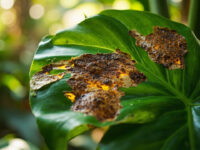
If you assumed browning leaf tips mean the plant needs more water, that guess is exactly backward more often than not. Brown, crispy edges are usually low humidity or a buildup of minerals and chlorine in tap water, not thirst.
The real fix is filtered, distilled, or rainwater left to sit overnight, plus a humidity boost from a pebble tray, humidifier, or grouping plants together. Soggy, mushy, yellowing lower leaves point the other direction, straight at overwatering and roots sitting wet too long.
Water right and you have solved the second-biggest killer, but the soil underneath it has to be doing its job too.
Soil, Potting Mix, and Feeding
Use a light, well-draining mix, a standard peat or coir-based potting soil cut with perlite or orchid bark works well. Calathea roots are fine and shallow, and they rot fast in anything dense or slow to drain.
A pot with a drainage hole is not optional here. This plant punishes standing water at the roots quicker than almost any other common houseplant.
Feed lightly during spring and summer with a diluted balanced liquid fertilizer, roughly half the label strength, once every four to six weeks. Skip feeding entirely in fall and winter when growth slows down, since fertilizer salts build up fast in soil that is not being used by active roots.
Good soil keeps the roots happy, but the plant still needs regular upkeep on top of it.
Pruning, Repotting, and Cleaning
Snip off any leaf that has gone fully brown or yellow at the base with clean scissors, right where the stem meets the soil. There is no bringing a fully brown leaf back, so removing it just redirects energy to new growth.
Repot every 12 to 18 months, or sooner if you see roots circling tightly at the drainage hole. Go up only one pot size, since an oversized pot holds excess moisture the roots cannot use fast enough.
Wipe the leaves every couple of weeks with a soft, damp cloth. Dust blocks light and clogs the pores calathea uses to manage humidity around itself, and clean leaves also make it much easier to spot early pest trouble.
Routine care is easy to skip, but skipping it is exactly how small problems turn into big ones.
The Problems Most Likely to Strike
Now for the sign almost everyone misreads. Leaves curling and folding up in the evening, sometimes dramatically, is not a cry for help. Calathea Medallion does this naturally as light fades, a trait called nyctinasty, and the leaves unfurl again by morning if the plant is otherwise healthy.
The problems that actually matter look different. Spider mites show up as fine webbing and stippled, dusty-looking leaves, usually when the air is too dry.
Treat any pest outbreak with insecticidal soap or neem, following the product label exactly. Root rot from overwatering shows up as blackened, mushy stems at the soil line, and once it reaches that stage the honest move is usually to take healthy cuttings or divisions rather than trying to save the original plant.
Catch these early and recovery is realistic, which brings us to what genuinely thriving actually looks like.
Signs Your Calathea Medallion Is Actually Thriving
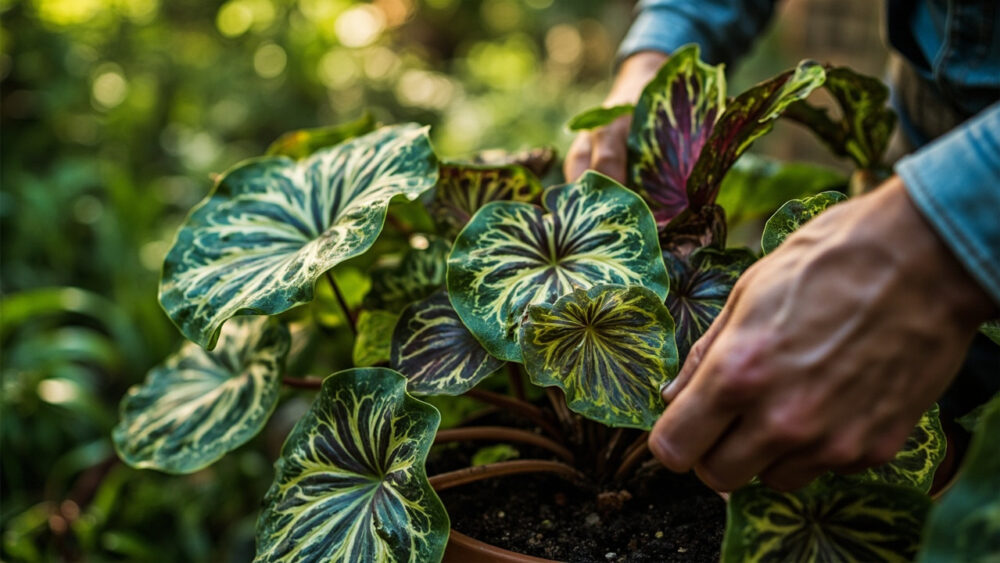
A happy plant pushes out new leaves steadily through spring and summer, each one unfurling tightly rolled before opening flat with sharp, high-contrast pattern. The undersides should show a deep, even purple, not patchy or faded.
Strong evening curling followed by a full, flat reopen by morning is actually a good sign, not a warning, proof the plant is responding normally to light changes. Stems should feel firm, not limp or mushy at the base.
No pest webbing, no crispy margins, no rapid yellow drop from the bottom of the plant, that is the real baseline for healthy. Everything below is the card worth saving to your phone right now.
Calathea Medallion at a Glance
- Light: bright, indirect light only, a few feet from an east or north window or behind a sheer curtain, never direct sun.
- Temperature: 65 to 80°F, never below 60°F, away from drafts and heating vents.
- Watering: when the top inch of soil is dry, roughly weekly, using filtered, distilled, or rested tap water.
- Humidity: 50 percent or higher, boosted with a humidifier, pebble tray, or grouped plants.
- Soil and feeding: light, well-draining mix with perlite or bark, fed at half strength every four to six weeks in spring and summer only.
- Routine care: repot every 12 to 18 months going up one pot size, wipe leaves every couple of weeks, trim fully brown leaves at the base.
- Normal behavior: leaves curl and fold at night and reopen by morning, this is not distress.
If you remember one thing, remember this: consistency beats intensity with this plant. Steady light, steady moisture, and steady humidity will do more for a Calathea Medallion than any single perfect adjustment ever could.