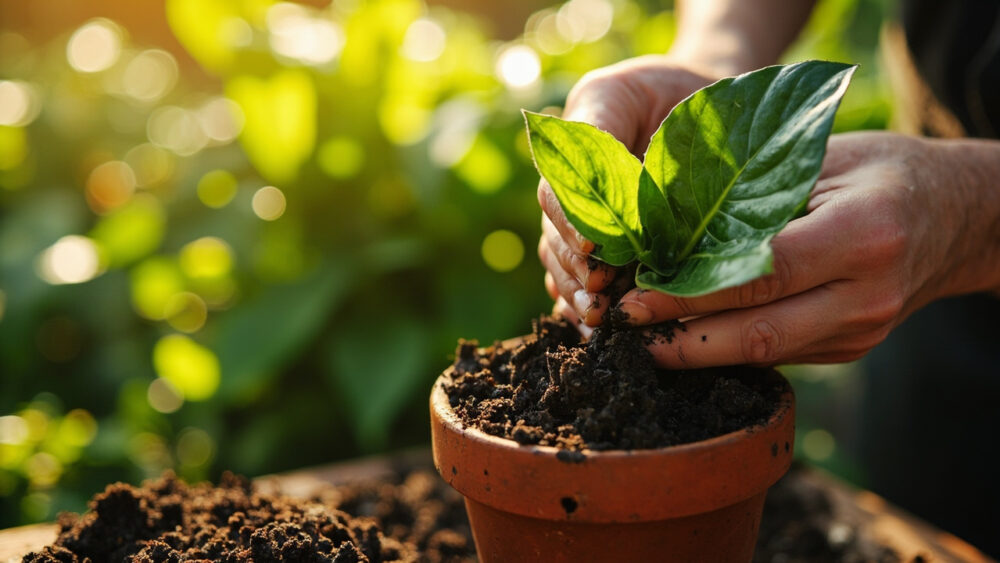
The fastest reliable way to propagate a ZZ plant is division, splitting the rhizomes apart at repotting time so each piece already has roots and leaves attached. Leaf and stem cuttings work too, but they root so slowly that most people give up before anything happens, sometimes 3 to 4 months before a single root shows up. If you want speed, divide. If you want more plants from one plant and don’t mind waiting, cuttings are worth the patience.
Here’s what trips people up: the biggest reason ZZ propagation “fails” isn’t rot or bad luck, it’s quitting too early. This plant roots on its own timeline, not yours, and nothing visible happens for weeks even when everything is going right underground.
There’s also a sign everyone reads wrong, a wrinkled or floppy cutting that looks dead but isn’t, and an honest answer about whether a single leaf will ever grow you a real plant. Stick around, because the “Zz Plant at a Glance” card at the bottom has every number you’ll want saved to your phone before you make the first cut.
Division vs. Cuttings: Which One You Should Actually Use
Division is propagation with a head start. You’re not asking a leaf to grow a whole root system from nothing, you’re separating an existing rhizome clump into smaller clumps that already have what they need.
A ZZ plant with three or more stems coming out of the soil almost always has multiple rhizomes underneath, which means it’s divisible.
Stem and leaf cuttings are the slow route. They can absolutely work, ZZ plants store enough energy in their leaf tissue to eventually push out a tiny rhizome, but “eventually” means months, and a single leaflet cutting may take a year or more to become anything worth potting up on its own.
If your ZZ only has one or two stems, cuttings are your only option right now.
Step by Step: Taking the Cutting or Division
Dividing the rhizomes
Slide the whole plant out of its pot and knock loose soil off the root ball. You’ll see thick, potato-like rhizomes with stems growing out of them, sometimes tangled together, sometimes clearly separate.
Gently pull or cut apart clumps so each division keeps at least one rhizome and its attached stems and roots. A clean, sharp knife works better than tearing when rhizomes are fused tight.
Taking stem or leaf cuttings
For a stem cutting, snip a whole stem near the soil line, ideally one with several leaflets still attached. For a leaf cutting, pull or cut individual leaflets off a stem, keeping a small heel of tissue if you can.
Let any cutting sit out at room temperature for 1 to 2 hours so the cut end dries and calluses slightly before it touches soil or water.
The cut itself is the easy part, what happens next decides whether it actually roots.
Rooting Medium and Conditions That Actually Work
Divisions go straight into a well-draining potting mix, the same kind you’d use for the parent plant, because they already have roots and just need to settle in. Water lightly and treat it like a normal repot.
Cuttings root in either water or soil, and both work, but each has a catch. In water, you can watch progress, but you’ll eventually need to transition the cutting to soil, which can shock a plant that’s only ever known water roots.
In soil, skip that transition entirely, but you’re rooting blind. A well-draining mix, cactus or succulent blend or regular potting mix cut with perlite, avoids the rot that kills more ZZ cuttings than anything else.
Keep cuttings in bright, indirect light, never direct sun, and at normal room temperature, ideally 65 to 75°F. Skip a humidity dome, ZZ plants root fine in normal room air and a sealed dome just invites rot.
Water sparingly, water is the actual enemy here.
The Timeline: What to Expect Week by Week
Week 1 to 2, nothing. The cutting looks exactly the same, and that’s normal, not a bad sign.
Week 3 to 6 is when a lot of people panic, because this is when a leaf cutting can start looking wrinkled or slightly floppy. If you assumed that means it’s dying, that guess is wrong more often than it’s right.
ZZ leaves and stems are thick and store water, and they draw on those reserves while they wait to grow roots, which shows up as mild wrinkling. As long as the tissue isn’t soft, mushy, or brown at the cut end, it’s still alive and working.
Somewhere around 2 to 3 months, tug very gently. Resistance means roots have formed. A tiny rhizome, pea sized at first, usually shows up around this point too, right at the base of the cutting.
Divisions skip almost all of this since they already have roots, they just need a few weeks to stop looking stressed and start pushing new growth.
Once you feel real resistance, you’re ready to think about a permanent pot.
When and How to Pot Up
Move a water-rooted cutting to soil once roots are 1 to 2 inches long, not before. Shorter roots often stall out when the environment suddenly changes.
For soil-rooted cuttings or new divisions, wait until you feel that gentle tug resistance, then pot into a container with drainage holes, sized just an inch or two wider than the root mass. ZZ plants actually prefer being slightly snug in their pot.
Use a well-draining mix and don’t bury the rhizome deep, it should sit near the surface, similar to how it grew on the parent plant.
Outdoor planting is really only relevant in USDA zones 9 through 11 or as a summer patio plant elsewhere, since ZZ plants are frost-tender and treated as houseplants almost everywhere. If moving a rooted division outside, do it after nighttime temperatures are reliably above 50°F, in shade or bright indirect light, never full sun.
Getting a cutting into a pot too early is a common misstep, but it’s not the one that kills most attempts.
Why Most Attempts Actually Fail
Overwatering is the real killer, not impatience, not bad light, not the wrong pot. A cutting sitting in soggy soil or water that never gets changed will rot at the base before it ever gets the chance to root.
The signs of rot are unmistakable once you know them: the cut end turns brown or black, goes soft, and often smells sour or fermented. Wrinkled but firm tissue is fine, mushy and dark tissue is not, and there’s no reviving a cutting once rot sets in at the base.
The second most common mistake is giving up around week 4 or 5, right when a leaf cutting looks its worst but is often closest to forming a rhizome. Pulling it to check too often disturbs whatever tiny roots are trying to form.
Check for resistance no more than once every couple of weeks, and let the calendar, not your nerves, decide when to worry.
ZZ Plant at a Glance
- Best method: divide rhizomes at repotting for fast results, use stem or leaf cuttings only if the plant has too few stems to divide.
- When to propagate: anytime indoors, though spring through summer growth periods root fastest.
- Rooting medium: water or a well-draining potting mix cut with perlite, never a heavy, moisture-holding soil.
- Light and temperature: bright, indirect light, no direct sun, 65 to 75°F.
- Timeline: divisions settle in within a few weeks, cuttings typically take 2 to 4 months to root and may take a year or more to become a full plant.
- Watering: sparing, only when the top inch of medium is dry, since rot from overwatering is the top cause of failure.
- Pot up when: water roots reach 1 to 2 inches long, or a soil cutting gives gentle resistance when tugged.
Patience beats fussing every time with this plant. Give it a well-draining mix, a light hand with the watering can, and a couple of months you don’t spend checking on it, and it will root on schedule.