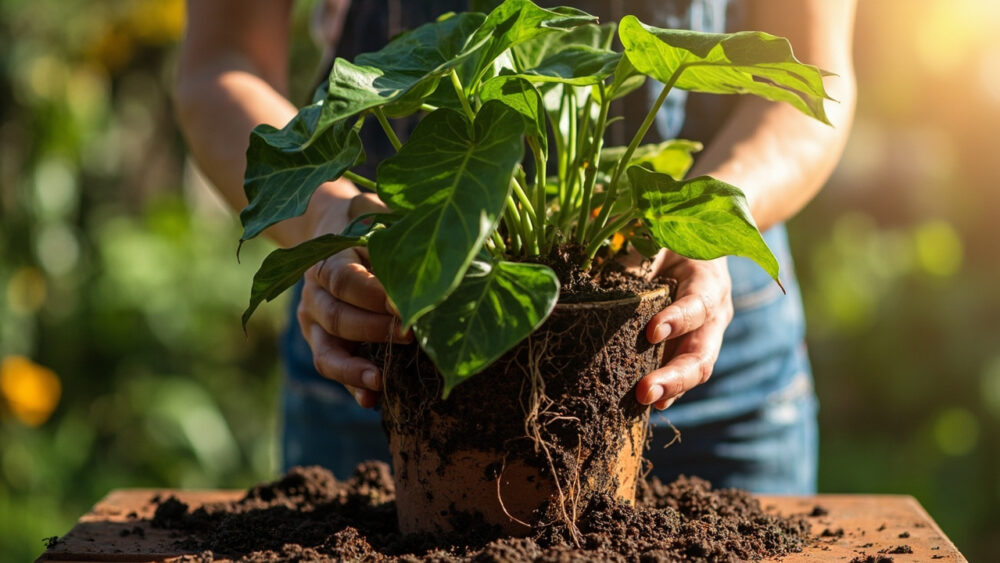
The right time to repot philodendron is when roots circle the pot’s bottom or poke through the drainage holes, which usually means every 12 to 18 months for a healthy plant. Move up just one pot size, no more than 2 inches wider in diameter, and use fresh, chunky, well-draining mix. Water it in, skip fertilizer for about four weeks, and keep it out of direct sun while the roots settle.
That’s the short version, but repotting philodendron badly is how a lot of people accidentally kill a plant that was doing fine. There’s one sizing mistake almost everyone makes that leads straight to root rot, a sign of rootbound growth that gets misread as “needs water” more often than not, and an honest answer about whether you should tease apart the roots or leave them alone.
Stick around and I will walk through all of it, including the exact soil mix, the watering rhythm that actually works, and the save-able Philodendron at a Glance card at the bottom with every number in one place.
The Pot Size Mistake That Causes Root Rot
Here’s the guess almost everyone makes: bigger pot means less repotting later, so why not jump up 4 or 5 inches while you’re at it. That guess is exactly what drowns philodendron roots.
A pot that’s too big holds far more soil than the roots can use, and all that extra soil stays wet for days after watering. Roots sitting in soggy mix that never dries out is the single biggest cause of philodendron root rot, more than overwatering itself.
The fix is boring but it works: go up one size only, roughly 2 inches in diameter, and let the plant fill that space before it earns another upgrade. If the roots are only mildly snug, you can even refresh the top few inches of soil and skip the new pot entirely for another six months.
Get the size right and the next question is what to do with the roots themselves.
Do You Need to Loosen the Roots
Mildly rootbound philodendron doesn’t need aggressive root surgery. If the roots are gently coiled but the rootball still holds its shape when you tip it out, just loosen the outer inch or two with your fingers and set it in the new pot as is.
Severely rootbound plants are different. If you see a dense, hard mat of roots with almost no visible soil, or the roots have started spiraling in a tight circle at the bottom, take a clean knife or your fingers and score or tease that outer layer apart in three or four places before repotting. This encourages roots to grow outward into the new soil instead of continuing to circle.
Skip this step on a badly rootbound plant and the roots will often keep circling in the exact same shape inside the bigger pot, which defeats the point of repotting at all.
Once the roots are sorted, the soil you put them into matters just as much.
Light, Placement, and Temperature
Philodendron wants bright, indirect light, the kind you get a few feet back from an east or west window, or right in front of a sheer curtain on a south window. Direct midday sun scorches the leaves; too little light gives you a leggy plant with long gaps between leaves and pale new growth.
Temperature-wise, philodendron is comfortable anywhere between 65 and 85°F, and most home environments sit right in that range without any effort. Below 55°F for extended periods slows growth and can cause leaf drop, so keep it away from drafty windows and exterior doors in winter.
Humidity above 40 percent keeps the leaves glossy and the growth steady, though most varieties tolerate average household air just fine.
Get the light right and watering becomes a much easier call.
Watering: How Much, How Often, and the Sign Everyone Misreads
Water philodendron when the top 1 to 2 inches of soil feel dry to a finger poked in past the first knuckle. That’s usually every 7 to 10 days indoors, though heat, light, and pot size all shift that window.
Here’s the sign that fools people: drooping, yellowing lower leaves get read as thirst almost every time, so the instinctive fix is more water. That’s backward. Drooping combined with yellow leaves and soil that’s still damp underneath is a root rot signal, not a drought signal, and more water at that point makes it worse.
Check the soil before you decide anything. If it’s dry an inch down, water thoroughly until it runs from the drainage holes. If it’s still damp and the leaves are yellowing, hold off and check the roots for rot instead.
Once you know your watering rhythm, the soil underneath needs to support it.
Soil Mix and Feeding
Philodendron needs a chunky, fast-draining mix, not standard potting soil straight from the bag. A solid ratio is two parts quality potting mix to one part perlite or orchid bark, which gives roots air pockets while still holding some moisture.
Feed lightly during active growth, spring through early fall, with a balanced liquid houseplant fertilizer diluted to half strength every four to six weeks. Skip fertilizer entirely in winter when growth naturally slows, and always wait about a month after repotting before feeding again since fresh mix already carries some nutrients.
A mix that stays soggy for more than a few days after watering is too dense and is worth repotting into something chunkier even outside the usual schedule.
Good soil sets up everything else, including how often you’ll be trimming and cleaning this plant.
Pruning, Cleaning, and Repotting Timing
Prune philodendron any time you see a leggy stem, a yellowed leaf, or growth that’s outpacing its space, using clean scissors just above a node so new growth branches from that point. Wipe the leaves with a damp cloth every few weeks; dust blocks light and can invite pests.
Repotting has a real season to it. Spring through midsummer, while the plant is actively growing, is when roots recover fastest from the disturbance. Repotting in the dead of winter, when growth has slowed to a crawl, means the roots sit in fresh soil without the energy to grow into it quickly, which raises the odds of rot.
If you missed spring and the plant is badly rootbound right now, don’t wait out the whole winter, just water a little less generously than usual for the first month after you repot.
With the routine covered, it helps to know what actually goes wrong and why.
The Problems Most Likely to Strike
Philodendron is a forgiving plant, but a few issues show up again and again.
- Yellow, mushy lower leaves: almost always overwatering or poor drainage, check the roots for brown, soft rot and repot into fresher, chunkier mix if you find it.
- Brown, crispy leaf edges: usually low humidity or too much direct sun, move it back from the window and mist occasionally or group it with other plants.
- Small yellow leaves with fine webbing underneath: spider mites, treat with insecticidal soap or neem oil following the product label, and isolate the plant while treating it.
- Sticky residue and small bumps on stems: scale or mealybugs, wipe them off with alcohol on a cotton swab and follow up with insecticidal soap per label directions.
- No new leaves for months: usually insufficient light rather than a feeding problem, move it brighter before reaching for fertilizer.
Philodendron is mildly to moderately toxic to cats, dogs, and people if chewed or swallowed, due to calcium oxalate crystals that cause mouth and throat irritation, drooling, and swelling. If you suspect a pet or child has eaten any part of it, contact a veterinarian or poison control right away rather than waiting to see what happens.
Once pests and rot are ruled out, it’s worth knowing what real thriving actually looks like, because it’s not always what you’d expect.
How to Tell It’s Genuinely Thriving
A thriving philodendron pushes out a new leaf every 3 to 6 weeks during the growing season, each one slightly larger than the last. New leaves should unfurl a lighter, almost lime green before darkening, which is normal, not a deficiency.
Aerial roots appearing at the nodes are a good sign, not a problem, they’re the plant reaching for something to climb or extra moisture in the air. Vining types will also start trailing noticeably faster once they’re happy, sometimes putting out a foot or more of new growth in a single month.
If the plant is doing all that, resist the urge to fuss with it further, more attention isn’t what it needs right now.
Here’s everything from above condensed into one card worth saving.
Philodendron at a Glance
- When to repot: spring through midsummer, when roots circle the pot or emerge from drainage holes, roughly every 12 to 18 months.
- Pot size increase: one size up only, about 2 inches wider in diameter, never a dramatic jump.
- Soil mix: two parts potting soil to one part perlite or orchid bark, for fast drainage and airy roots.
- Light: bright, indirect light, a few feet from an east or west window or behind a sheer curtain.
- Watering: when the top 1 to 2 inches of soil are dry, roughly every 7 to 10 days, always check before assuming thirst.
- Feeding: balanced liquid fertilizer at half strength every 4 to 6 weeks in spring through early fall, none in winter.
- Toxicity: mildly to moderately toxic to pets and people if ingested, contact a veterinarian promptly for any suspected ingestion.
Get the pot size and timing right and philodendron pretty much takes care of itself from there.
Everything else on this list is just fine-tuning around that one decision.