Here is the short version of how to grow lettuce from seed: sow it a quarter inch deep in loose, moist soil once temperatures sit between 40 and 75 F, keep it consistently damp, thin the seedlings, and you will be cutting leaves in 30 to 45 days for loose leaf types or 55 to 75 for heads. Lettuce is one of the fastest, most forgiving vegetables you can start from seed. Most of the trouble people have with it comes down to one or two habits, not a lack of skill.
The mistake that wrecks more lettuce than anything else is planting it too late in the season, once the weather has already turned warm. Lettuce does not fail dramatically. It just quietly turns bitter and bolts to seed while you are wondering what you did wrong.
There is also a sign at germination that panics almost every new grower, a real question about whether to start indoors or just toss seed in the ground, and the honest truth about when lettuce is actually done producing for the year. All of that is coming up, and at the very bottom you will find a save-able Lettuce at a Glance card with every number in one place.
When to Start Lettuce Seed
Lettuce is a cool-season crop, and timing it around temperature matters more than the calendar. You can direct sow outdoors as early as 4 to 6 weeks before your last frost date, as soon as soil can be worked and isn’t frozen or waterlogged. Seeds will germinate in soil as cool as 40 F, though they come up faster once it reaches 55 to 65 F.
If you want a head start, or you’re pushing into a short spring window, start seed indoors 4 to 6 weeks before you intend to transplant. Lettuce also does well as a fall crop, started 6 to 8 weeks before your first fall frost so it matures in cooling weather instead of summer heat.
The window is wider than people assume, but it does close.
Sowing Lettuce Seed, Step by Step
Lettuce seed is tiny and needs light to germinate well, which changes how you handle it compared to something like beans or squash.
1. Choose your medium
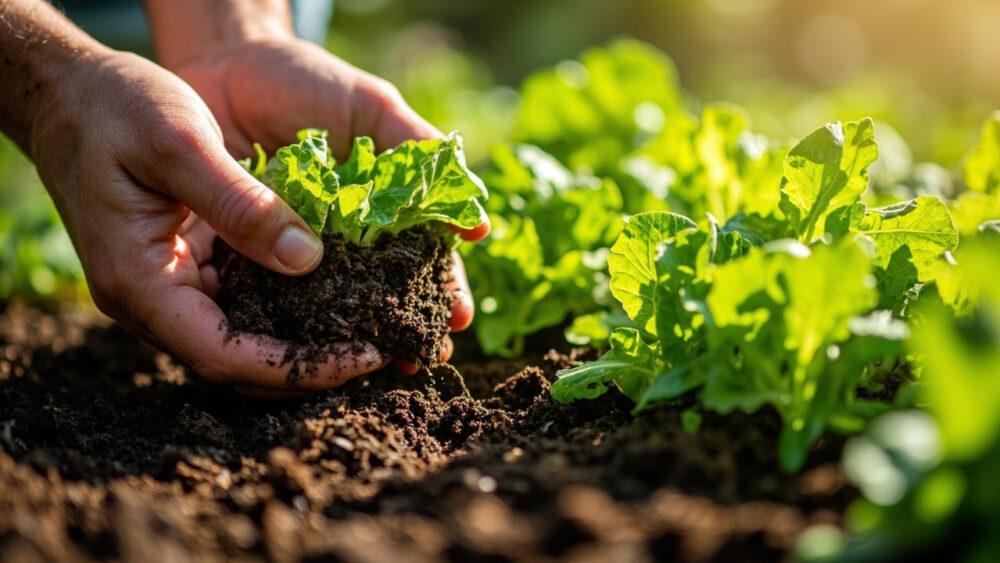
Use a light seed-starting mix indoors, or loose, raked, weed-free garden soil outdoors. Lettuce roots are shallow and fine, so compacted or clumpy soil slows it down noticeably.
2. Sow shallow
Plant seeds about 1/8 to 1/4 inch deep. Any deeper and germination drops off fast, since these seeds rely on light exposure to trigger sprouting.
3. Space with thinning in mind
Scatter seed roughly every inch, or sow a few per cell if starting indoors. You’ll thin later, so slightly thick sowing is normal and expected.
4. Keep it consistently moist and cool
Mist or water gently so you don’t wash seeds away. Ideal soil temperature is 60 to 70 F. Above 80 F, germination gets erratic and some varieties go dormant instead of sprouting.
Get the depth and moisture right and the hardest part of growing lettuce is already behind you.
Germination: What’s Normal and What Isn’t
Expect green sprouts in 2 to 10 days, faster in warm soil, slower in cold. If you assumed a bare patch after a week means dead seed, that guess causes more replanting than actual failure does.
Lettuce often germinates unevenly, with a few seedlings up on day 3 and others straggling in by day 10, especially outdoors where soil temperature swings day to night.
The real warning sign isn’t slow emergence, it’s soil that stays soggy and cold for over two weeks with nothing showing. That usually means rot, not dormancy, and a re-sow is faster than waiting it out.
Once seedlings have their first true leaves, past the two round baby leaves, thin them to 4 to 6 inches apart for leaf lettuce or 8 to 12 inches for head types.
Thinning feels wasteful, but crowded lettuce is the single fastest way to get weak, leggy plants.
Hardening Off and Transplanting
If you started seed indoors, harden seedlings off over 5 to 7 days before they go in the ground. Set them outside in a sheltered, shaded spot for a couple hours the first day, then gradually increase sun and time each day.
Skip this step and transplant shock will stall growth for a week or more, sometimes longer in bright sun or wind.
Transplant once seedlings have 3 to 4 true leaves, generally 3 to 4 weeks after sowing indoors. Set them at the same depth they were growing, water in well, and shade them for a day or two if the weather is bright and warm.
Lettuce transplants easily, but only if you give it a gentle transition, not a shock.
Care Through the Season
Lettuce has shallow roots, so it dries out fast. Water when the top inch of soil feels dry, aiming for about 1 inch of water a week, more in hot or windy weather. Inconsistent watering is a common cause of bitter, tough leaves.
Feed lightly. A balanced fertilizer or an inch of compost worked in at planting is usually enough; lettuce grows fast and doesn’t need heavy feeding to bulk up.
Mulch lightly to keep soil cool and moist, especially as temperatures climb toward summer.
Watch for slugs, aphids, and leaf miners. Handpicking, floating row cover, and keeping the bed weeded handle most light infestations; if a pest problem is serious, choose a product labeled for vegetable gardens and follow the label exactly.
Good care through the middle stretch is what determines whether you get three weeks of harvest or three months of it.
When Lettuce Reaches Harvest, and What Comes After
Loose leaf lettuce is ready to start cutting at 30 to 45 days, once outer leaves reach 4 to 6 inches. Head lettuce, romaine, and butterhead types take longer, generally 55 to 75 days, and are ready when heads feel firm and full for their type.
You can harvest leaf lettuce continually: cut outer leaves and let the center keep producing for weeks. Head types are typically a one-time cut.
Here’s the part most people don’t want to hear: once daytime temperatures push consistently past 80 F, lettuce bolts, sending up a tall, bitter flower stalk, and there is no fixing that once it starts. Pulling and replanting for fall is faster than trying to nurse a bolted plant back.
That heat ceiling is exactly why timing your planting window matters more than almost anything else on this list.
Lettuce at a Glance
- When to plant: direct sow 4 to 6 weeks before last frost, or start indoors 4 to 6 weeks before transplanting, soil between 40 and 75 F.
- Sowing depth: 1/8 to 1/4 inch deep, needs light to germinate well.
- Germination time: 2 to 10 days depending on soil temperature.
- Spacing after thinning: 4 to 6 inches for leaf lettuce, 8 to 12 inches for head types.
- Water needs: about 1 inch per week, more in heat, keep top inch of soil from drying out.
- Days to harvest: 30 to 45 days for leaf lettuce, 55 to 75 days for head lettuce.
- Heat limit: bolts and turns bitter once days run consistently above 80 F.
Get the timing and the water right, and lettuce basically grows itself.
Everything else on this list is just backup for those two things.