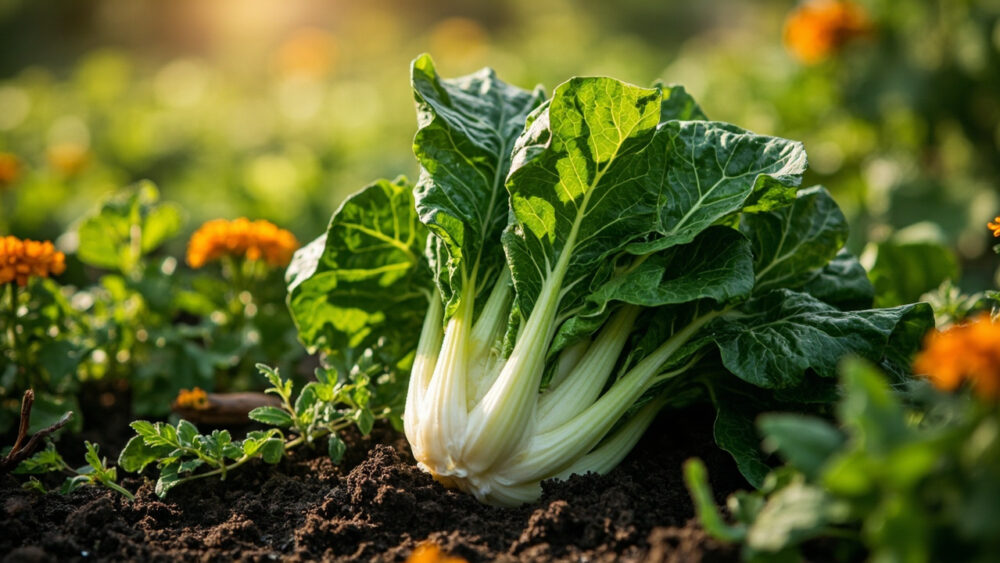
The best companion plants for bok choy are aromatic herbs and alliums that confuse cabbage moths, along with nasturtiums and beets that pull pests away from the leaves you actually want to eat. Skip anything in the mustard or brassica family nearby since they share the same pests and diseases and will just concentrate the problem in one bed. Skip strawberries and other heavy feeders too close, since bok choy bolts fast when it has to compete for water and nitrogen.
Most people planting a mixed bed make one mistake that costs them the whole bok choy crop by early summer: they crowd it next to something slow and leafy that shades it just enough to stall growth, then it bolts the second a hot week hits. There is also a companion pairing everyone assumes works because it is “traditional,” and it does not hold up once you look at what each plant actually needs from the soil.
Stick around for the layout that actually works in a small bed, the pairing myth worth dropping, and the save-able Bok Choy at a Glance card at the bottom with spacing, timing, and soil numbers in one place.
Why Companion Planting Matters More for Bok Choy Than for Most Greens
Bok choy grows fast, usually 30 to 50 days from transplant to harvest, and it bolts the moment it gets stressed by heat, drought, or root competition. That short window is exactly why good neighbors matter so much. You do not have months to fix a bad pairing.
It is also a magnet for cabbage moths, flea beetles, and aphids, the same crew that goes after every other brassica. Companion planting here is less about soil chemistry and more about pest confusion and smart spacing.
The right neighbors buy bok choy the calm, unstressed month it needs.
The Best Companions and Why Each One Earns Its Spot
Aromatic Herbs: Dill, Cilantro, and Thyme
Strong-smelling herbs mask the scent bok choy gives off, which is what cabbage moths use to find it in the first place. Dill and cilantro also flower quickly and draw in hoverflies and parasitic wasps, both of which prey on aphids and cabbage worms. Thyme works the same way at ground level and doubles as a living mulch that keeps weeds down between rows.
Plant them close, within 6 to 12 inches, since their job is scent coverage, not shade or root competition.
That scent trick only works if the herb is actually established, not just seeded the same week.
Alliums: Onions, Garlic, and Chives
Onions, garlic, and chives repel aphids and some root maggots through sulfur compounds in their foliage. They also take up very little lateral root space, so they will not compete with bok choy for water the way a bushier plant would. Tuck them along the edges of the bed rather than mixing them directly into the bok choy rows, since alliums like slightly drier soil and bok choy wants consistent moisture.
Garlic planted the previous fall works especially well, since it is already up and established by the time bok choy goes in.
Alliums handle the pest side, but there is another job still uncovered: distraction.
Nasturtiums and Radishes: The Sacrifice Crop Strategy
Nasturtiums are a flea beetle and aphid magnet, and that is the point. Planted a foot or two from your bok choy, they pull pests onto themselves first. Radishes do something similar underground, and they mature in as few as 25 to 30 days, so they are gone and harvested before they ever compete with bok choy for root space.
Check nasturtium leaves every few days for aphid clusters and just accept some damage there, that is the whole strategy working as intended.
Sacrifice crops protect the leaves, but what protects the roots is a different kind of companion entirely.
Beets and Carrots: Different Root Depths, No Competition
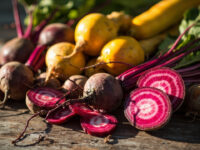
Beets and carrots root deeper and narrower than bok choy’s shallow, wide root mass, so the two are not fighting over the same layer of soil. Carrots also loosen soil as they grow, which helps drainage around bok choy’s roots and reduces the standing moisture that causes rot. Neither crop draws heavily on nitrogen the way bok choy does, so there is less competition for feed too.
Space them a full 8 to 10 inches from bok choy so both get room to bulk up without crowding leaves at the surface.
Good root pairings solve half the layout problem, but the other half is what you leave out entirely.
What to Never Plant Near Bok Choy
Never plant bok choy next to other brassicas: cabbage, kale, broccoli, mustard greens, or Brussels sprouts. They all share the same pests and the same soil-borne diseases, particularly clubroot, and planting them together just concentrates the risk instead of spreading it out. One infected plant can take down the whole cluster in a single season.
Strawberries and other heavy, shallow-rooted feeders are a second problem. They compete directly with bok choy for the same thin top layer of moist soil, and bok choy usually loses that fight and bolts early.
Tall crops like corn or pole beans cast shade that slows bok choy down just enough to trigger premature flowering in warm weather. If you are set on growing tall crops nearby, put bok choy on the north side of them so it gets morning sun and afternoon shade instead of the reverse.
The mistake that ruins most home layouts is exactly this: brassicas grouped together because “they’re all cabbage family, might as well,” when that grouping is the one thing to avoid.
Laying Out the Bed So It Actually Works
Space bok choy itself 6 to 10 inches apart for baby heads, or 10 to 12 inches for full-size heads, in rows 12 to 18 inches apart. Run a border of alliums along the outer edge of the bed, tuck herbs like dill or cilantro into gaps between bok choy rows, and give root crops their own lane 8 to 10 inches off to the side. Keep nasturtiums at the perimeter, not mixed in, so they draw pests toward the edge rather than through the middle of your harvest.
Bok choy wants soil that stays evenly moist, roughly the feel of a wrung-out sponge an inch down, and a pH between 6.0 and 7.5. It also wants at least 4 to 6 hours of sun, but appreciates afternoon shade once temperatures push past 75°F.
That layout handles pests and light, but one popular pairing still needs debunking.
The Pairing Myth That Does Not Hold Up
You will see marigolds recommended everywhere as a universal vegetable companion, bok choy included. If you assumed marigolds automatically help everything, that guess is only half right here. Marigolds do repel some nematodes and can deter certain beetles, but they do very little against the cabbage moths and aphids that actually bother bok choy, and their scent is nowhere near as effective as dill or alliums for that specific job.
They are not harmful to plant nearby, just oversold for this particular crop. Save your bed space for the herbs and alliums that are doing real pest-confusion work instead of a flower that is mostly there for looks.
With the myth cleared up, everything you need is ready to save in one place.
Bok Choy at a Glance
- When to plant: direct sow or transplant 2 to 4 weeks before your last frost in spring, or 6 to 8 weeks before first fall frost for a fall crop, since bok choy prefers cool weather over heat.
- Spacing: 6 to 10 inches apart for baby bok choy, 10 to 12 inches for full heads, rows 12 to 18 inches apart.
- Best companions: dill, cilantro, thyme, onions, garlic, chives, nasturtiums, radishes, beets, and carrots.
- Never plant near: other brassicas like cabbage, kale, broccoli, or mustard, plus strawberries and tall shading crops like corn.
- Soil and water: evenly moist, feels like a wrung-out sponge an inch down, pH 6.0 to 7.5, steady nitrogen for leafy growth.
- Light: 4 to 6 hours of sun, with afternoon shade once temperatures pass 75°F to prevent bolting.
- Harvest window: 30 to 50 days from transplant, pull baby heads early or let full heads reach 8 to 12 inches tall.
Keep brassicas out of the bok choy bed and let alliums and aromatic herbs do the pest work instead.
Get the spacing and moisture right and bok choy rewards you fast, usually within a month and a half.