Nine times out of ten, garlic leaves turning yellow from the bottom up, starting at the tip and working down, is just the plant doing what garlic naturally does as it matures or as it reacts to uneven watering. It is rarely an emergency, and the fix is usually a small water or nitrogen correction, not a rescue mission. But not all yellowing is harmless, and the pattern on the plant tells you which kind you have.
Everyone blames overwatering first. Sometimes that is right, but just as often the real problem is the opposite, or a nitrogen shortage that looks identical from three feet away. The detail that actually separates the causes is where on the leaf and where on the plant the yellow shows up first, and whether it comes with streaks, spots, or just a plain fade.
Stick with this. Below is every real cause ranked by likelihood, how to confirm each one in under a minute, the fix, and an honest read on whether your garlic bounces back. At the bottom is a two-minute diagnosis checklist you can run right at the bed, save it before you go.
Most Likely Causes, Ranked
1. Natural maturity (it’s just time)
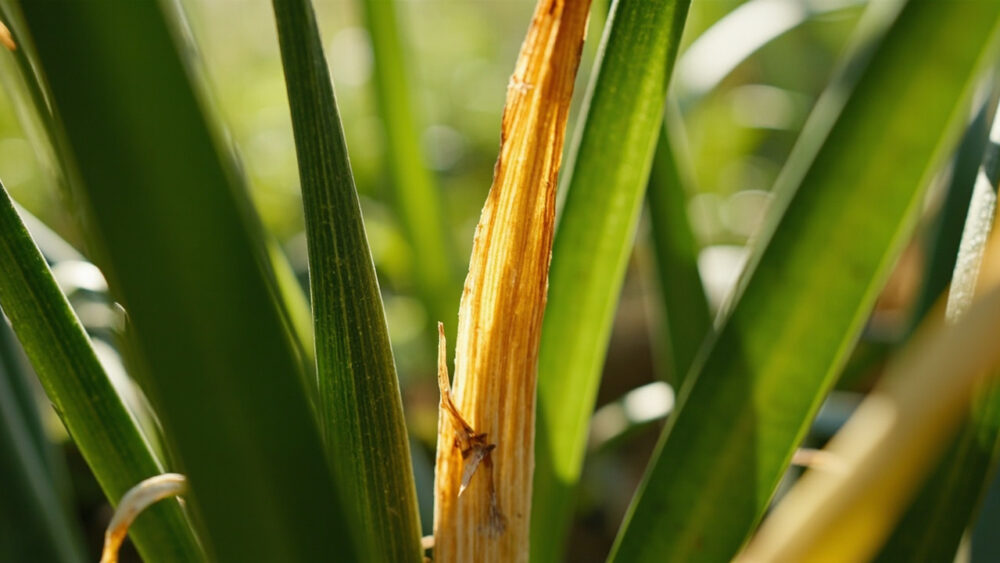
Confirm it: The lowest, oldest leaves are yellowing or browning first, from the tip downward, while the top four to six leaves stay green. It is late spring or early summer, and the plant otherwise looks healthy and upright.
This is garlic’s normal countdown to harvest, not a problem. Each leaf corresponds to a wrapper layer on the future bulb, so losing lower leaves on schedule is expected.
Fix: Nothing to fix. Stop watering as heavily once you see this start, and plan to harvest once about half the leaves have browned.
If this doesn’t match your timing, the next cause is the one people misdiagnose most.
2. Overwatering or poor drainage
Confirm it: Soil an inch or two down feels soggy rather than moist, leaves yellow starting at the base of the plant even in leaves that are still young, and you may see the whole plant looking a little limp or the tips going mushy rather than crisp-brown.
Garlic roots sit in wet soil and start to suffocate and rot, which cuts off nutrients and shows up as yellow leaves even though the actual problem is below ground.
Fix: Let the bed dry out between waterings. Garlic wants about an inch of water a week, less once bulbs are sizing up. If drainage is the real issue, raised rows or amending with compost for next season is the long-term answer.
If the soil is dry instead of wet, you are looking at the opposite problem.
3. Underwatering or drought stress
Confirm it: Soil is dry more than an inch down, leaf tips yellow and curl or twist, and yellowing appears on whichever leaves are actively growing, not just the oldest ones.
Garlic has a shallow root system and does not tolerate long dry stretches, especially during bulbing in late spring.
Fix: Water deeply once, then settle into a consistent schedule, about an inch a week from rain and irrigation combined. Mulch with straw to hold moisture and even out the swings that cause this in the first place.
If watering in either direction doesn’t match what you’re seeing, look at what the soil is actually feeding the plant.
4. Nitrogen deficiency
Confirm it: Older leaves yellow uniformly, no spots, no streaks, just a pale, washed-out green fading to yellow, and the plant looks generally smaller or slower than it should for the season.
Garlic is a heavy nitrogen feeder, especially in the six or so weeks before bulbing starts, and it will visibly stall without enough.
Fix: Side-dress with a balanced or nitrogen-forward fertilizer, or blood meal, following the product label rate. Stop nitrogen feeding once bulbing begins in late spring, since it can push leaf growth at the bulb’s expense.
If the yellowing comes with streaks or a mosaic look, this is not a feeding problem at all.
5. Rust or fungal disease
Confirm it: Small orange, rust-colored, or yellow raised pustules on the leaf surface, sometimes with yellow blotching around them, usually showing up in cool, damp, humid stretches.
Rust is a fungal disease that spreads leaf to leaf and plant to plant, especially in crowded beds with poor airflow.
Fix: Remove and destroy affected leaves, improve spacing and airflow, avoid overhead watering that wets the foliage, and if it’s spreading fast, use a fungicide labeled for rust on garlic or alliums, following the label exactly.
If you see streaking instead of raised spots, you’re dealing with something a fungicide won’t touch.
6. Viral infection (mosaic virus)
Confirm it: Yellow streaking or mottled, mosaic-patterned discoloration running along the length of the leaf, often on stunted or distorted plants, with no raised texture.
Garlic viruses are common, usually come in on infected seed garlic, and spread slowly through the planting.
Fix: There is no cure. Pull and discard infected plants so they don’t weaken the rest of the bed, and start next season with certified disease-free seed garlic.
Once you’ve ruled out disease, the last common culprit is smaller than any of these and easy to miss.
7. Onion maggot or thrips damage
Confirm it: Yellow, silvery, or streaked patches on leaves, sometimes with tiny black specks (thrips) or, at the base, soft rotting stems and maggots if you dig gently (onion maggot).
Both pests weaken leaves directly by feeding on them, causing yellow damage that can look like a nutrient problem at first glance.
Fix: For thrips, blast leaves with water and remove heavily damaged foliage; for onion maggot, remove and destroy affected plants and rotate away from alliums next season. Row covers early in the season prevent both.
Now that you’ve got the full list, here’s how to tell them apart fast without guessing twice.
How to Tell the Causes Apart
Where it starts matters most. Oldest, lowest leaves yellowing first points to maturity, overwatering, or nitrogen deficiency. Newer, upper leaves yellowing or curling points to drought stress or pests.
Texture is the second clue. Plain, smooth, even fading is watering or nitrogen. Raised bumps mean rust. Streaks or mottling mean virus. Silvery scarring or actual holes mean insects.
Speed tells you something too. Yellowing that appears over days across the whole bed usually means environment, water, or nitrogen. Yellowing that shows up on scattered individual plants points more toward virus or pests.
Once you know which bucket you’re in, the next question is whether you’re too late to fix it.
Will It Recover?
Maturity yellowing needs no recovery, the plant is on schedule and you’re just watching the countdown to harvest.
Watering and nitrogen issues bounce back well if you catch them while the top leaves are still mostly green, usually within one to two weeks of a fix. If the whole plant has gone yellow and collapsed, the bulb is likely stunted for this season regardless of what you do now.
Rust rarely kills the plant outright but can reduce bulb size if it defoliates the plant early. Virus never resolves, and the honest move is managing spread rather than expecting recovery. Pest damage is recoverable if caught early, but heavy maggot damage at the base usually means that plant is done.
The recovery odds are only half the story, prevention is what actually saves you the guesswork next year.
How to Keep It From Happening Again
Get the water rhythm right from planting on, about an inch a week, consistent rather than feast-or-famine, and ease off entirely once lower leaves start their natural yellowing near harvest.
Feed nitrogen early and stop by bulbing. Garlic wants its nitrogen front-loaded, not late.
Give plants real airflow, 4 to 6 inches apart in rows spaced 12 or more inches, and avoid wetting foliage late in the day, which is what lets rust and fungal issues take hold.
Start with certified disease-free seed garlic every season rather than replanting your own saved cloves indefinitely, since that’s how viruses build up in a planting over the years.
All of that is prevention for next time, but here’s the fast version for what’s happening in your bed right now.
Diagnosis Checklist
- Check which leaves are yellow first: if it’s only the lowest, oldest leaves and it’s late spring, this is likely just maturity, no action needed.
- Feel the soil two inches down: if it’s soggy, ease off watering and check drainage; if it’s dry, water deeply and mulch.
- Look for spots or streaks: raised orange bumps mean rust, treat and improve airflow. Yellow mottled streaking with no texture means virus, remove that plant.
- Check for pest signs: tiny black specks or silvery scarring means thrips, rinse and remove damaged leaves. Soft rotting at the base means onion maggot, pull that plant.
- If none of the above fit and yellowing is even and pale across older leaves, feed with a balanced or nitrogen-rich fertilizer per the label and recheck in a week.
- Count how many green leaves remain: five or six green leaves left with yellowing lower leaves means you’re on track for a normal harvest.
Most yellow garlic leaves are the plant talking, not dying, so read the pattern before you reach for a fix.
Get the water and nitrogen right early, and next season’s garlic will barely give you a yellow leaf to worry about.