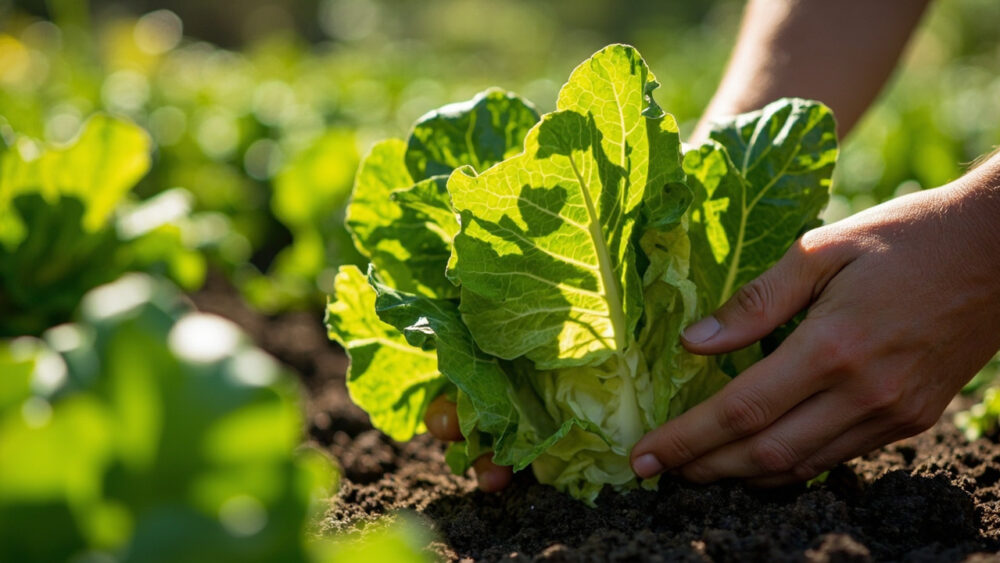
The short answer: harvest romaine lettuce when the head stands 8 to 10 inches tall, the leaves are packed tight enough to feel firm when you squeeze the sides gently, and the outer leaves are still a rich green with no signs of bitterness or bolting. Most romaine hits that point 65 to 75 days after seeding, or 45 to 55 days after transplanting. But when to harvest romaine lettuce really depends on temperature more than the calendar, and that’s where most home gardeners get tripped up.
Here’s the thing nobody tells you until you’ve already lost a crop to it: romaine can look perfectly ready and taste terrible, or look small and unfinished and be exactly right. The visual cues matter, but so does the weather forecast for the next week, and that’s a detail almost every guide skips.
Below, I’ll walk through the real ready signs, the harvest window and what blowing past it costs you, the cutting method that keeps the plant alive for a second round, and what to do in the ten minutes after the knife comes out. Save the Romaine Lettuce at a Glance card at the very bottom for the numbers you’ll want next time you’re standing in the garden with dirt on your hands and no signal to look anything up.
The Real Ready Signs
A romaine head is ready when it’s dense, upright, and elongated rather than loose and floppy. Grab the head just above soil level and give it a light squeeze.
The firmness test
Firm heads feel like a tightly rolled newspaper. Loose ones, still spongy in the middle, need another week or two.
The color and leaf check
Outer leaves should be deep green, the inner leaves paler and more tender. If the outer leaves have turned yellow or papery at the edges, the plant has been sitting too long already.
Size is the guess everyone makes and gets partly wrong, since a head can hit 10 inches and still be underdeveloped inside if it grew fast in cool, wet weather.
The Timing Window: Early, Late, and Right
Romaine has a real window, not a single day, and it runs longer in cool weather and shrinks fast in heat. In spring plantings, that window opens once soil and air temps have been consistently in the 50 to 70 F range for several weeks. In fall plantings, after the first light frosts, the window actually widens, since cold sweetens romaine instead of ruining it.
Harvest too early and you get a technically edible but underfilled head, thin ribs, and a lot of wasted space in the row. That’s a minor loss.
Harvest too late is the expensive mistake. Once daytime temps push past 80 F for several days running, romaine bolts, sends up a bitter-tasting seed stalk, and the leaves turn tough and taste like the plant is actively defending itself. This is not fixable with more water. Once bitterness sets in, that head is done, and no amount of hoping brings the sweetness back.
The honest follow-up question you’re probably about to ask is whether you can just wait a few more days to size it up.
Why “Just a Few More Days” Is the Mistake That Costs the Whole Row
If you assumed a slightly bigger head is always worth the wait, that guess is what turns a whole bed bitter in one hot weekend. Romaine doesn’t ripen gradually and hold like a winter squash. It hits its peak, holds there for maybe 5 to 10 days in mild weather, then degrades fast once heat arrives.
The safer bet: when a head passes the firmness test and a heat wave is forecast, cut it now even if it’s a size smaller than you hoped for. A slightly smaller sweet head beats a full-sized bitter one every time.
Once you know it’s time, the actual cutting matters more than people expect.
How to Harvest Without Wrecking the Plant
You have two real options, and which one you pick decides whether you get a second harvest.
- Whole-head harvest: use a sharp knife to cut the entire head at the soil line, angling the blade slightly so you’re not dragging dirt into the leaves.
- Cut-and-come-again harvest: take only the outer leaves, 3 to 4 inches long, leaving the center rosette and growing point untouched.
For the second method, never cut below the crown, the small tight cluster of new leaves at the center. Damage that and the plant stops producing, full stop.
Morning harvest, while leaves are cool and hydrated, gives you crisper texture and a longer fridge life than an afternoon cut.
Cutting right is only half the job, what you do in the next ten minutes matters just as much.
The First Ten Minutes After Cutting
Romaine loses moisture fast once it’s off the plant, so don’t let it sit in a sunny wheelbarrow while you finish weeding.
Rinse whole heads under cool water right away, shaking or spinning out excess moisture. Trim off any damaged outer leaves and the very base of the stem if it looks dry or browned.
Store unwashed leaves loosely wrapped in a damp paper towel inside a perforated bag in the crisper drawer. Handled this way, romaine holds well for 10 to 14 days, noticeably longer than most lettuce types.
If you’re only taking outer leaves and leaving the plant standing, storage is the easy part.
Keeping the Harvest Coming
Cut-and-come-again plants will push new leaves for 2 to 4 more pickings if the weather stays mild and you keep them watered, roughly 1 to 1.5 inches per week.
Feed lightly with a balanced fertilizer after the first cutting, since repeated leaf removal draws down the plant’s reserves fast.
Once temperatures settle into consistent heat, even cut-and-come-again plants will bolt and turn bitter no matter how carefully you’ve been harvesting.
At that point the smart move is pulling the plant and starting a fresh fall crop rather than nursing a bitter one along.
That’s the whole cycle, and here’s the card that puts every number in one place.
Romaine Lettuce at a Glance
- When to plant: direct seed or transplant 2 to 3 weeks before your last spring frost, or in late summer for a fall crop as heat breaks.
- Days to harvest: 65 to 75 days from seed, 45 to 55 days from transplant.
- Ready signs: firm, tightly rolled head 8 to 10 inches tall, deep green outer leaves, no seed stalk forming in the center.
- Best harvest window: once heads pass the firmness test and before daytime temps hold above 80 F for multiple days.
- Harvest method: cut whole head at the soil line, or take outer leaves only, always leaving the center crown intact.
- After harvest: rinse, dry, and refrigerate in a perforated bag with a damp paper towel for 10 to 14 days of storage.
- Repeat harvests: cut-and-come-again plants can yield 2 to 4 more pickings with steady water and light feeding before heat ends the run.
The one thing worth remembering: romaine doesn’t wait for you once heat arrives, so cut a size early rather than a day late.
Get that timing right and the rest of this, spacing, feeding, storage, is just details.