Most bok choy is ready 30 to 45 days after transplanting or 45 to 60 days from seedonce the base has bulked up to 4 to 6 inches across for full-size types, or as soon as leaves reach 3 to 4 inches for baby bok choy. You can pick individual outer leaves anytime once the plant has six or more, but for the classic tight, vase-shaped head you wait for the whole plant to fill out. Get the timing wrong in either direction and you either lose half the harvest to bolting or end up with something too small to bother cooking.
Here is the part almost nobody tells you: the sign most gardeners watch for, the plant “looking full,” is not the reliable one. There is a better tell, and it has nothing to do with size.
There is also one mistake that wrecks more bok choy crops than pests, disease, and bad soil combined, and it happens weeks before harvest, not at harvest. Stick around for the exact cause and the fix, plus the honest answer to what happens if you wait even a few days too long in warm weather. The full Bok Choy at a Glance card is at the bottom, worth saving to your phone before you head out to the garden.
The Real Ready Signs
Size is a guideline, not the answer. A bok choy that looks “full” in cool spring weather can still be days from peak, while the same size plant in early summer heat might already be one warm afternoon from bolting. Size tells you it is in the window. It does not tell you where in the window you are.
The stalk base
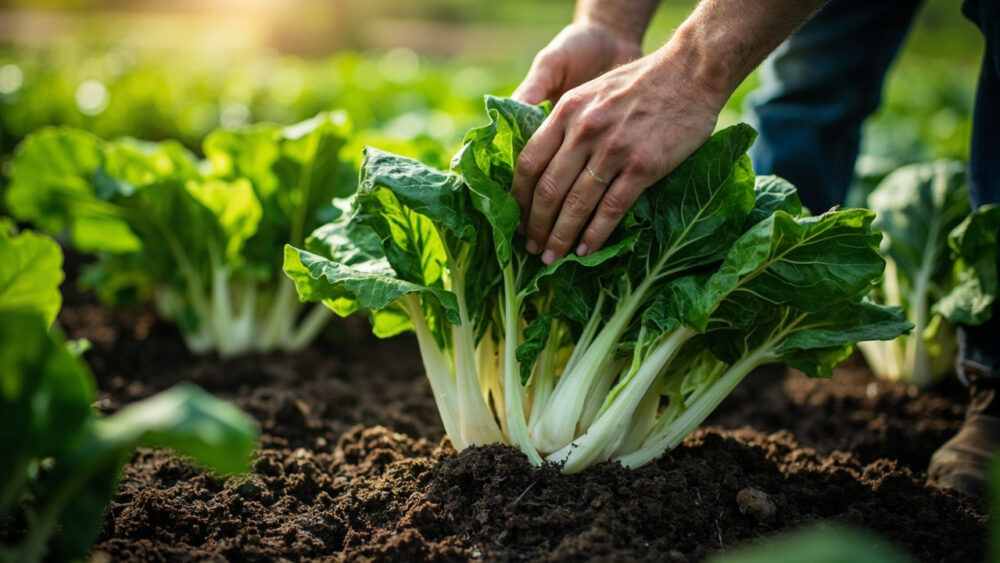
Look at where the leaf stalks meet the base of the plant. On a mature plant, that base has widened and the stalks pack in tight against each other, almost like a bulb of celery. Loose, spread-out stalks with gaps between them mean it needs more time.
The center
Check the innermost leaves. They should be curling inward and closing up, not standing open and floppy. A closed, cupped center is the single best sign the head has matured, more reliable than measuring width with a tape measure.
That closed center is your green light, but there is a yellow flag that overrides it completely.
The Timing Window, and What Blows It
Bok choy bolts, and bolting is the mistake that ends most people’s harvest early. Once daytime temperatures push consistently above 75°F, especially paired with long daylight hours, the plant panics and shoots up a flower stalk from the center instead of staying leafy. That is the mistake nobody warns you about: it is not a harvesting error, it is a planting-date error that shows up weeks later as a ruined crop.
Once you see a thick stalk rising from the center or the plant suddenly gaining height instead of width, harvest immediately. The leaves get bitter and tough fast once bolting starts, and there is no reversing it.
Harvesting early costs you yield, plain and simple. Baby bok choy at 3 inches is genuinely fine to eat, just smaller. Harvesting a full-size type too early just means fewer stalks per plant.
Harvesting late is the riskier direction. Beyond peak, texture turns woody, flavor turns bitter, and in warm weather the plant bolts within days of looking “perfect.” In cool fall weather you have more slack, sometimes a week or two of cushion, because bolting is temperature-driven, not purely age-driven.
That cushion is exactly why most experienced growers push their best bok choy crop into fall instead of spring.
How to Cut It Without Wrecking the Plant
For a full headuse a sharp knife and cut straight across the base, right at soil level, in one clean motion. Do not pull. Pulling drags soil into the leaves and can uproot neighboring plants if you spaced them close.
For a harvest that keeps producing, take only the outer leaves, 2 to 3 at a time, leaving the center intact. The plant keeps generating new leaves from the middle for several more weeks. This works well with loose-leaf types and slows down, but does not stop, the clock on bolting.
- Check the center for that closed, cupped look before you commit to a full cut.
- Cut at soil level with a clean knife rather than snapping or pulling.
- Leave the roots in the ground; they break down and feed the soil rather than fighting them out.
- Harvest in the cool part of the daymorning if you can, since leaves wilt fast once cut in heat.
Once it is cut, the clock changes from “when” to “how fast,” and that clock runs quicker than most vegetables.
Right After the Cut
Bok choy wilts faster than lettuce. Get it out of direct sun immediately and into shade or indoors within minutes if you can manage it. A quick cold water rinse right after cutting firms the leaves back up if they went limp during a hot-day harvest.
Do not trim it down hard or wash it thoroughly until you are ready to use or store it. Excess moisture sitting on cut stalks in storage invites rot within a couple of days.
Shake off loose soil, pull any yellowed or damaged outer leaves, and you are ready for storage or the kitchen.
Storage and Keeping the Harvest Coming
Fresh-cut bok choy keeps 5 to 7 days in a loose plastic bag in the crisper drawer, longer if you did not wash it before bagging. It does not cure or store long-term like an onion or a winter squash. This is a fresh vegetable, not a keeper crop, so plan to use it within the week.
To keep a steady supply instead of one big harvest, succession plant every 2 to 3 weeks through your cool season. Spring plantings go in 2 to 3 weeks before your last frost, since bok choy tolerates a light frost fine; fall plantings go in 6 to 8 weeks before your first frost, which is the window with the least bolting risk.
Space plants 6 to 10 inches apart for full-size varieties, 4 to 6 inches for baby types, in soil that has been loosened to at least 6 inches deep with compost worked in.
Get the succession timing right and you are pulling fresh bok choy every couple of weeks instead of drowning in one harvest and running dry the rest of the season.
Bok Choy at a Glance
- When to plant: 2 to 3 weeks before your last spring frost, or 6 to 8 weeks before your first fall frost for the easiest, most bolt-resistant crop.
- Days to harvest: 30 to 45 days from transplant, 45 to 60 days from seed, 25 to 30 days if picking baby bok choy leaves.
- Spacing and depth: 6 to 10 inches apart for full-size heads, 4 to 6 inches for baby types, seeds sown about 1/4 to 1/2 inch deep.
- Ready signs: base 4 to 6 inches wide, stalks packed tightly together, center leaves cupped and closed rather than loose and flat.
- Biggest risk: bolting once temperatures push past about 75°F, especially with long daylight. Harvest immediately if a flower stalk appears.
- How to cut: sharp knife straight across at soil level for a full head, or take outer leaves a few at a time to keep the plant producing.
- Storage: unwashed in a loose bag in the crisper, good for 5 to 7 days. This is a fresh vegetable, not a long-term keeper.
If you remember nothing else, remember the center leaves, not the width, and remember that heat is the enemy, not time.
Catch it before it bolts and bok choy is one of the easiest, fastest vegetables you will grow all year.