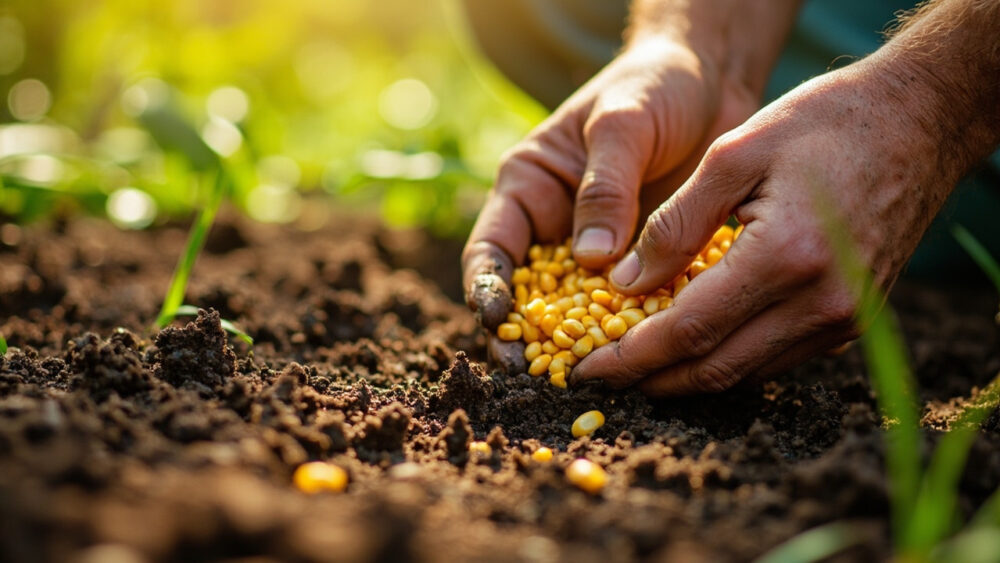
Here’s the direct answer: sow sweet corn seed directly in the ground about 1 to 1.5 inches deep, once soil hits 60°F, in blocks of at least four rows rather than one long row, spaced 8 to 12 inches apart within rows that are 30 to 36 inches apart. Skip the indoor head start almost every other vegetable wants. Corn does not transplant well, and how to grow sweet corn from seed really comes down to timing the soil, planting in the right shape, and feeding it hard once it’s up.
That shape detail is the part almost nobody gets right the first time. Plant corn in one skinny row against a fence line, the way you’d plant beans, and you’ll get skimpy ears with bald patches and missing kernels no matter how well you watered. There’s a reason for it, and it’s not soil or water.
There’s also a germination sign that spooks new growers into replanting when the seed was actually fine, a hardening-off step that barely applies here, and a harvest window that lasts about as long as a good happy hour. Stick around for all of it, and save the Sweet Corn at a Glance card at the bottom before you head out to the garden.
When to Plant: Soil Temperature Beats the Calendar
Corn seed rots in cold, wet soil instead of sprouting, so soil temperature matters more than any date on a seed packet. Wait until the soil is consistently at least 60°F at planting depth, which usually lands two to three weeks after your last spring frost. A cheap soil thermometer, checked at the same time each morning for a few days, tells you more than a calendar ever will.
If your season is short, you can start seed indoors in biodegradable pots three to four weeks before your last frost, but treat it as a rescue tactic, not the plan. Corn roots resent disturbance, and transplants often stall for a week while they recover.
Most growers get better, faster results direct sowing once the soil warms, even if that means planting a week or two after neighbors who started indoors.
Once the soil’s warm enough, the actual sowing takes about ten minutes and a little planning on shape.
Sowing Sweet Corn Step by Step
Pick the block, not the row
Corn is wind pollinated, and pollen has to drift sideways from tassels to the silks on neighboring plants. A single long row loses most of its pollen to the open air on either side. Plant in a block of at least four rows by four rows, even if that means a shorter row length than you’d planned.
Depth, spacing, and soil
Sow seed 1 to 1.5 inches deep in cooler, slightly damp spring soil, and up to 2 inches deep if the topsoil is already drying out. Space seeds 8 to 12 inches apart within the row, rows 30 to 36 inches apart. Corn wants full sun, at least 6 to 8 hours, and rich, well-drained soil with a generous helping of compost worked in before planting.
Water it in
Water right after sowing and keep the top inch of soil consistently moist, not soggy, until seedlings emerge. Skip fertilizer at planting; corn’s big feeding comes later once it’s tall and growing hard.
Get the block shape and depth right, and germination is mostly a waiting game from here.
Germination: What’s Normal and What Isn’t
Expect seedlings in 7 to 10 days once soil is reliably above 60°F, stretching to two weeks in cooler soil. The seedling pushes up looking like a single rolled blade, pale and almost grass-like, which throws off first-time growers who expect something more corn-shaped right away.
If you’re staring at bare dirt at day 10 and assuming the seed died, that’s the most common false alarm in the whole process. Cool soil alone can stretch germination out, and it’s not a failure yet.
Genuine trouble looks like this: soil that’s stayed soaked and cold for over two weeks with nothing showing, seed that’s visibly rotted or moldy when you dig one up to check, or wide gaps in an otherwise even bed that suggest birds or mice pulled the seed. Crows and other birds are a real threat to sprouting corn in some areas, and mesh row cover over the bed until seedlings are up is the simplest fix.
Uneven stands get patched by reseeding gaps immediately, since corn planted even a week apart matures unevenly and complicates harvest later.
Once seedlings are a few inches tall and standing straight, the next decision is what to do with any extras you started indoors.
Hardening Off and Transplanting, If You Started Indoors
If you started seed indoors, harden it off over 5 to 7 days: a few hours of dappled outdoor light the first day, working up to a full day outside including some direct sun by day five or six, before leaving pots out overnight. Skipping this step shocks the seedlings and stunts them for a couple of weeks, corn included.
Transplant on an overcast day or in early evening, once nighttime temperatures are reliably above 50°F. Handle the root ball as little as possible; corn roots are fine and shallow, and any tearing sets the plant back hard. Plant at the same depth it was growing in the pot, water immediately, and expect a few days of sulking before new growth resumes.
Direct-sown seedlings skip all of this and simply need thinning once they’re 3 to 4 inches tall, to the final 8 to 12 inch spacing.
Whichever way your corn got its start, the real growth phase, and the real feeding, begins now.
Season Care: Feeding, Watering, and the Wind Problem
Corn is a heavy nitrogen feeder. Side-dress with a nitrogen-rich fertilizer or blood meal when plants are about 12 inches tall, and again when tassels first appear at the top of the stalk. Skimping here is the single biggest reason for small, half-filled ears at harvest.
Water matters most during two windows: when stalks are rapidly growing and again once tassels and silks appear, which is when the plant is actually forming ears. Corn needs roughly 1 to 1.5 inches of water a week during those stretches, more in hot, dry weather. Drought stress right at silking is what causes missing kernels and stunted cobs, even if you correct it a week later.
Mound soil slightly around the base as stalks grow, since shallow corn roots make plants prone to toppling in wind and heavy rain. Watch for tassels loaded with pollen and silks that are fresh and slightly sticky, both signs pollination is actively underway.
Feed hard, water on schedule during those two windows, and your corn does most of the rest of the work itself.
Knowing When It’s Ready to Pick
Sweet corn hits harvest 60 to 100 days from sowing depending on variety, but the calendar is only a rough guide. The real test is the silks: they turn brown and dry while the husk stays green, usually about 20 days after silks first appeared.
Peel back a bit of husk and pop a kernel with your thumbnail. Milky white juice means it’s ready. Clear, watery liquid means it needs more time, and a dry, doughy kernel means you’ve waited too long, which happens fast in hot weather.
The harvest window on any one ear is short, often just 3 to 5 days of true peak sweetness, so check the block every day or two once silks start browning rather than trusting a single date circled on the calendar.
Everything above is the process start to finish, and the card below is the version worth saving to your phone before you’re standing in the garden trying to remember spacing.
Sweet Corn at a Glance
- When to plant: direct sow once soil is consistently 60°F or warmer, roughly two to three weeks after your last frost.
- Depth and spacing: 1 to 1.5 inches deep, seeds 8 to 12 inches apart, rows 30 to 36 inches apart, planted in blocks of at least four rows for pollination.
- Germination: 7 to 10 days in warm soil, up to two weeks in cool soil, seedlings emerge as a single rolled grass-like blade.
- Sun and soil: full sun, 6 to 8 hours minimum, rich well-drained soil with compost worked in ahead of planting.
- Feeding: nitrogen side-dress at 12 inches tall and again at tasseling.
- Watering: 1 to 1.5 inches per week, critical during rapid stalk growth and again at silking.
- Harvest sign: brown, dry silks with green husks, kernels release milky juice when pierced, ready about 20 days after silks first appear.
Get the block shape and the soil temperature right, and most of what follows takes care of itself.
Everything else is just feeding it on time and checking kernels with your thumbnail when the silks turn brown.