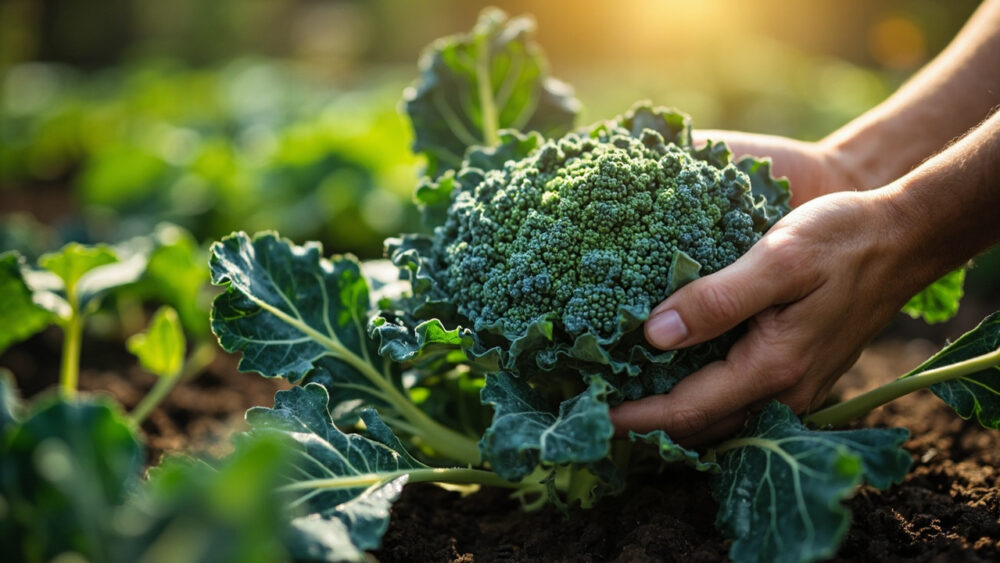
Broccoli moves through six distinct stages between seed and harvest: germination, seedling, vegetative growth, head formation, flowering (bolting), and harvest, and the whole run takes 55 to 100 days depending on the variety and how warm your soil is. Most home gardeners lose the crop at one specific point in that timeline, and it is not the one people worry about. Knowing the broccoli growing stages ahead of time is what lets you catch a stall before it becomes a wasted season.
Here is the honest part nobody tells you up front: the biggest mistake is not underwatering or bad soil. It is timing the head formation stage against summer heat.
Get that wrong and you will grow a beautiful plant that never gives you a real head. There is also a sign at the seedling stage that panics new gardeners for no reason, and a specific moment when the plant looks like it is struggling but is actually doing exactly what it should. Stick around for the Broccoli at a Glance card at the bottom, it is built to save to your phone before you head back out to the garden.
Germination: Days 4 to 10
Broccoli seed sprouts in soil that is 45 to 85 F, but germination is fastest and most even around 70 to 75 F. Sow seed a quarter to a half inch deep. Below 45 F, seeds mostly sit and rot instead of sprouting, so if you are direct sowing, wait until soil has warmed rather than trusting the calendar.
Keep the top inch of soil consistently moist during this stage, it should never fully dry out or stay soggy. You will see a small hooked stem push up first, then two seed leaves (cotyledons) unfold.
That first green loop breaking the surface is the only real confirmation you have that conditions were right.
Seedling Stage: Weeks 2 to 5
Once true leaves appear, the plant is in its seedling stage, whether started indoors under lights or thinned in the garden bed. True leaves are the ones that actually look like miniature broccoli foliage, rounded and slightly fuzzy, not the smooth paired cotyledons from germination.
This is the stage that panics people for no real reason. Seedlings often look thin, slightly purple-tinged on the undersides, or a little pale, especially if nights are cool.
That purple tint is usually just cold stress, not a nutrient problem, and it clears up as temperatures rise. What actually matters here is light. Leggy, pale, floppy seedlings almost always mean insufficient light, not lack of fertilizer.
Give seedlings 6 or more hours of direct sun (or strong grow light exposure) and they thicken up fast.
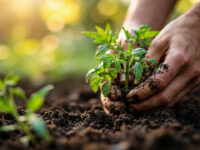
Transplant outdoors 2 to 4 weeks before your last expected frost, once seedlings have 4 to 6 true leaves. Broccoli tolerates light frost fine, it is heat later on that you need to plan around, not cold now.
Get transplant timing right and the next stage takes care of most of itself.
Vegetative Growth: Weeks 4 to 8 After Transplant
This is the stage where broccoli just builds itself: leaves, stem thickness, root mass. Space plants 18 to 24 inches apart in rows 24 to 36 inches apart, tighter spacing gives you smaller heads, wider spacing gives you bigger ones with more room for side shoots later.
Feed at transplant and again 3 to 4 weeks later with a balanced fertilizer or one slightly higher in nitrogen, broccoli is a heavy feeder and thin, pale plants at this stage usually mean it is hungry, not thirsty. Keep soil evenly moist, broccoli wants about 1 to 1.5 inches of water a week and does not forgive long dry stretches.
A healthy plant in this stage adds new leaves every few days and the whole plant visibly widens week over week.
Once the center of the plant starts looking tight and clustered instead of open, you are approaching the stage everything hinges on.
Head Formation: The Stage Where Most Broccoli Fails
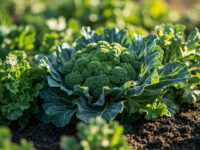
This is it, the stage that determines whether your season was a win. Head formation (botanically, the plant is producing a tight cluster of unopened flower buds) typically starts 50 to 70 days after transplant, depending on variety, and it needs temperatures in the 60 to 70 F range to form well.
If you assumed the risk here was cold, that guess is backwards. Cold slows head formation but rarely ruins it. Heat above roughly 80 F is what causes real damage: heads that stay small, form loosely with visible gaps between beads, or skip forming altogether and go straight to flowering.
This is why timing your planting date so head formation lands before summer heat (or after it, for a fall crop) matters more than almost anything else you do.
Once you see a small tight green button appear in the crown of the plant, harvest is usually 10 to 20 days away.
Flowering (Bolting): The Point of No Return
If a head starts to loosen, the beads separate, and small yellow flowers begin opening, the plant has bolted. This happens when heat, drought stress, or a late harvest pushes the plant to complete its life cycle and go to seed.
There is no fix once flowers open, the head will taste bitter and turn woody fast. The honest answer is you harvest immediately if there is anything worth saving, then let the plant finish or pull it.
Bolting is a one-way door, which is exactly why the harvest window below is worth watching closely.
Harvest: The Window Is Shorter Than You Think
Harvest the central head when it is fully formed, tight, and deep green, but before the beads start to loosen or any yellow shows. Cut the stalk at an angle, 5 to 6 inches below the head, using a sharp knife.
Most varieties are ready 50 to 70 days after transplant, but heat can compress that window to just a few days once the head is close to mature. Check plants every day or two once heads reach the size of a tennis ball.
Do not pull the whole plant after cutting the main head. Most varieties keep producing smaller side shoots for another 3 to 6 weeks if you leave the plant in place, watered and fed.
Those side shoots are often the most underrated part of growing broccoli at all.
Telling Healthy Progress From a Stall
A healthy plant changes visibly every few days: new leaves, thicker stem, deeper green color. A stalled plant looks frozen in time, same size for a week or two with no new growth at the center.
Stalling usually traces back to one of three things: nitrogen deficiency (pale, yellowing lower leaves), heat stress (wilting midday even with moist soil), or root crowding in containers that are too small. Check soil moisture an inch down with your finger before assuming it is water. Dry an inch down means water now, moist and still wilting midday points to heat stress instead.
A plant that stalls for more than 2 weeks during head formation rarely catches up to full size, though it will usually still produce a smaller, edible head.
Save the card below and you will know exactly where your plant stands the next time you walk out to check it.
Broccoli at a Glance
- When to plant: transplant seedlings outdoors 2 to 4 weeks before your last frost, or plant a fall crop so head formation lands 6 to 8 weeks before your first fall frost.
- Soil temperature: germinates in 45 to 85 F soil, fastest and most even around 70 to 75 F.
- Spacing and depth: sow seed a quarter to a half inch deep, space plants 18 to 24 inches apart in rows 24 to 36 inches apart.
- Water needs: about 1 to 1.5 inches per week, consistent moisture matters most during head formation.
- Best head-forming temperature: 60 to 70 F, heat above about 80 F causes loose or stunted heads.
- Days to harvest: 50 to 70 days after transplant for the main head, then 3 to 6 more weeks of smaller side shoots.
- Harvest sign: head is tight, deep green, and fully sized, cut before any beads loosen or flowers show yellow.
If you remember one thing, remember this: broccoli succeeds or fails based on whether head formation lands in cool weather, not on how much you fertilize or baby the plant.
Time that one stage right and the rest of the crop mostly takes care of itself.