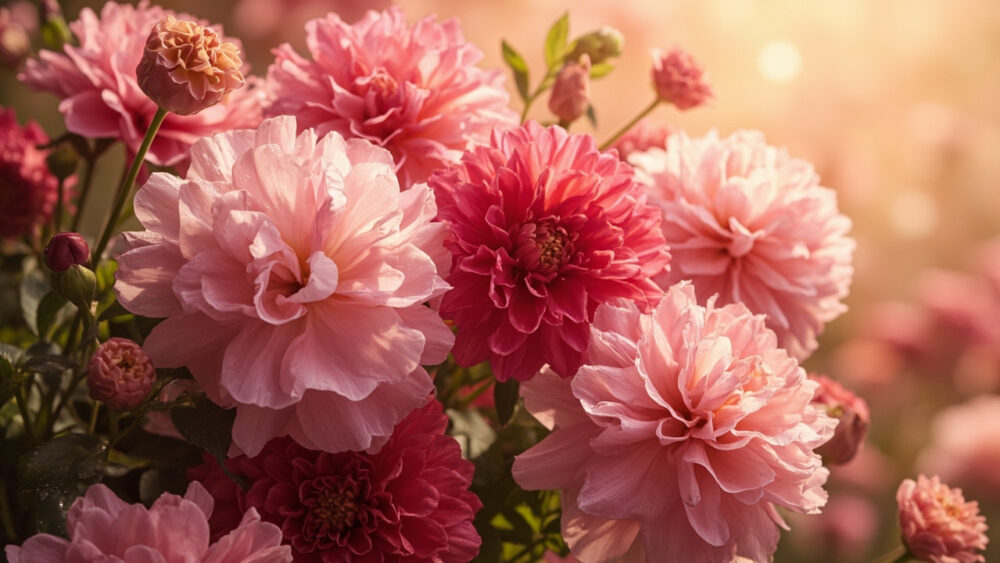
The fastest way to sort pink flowers is by growth habit, not color, because “pink” covers everything from a groundcover phlox to a fifteen-foot rose cane. Once you know whether you need a shrub, a bulb, a climber, or a shade-loving perennial, the right types of pink flowers narrow down fast. This list groups all fifteen that way so you are not scrolling through random pretty faces with no idea which one fits your yard.
A few of these get picked for the wrong reason every spring. One popular shrub gets bought for its flowers and then resented for what it does the other eleven months of the year. Another, quieter option gets ignored at the nursery because it looks like nothing in a small pot, then becomes the plant everyone asks about by August.
Number 13 on this list is the one most people get completely wrong on spacing, and it costs them the whole display. Stick around for the last few entries and the simple method for choosing, both are waiting at the bottom.
Shrubs and Roses: The Backbone Plants
These are the ones that give a bed structure and come back bigger every year.
1. Knock Out Roses
Nearly foolproof repeat bloom is the whole draw here. These shrub roses flower from late spring until frost, shrug off the black spot that ruins fussier roses, and handle full sun and average soil across zones 5 through 10 without much fuss.
2. Floribunda Roses
Clusters instead of single blooms set floribundas apart from classic hybrid teas. Each cane throws multiple flowers at once, so you get a fuller look faster, and they tolerate a bit more shade and neglect than their high-maintenance cousins.
3. Bigleaf Hydrangea
Soil pH decides the color more than the plant tag does. Acidic soil pulls these toward blue and neutral to alkaline soil pushes them pink, and they want part shade, consistent moisture, and protection from afternoon sun in hot climates or the big leaves will wilt by 2pm every day.
4. Crepe Myrtle
Bought for the flowers, kept for the bark once people figure it out. This is the shrub or small tree that gets planted purely for its ruffled summer blooms and then gets butchered every winter by owners who do not realize the peeling cinnamon bark and graceful branching are half the reason to grow it, zones 7 through 9 mostly, full sun.
Shrubs give you the bones, but the ground level needs its own plan.
Perennials and Groundcovers for Beds and Borders
These fill in around the shrubs and come back without replanting.
5. Peony
The one everyone plants too deep and then wonders why it never flowers. Peonies need their eyes within an inch or two of the soil surface, full sun, and a cold winter to set buds, and once established in zones 3 through 8 they will outlive the gardener who planted them.
6. Garden Phlox
Powdery mildew is the tradeoff for those tall, fragrant summer clusters. Give garden phlox good air circulation and morning sun and it rewards you with months of bloom on 2 to 4 foot stems, zones 4 through 8.
7. Creeping Phlox
The quiet one people skip in the nursery because a one-gallon pot looks like a sad little tuft. Give it two seasons on a sunny slope or rock wall and it turns into a solid sheet of pink in early spring, low-growing, drought tolerant once established, zones 3 through 9.
8. Astilbe
Feathery plumes for the shade most pink flowers cannot handle. Astilbe wants part to full shade and soil that never fully dries out, making it the answer for the damp shady corner where roses and peonies would sulk and die.
9. Bee Balm
Pollinators find it before you do most summers. This native perennial spreads by rhizome, tolerates average to moist soil, and pulls in hummingbirds and bumblebees reliably, though it can get floppy and mildewy in still, humid air, zones 3 through 9.
Perennials hold the middle ground, but bulbs are what most people picture first when they hear “pink flower.”
Bulbs and Tubers: Seasonal Bursts
Plant these once and get a return performance for years if the drainage is right.
10. Tulips
Bought for one big spring show, and that is exactly what they are built for. Plant bulbs in fall once soil has cooled below 60°F, in full sun with sharp drainage, and expect the best flowers the first year or two before many varieties fade and need replacing.
11. Oriental Lilies
The fragrance carries across a whole yard, which is either the selling point or the reason to plant them away from a porch. These grow 3 to 4 feet on sturdy stems, want full sun and well-drained soil, and come back reliably in zones 4 through 9.
12. Dahlias
Dug up every fall in cold climates is the part beginners do not expect. Dahlia tubers are not reliably winter hardy below zone 8, so gardeners farther north lift and store them, but the tradeoff is dinner-plate-sized blooms all summer in nearly any color including some genuinely striking pinks.
Bulbs deliver the drama, but the next group is where people consistently make the same spacing mistake.
Vines, Annuals, and the One Everyone Crowds
These finish the list, and one of them is the entry to actually pay attention to.
13. Cosmos
Crowding is the mistake that ruins this one. Cosmos looks like a delicate little seedling at planting time, so people space it 6 inches apart, and by midsummer they have a tangled, floppy mess that flops over and stops blooming. Give it the full 12 to 18 inches the seed packet actually recommends, full sun, poor to average soil, and it will reward the extra room with tall airy stems covered in flowers from early summer to frost.
14. Climbing Roses
Needs a structure from day one, not after it is already six feet tall. Climbing roses do not climb on their own, they need to be tied to a trellis, fence, or arbor as they grow, and once established they cover that structure in repeat flushes of bloom through the season.
15. Clematis
“Feet in shade, face in sun” is the old rule and it still holds. This vining perennial wants its roots cool and shaded and its flowers reaching for full sun, and pruning group matters more than most people realize, since cutting a spring-blooming variety back hard in fall means no flowers next year.
How to Choose the Right One
Match the plant to the site before you fall for a photo, and most of these will thrive with almost no drama.
- Measure your space first: know if you need a groundcover, a border perennial, a shrub, or something that needs a trellis before you shop.
- Check your zone and your summer humidity: mildew-prone types like garden phlox and bee balm need airflow, and dahlias need winter protection below zone 8.
- Decide the purpose: cut flowers point toward dahlias, peonies, and lilies, while season-long color points toward roses, cosmos, or crepe myrtle.
- Be honest about your care appetite: tulips and dahlias ask for yearly digging or replanting in cold zones, while creeping phlox and Knock Out roses mostly want to be left alone.
- Match light and moisture exactly: astilbe and clematis roots want shade and damp soil, while cosmos and crepe myrtle want full sun and will sulk in shade.
Pick based on your site, not the prettiest tag on the nursery bench, and the pink flowers you choose will actually stick around.
That is the real shortcut, everything else is just personal taste.