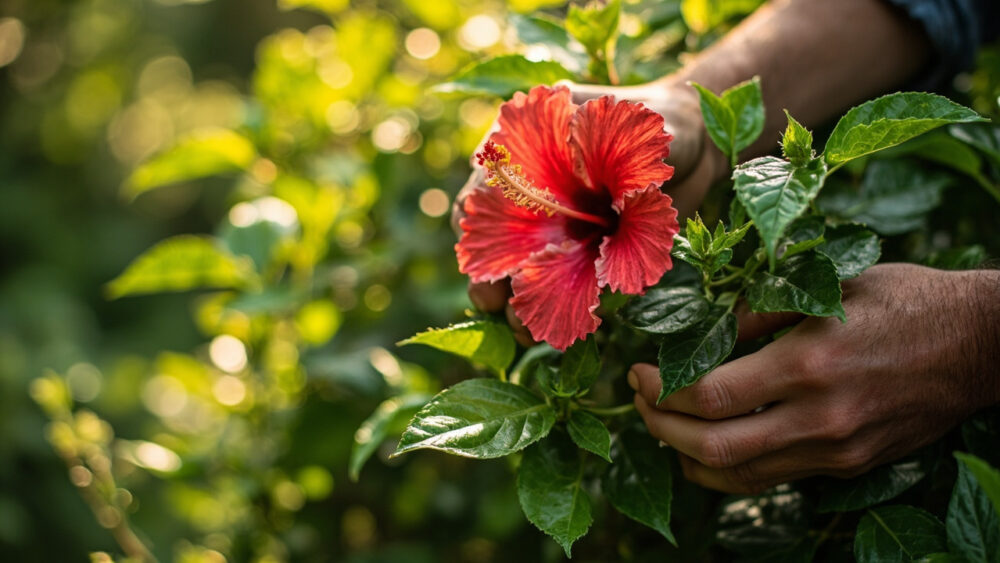
Learning how to care for hibiscus comes down to four things the plant will not compromise on: at least four to six hours of direct sun, soil that drains fast but never fully dries out, warmth above 50 to 55 F, and regular feeding while it is blooming. Get those four right and hibiscus flowers for months. Get any one of them wrong and you get a plant that drops buds before they ever open, which is the single most common hibiscus complaint there is.
Most people assume dropped buds mean underwatering. That guess is wrong more often than it is right, and chasing it with more water is how a lot of hibiscus root systems drown.
There is also a repotting mistake almost everyone makes in the first year, a very specific look the leaves get right before a plant tips from stressed into thriving, and the honest truth about whether that tropical hibiscus is coming back next spring. All of it is coming, and the save-able Hibiscus at a Glance card is waiting at the bottom once you have the reasoning behind it.
Light, Placement, and Temperature
Hibiscus wants direct sun for at least half the day, four to six hours minimum, more if you live somewhere with mild summers. Morning sun with light afternoon shade works fine in hot climates like the Gulf Coast or inland Southern California, where harsh 2 p.m. sun can scorch leaves and stress the plant into dropping buds.
Indoors or in containers, put it in your brightest window or on a south or west-facing patio. Tropical hibiscus (Hibiscus rosa-sinensis) has zero frost tolerance and starts sulking below 50 F, so it needs to come inside well before your first frost if it lives outdoors for summer.
Hardy hibiscus (Hibiscus moscheutos and relatives) is a different animal entirely, dying back to the ground and returning from the roots in USDA zones 4 through 9. Know which type you have before you panic over dropped leaves in October.
Next comes the part almost everyone gets backward: how much water it actually wants.
Watering: How Much, How Often, and How to Tell
Here is the guess that kills more hibiscus than drought ever does. Yellow, dropping leaves usually get read as thirst, so the watering can comes out, and now the roots are sitting in soggy soil on top of already-stressed roots.
Hibiscus wants consistently moist soil, not wet soil. Check the top inch with a finger. If it is dry, water thoroughly until it runs from the drainage holes. If it is still damp, wait.
In active summer growth that often means every one to two days in a container, especially in heat above 85 F, because hibiscus in bloom is a genuinely thirsty plant. In cooler weather or in the ground, stretch that to every three to five days.
The real tell for both under and overwatering is the same symptom, yellow leaves, so you have to check soil moisture to know which problem you actually have. Wet, mucky soil with yellow leaves means back off and let it dry. Dry, crumbly soil with yellow leaves means it is thirsty.
Get the soil itself right and watering gets a lot more forgiving.
Soil, Potting Mix, and Feeding
Hibiscus needs soil that drains fast, holds some moisture, and skews slightly acidic, roughly a 6.0 to 6.5 pH. A quality potting mix with perlite or bark worked in handles containers well. In the ground, amend heavy clay with compost so water does not sit around the roots.
Feeding is what actually drives bloom count. Hibiscus is a heavy feeder during its growing season. Use a fertilizer formulated for hibiscus or one higher in potassium and lower in phosphorus, and feed every two to four weeks from spring through the end of summer.
Ease off or stop entirely once temperatures drop and growth slows in fall. A plant fed hard through winter dormancy just wastes fertilizer and can push weak, leggy growth at the worst time.
Feeding and watering keep it alive, but a few routine chores are what keep it shaped, healthy, and reblooming.
Pruning, Repotting, and Cleanup on a Real Schedule
Prune in late winter or early spring, before new growth kicks in, cutting stems back by about a third. This is what triggers the bushy, floriferous shape instead of a leggy, bare-legged plant. Pinch spent blooms and yellowing leaves off through the season to keep it tidy and to redirect energy into new buds.
Repotting is where most first-year owners overcorrect. The instinct is to jump a small nursery pot straight into something huge, thinking bigger container means faster growth. Hibiscus actually blooms better slightly root-bound, so size up only one pot diameter at a time, roughly every one to two years, whenever roots start circling the drainage holes.
Wipe dust off leaves occasionally so the plant can photosynthesize efficiently, and clean up fallen leaves and spent flowers at the base to keep fungal problems from starting in that damp litter.
Even on a perfect schedule, hibiscus still attracts a short, predictable list of problems worth knowing before they show up.
The Problems Most Likely to Strike
Bud drop is the number one complaint, and it is rarely one single cause. Inconsistent watering, a sudden move to a new location, a cold draft, or underfeeding can all trigger it, so work through soil moisture first, then light, then feeding schedule.
Yellow leaves mean check the soil, as covered above, but they can also signal a nutrient deficiency if soil moisture looks fine and yellowing is spreading steadily.
Aphids and whiteflies are the most common pests, showing up as sticky residue or clusters on new growth and the undersides of leaves. Insecticidal soap applied according to the product label handles most infestations without heavy chemicals.
Watch for spider mites in hot, dry indoor air, visible as fine webbing and stippled, dull leaves. Hibiscus is considered mildly toxic to pets and can cause stomach upset if chewed on; if a cat or dog ingests a significant amount, call your veterinarian rather than waiting to see what happens.
Once you have ruled those out, the plant will start showing you exactly what thriving actually looks like.
How to Tell It Is Genuinely Thriving
A thriving hibiscus pushes new glossy leaf growth continuously through the warm season and sets buds faster than it drops them. Individual flowers only last a day or two even at their best, so judge the plant by bud production, not by how long any single bloom hangs on.
Deep green, firm leaves held out flat rather than curling or yellowing are the visual cue that light, water, and feeding are all dialed in together. A stressed plant looks thin and reactive; a happy one looks almost aggressive about growing.
If you have been chasing yellow leaves with water and fertilizer and nothing is improving, it is worth stepping back and rechecking placement and drainage rather than adding more of everything.
All of that reasoning boils down to the numbers below, worth saving before you close this tab.
Hibiscus at a Glance
- Light needed: at least four to six hours of direct sun daily, morning sun with afternoon shade in very hot climates.
- Temperature range: above 50 to 55 F for tropical types, bring indoors before first frost, hardy hibiscus survives freezing and regrows from the roots in zones 4 to 9.
- Watering: check the top inch of soil, water thoroughly when dry, roughly every one to two days in summer containers and every three to five days in cooler weather or in-ground.
- Soil: fast-draining, moisture-retentive mix, slightly acidic pH around 6.0 to 6.5.
- Feeding: potassium-rich, phosphorus-light fertilizer every two to four weeks through spring and summer, taper off in fall.
- Pruning and repotting: cut stems back by about a third in late winter or early spring, size up pots one diameter at a time every one to two years.
- Common trouble: bud drop from inconsistent watering or sudden moves, yellow leaves from over or underwatering, aphids and spider mites on new growth.
If you remember one thing, remember this: hibiscus forgives almost everything except soggy roots and too little sun.
Match those two, feed it on schedule, and the blooms take care of themselves.