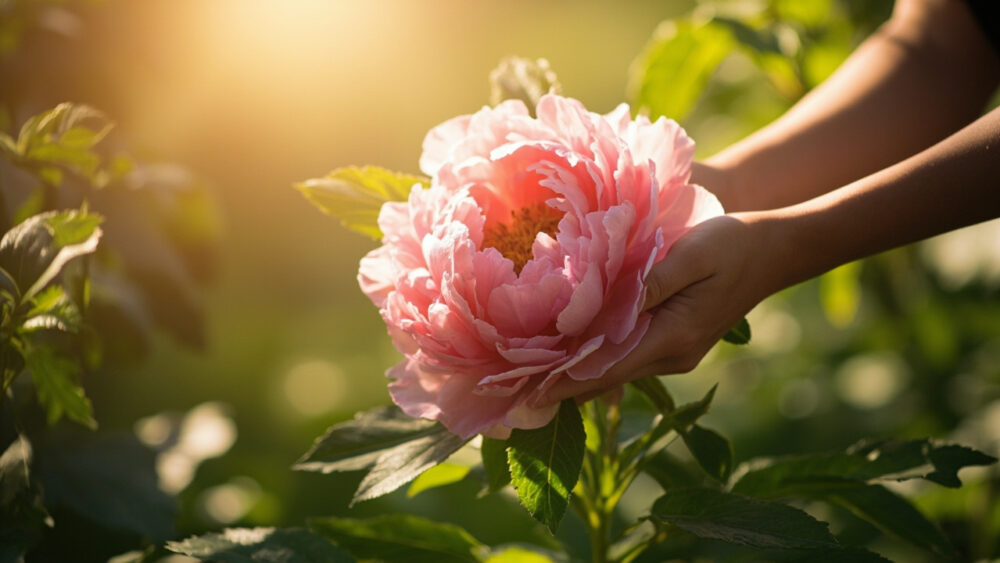
Caring for peonies comes down to five things: full sun, well-drained soil, an eye tip planted no deeper than 2 inches below the surface, patience through the first two springs, and leaving the foliage alone until fall. Get those right and a peony will outlive you, blooming reliably for 50 years or more in the same spot. Get the planting depth wrong and you can have a perfectly healthy plant that simply refuses to flower, ever, no matter what you feed it.
That depth mistake is the single most common reason peonies sulk, and almost nobody who makes it realizes that’s the cause. There’s also a bloom-drop problem every peony grower panics about at least once, and the real explanation has nothing to do with disease. And if you’ve ever wondered whether those ants crawling all over the buds are hurting the plant, the honest answer surprises most people.
All of that gets sorted out below, section by section. Stick around to the end and you’ll get a save-able Peonies at a Glance card with the numbers you’ll actually want on hand this weekend.
Light, Placement, and Temperature
Peonies want at least 6 hours of direct sunand full sun all day is better if your summers aren’t brutally hot. Morning sun with light afternoon shade works in zones 8 and up where afternoon heat can scorch petals fast.
These are cold-hardy plants, comfortable in zones 3 through 8, and they actually need a real winter chill to bloom well the following spring. That’s why peonies struggle or refuse to flower in the warmest parts of zone 9 and in zone 10, there simply isn’t enough cold.
Give them room too. Air circulation matters more than most people expect, since crowded, damp foliage is exactly what invites the fungal problems covered later on.
Placement decides more of your peony’s future than anything you’ll do after planting it.
Watering: How Much, How Often, and How to Tell
Once established, peonies want about 1 inch of water a week, less if you’re getting regular rain. Check by pushing a finger 2 inches into the soil near the crown: if it’s dry at that depth, water deeply; if it’s still moist, wait.
New divisions and first-year plants need more attention, roughly weekly watering through their first spring and summer since their root systems are still small and shallow.
The mistake that trips people up isn’t underwatering, it’s wet feet. Peonies planted in soil that stays soggy through winter and spring are far more likely to rot at the crown than to die of drought.
If you’re choosing between a slightly dry spot and a low spot that collects water, pick dry every time.
Soil, Feeding, and the Depth Mistake That Ruins Blooms
Peonies want rich, well-drained soil with a near-neutral pH, roughly 6.5 to 7.0. Heavy clay benefits from compost worked in before planting; raised beds or slightly mounded soil solve drainage problems in low yards.
Feed lightly. A balanced fertilizer or a top-dress of compost in early spring as shoots emerge, and again lightly after bloom, is enough. Too much nitrogen buys you huge leafy growth and fewer flowers.
Now the depth mistake promised earlier. Peony eyes, the pink buds at the top of the root, should sit no more than 1 to 2 inches below the soil surface. Plant them 4 or 5 inches down, which people do assuming “deeper is safer” the way it is for bulbs, and the plant will grow leaves for years without ever setting a bloom.
If your peony has been in the ground three or more years and has never flowered, dig carefully near the crown and check depth before you blame the fertilizer.
Routine Tasks: Pruning, Dividing, and Fall Cleanup
Herbaceous peonies get cut back hard once, in fall, after the foliage has died back on its own following the first hard frost. Cut stems down to 2 to 3 inches above the soil.
Do not cut the foliage back in summer just because the blooms are done. Those leaves are feeding next year’s flower buds through photosynthesis all summer long, and cutting them early is a quiet way to shrink next spring’s show.
Disbudding is optional: pinching off the small side buds next to the main bud on each stem redirects energy into fewer, larger blooms, mainly done by people growing for cut flowers or shows.
Division is a fall job too, done every 8 to 10 years or not at all if the plant is happy, since peonies genuinely resent being moved and can sulk for a year or two afterward.
Get the timing of that fall cutback right and you’ve handled ninety percent of peony maintenance for the year.
Problems Most Likely to Strike, and the Ant Question Everyone Asks
Start with the ants, since almost every peony grower spots them on unopened buds and worries. They’re harmless. They’re drawn to the sugary nectar the buds produce and do nothing to help or hurt the flower. They simply disappear once the bloom opens. No treatment needed.
The real disease to watch for is botrytis blight, a fungal problem that shows up as buds turning brown and failing to open, or gray fuzzy mold on stems and leaves in cool, wet spring weather. Remove and discard affected stems, improve air circulation, and avoid overhead watering. A fungicide labeled for botrytis on ornamentals can help in bad years if you follow the label exactly.
Peonies are toxic to dogs and cats if chewed or eaten, generally causing vomiting, diarrhea, or drooling. If you suspect your pet has eaten peony foliage or roots, call your veterinarian rather than waiting to see what happens.
Bloom drop right after a rainstorm looks alarming but usually just means heavy double blooms got waterlogged and top-heavy, not disease. Staking helps more than any spray does.
Once you’ve ruled out rot, blight, and simple weather damage, what’s left is almost always a plant that’s actually doing fine.
Signs Your Peony Is Genuinely Thriving
A happy peony pushes up thick, reddish shoots in early spring that grow noticeably taller every few days. By late spring you should see full, glossy, dark green foliage with no yellowing at the base.
Bud count is the real tell. A mature, well-sited peony throws multiple flower buds per stem across many stems, not just one or two total for the whole plant.
Established plants also shrug off light frost, brief drought, and one missed watering without dropping leaves or wilting dramatically, the kind of resilience that only shows up after that first slow year or two settling in.
If your plant matches most of that description, you’re doing this right, and the card below is what to keep handy for next season.
Peonies at a Glance
- When to plant: in fall, 6 to 8 weeks before your ground freezes, or early spring as soon as soil is workable in mild climates.
- Planting depth: eyes no more than 1 to 2 inches below the soil surface, never deeper.
- Spacing: 3 feet apart to allow airflow and mature spread.
- Light: full sun, at least 6 hours daily, with light afternoon shade in hot zones.
- Water: about 1 inch weekly, checked by feel 2 inches down, never in soggy or low-lying soil.
- Feeding: light balanced fertilizer or compost in early spring, again lightly after bloom.
- Hardiness: zones 3 through 8, needs winter chill to bloom well.
Plant the eye shallow, leave the foliage alone until fall, and give it two full seasons to settle in before you judge it.
Everything else about peonies is negotiable. That patience is not.