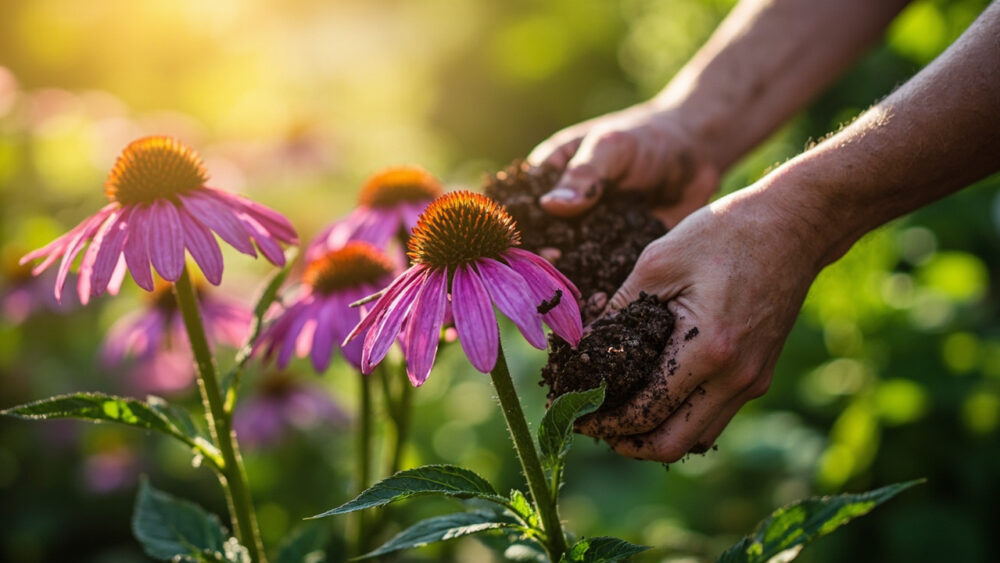
Coneflowers go into the ground after your last frost, in full sun, in soil that drains well and is not too rich, spaced 18 to 24 inches apart. That is the whole formula. Learning how to grow coneflowers really comes down to resisting the urge to baby them, because these are prairie plants that bloom best when you leave them a little hungry and a little dry.
Most people who fail with coneflowers do it in the first two weeks, and it is almost always the same mistake. There is also a sign on the plant everyone reads backwards, one that sends gardeners running for fertilizer when they should be doing the opposite. And there is an honest answer coming about whether you should cut those seed heads down in fall, because the internet is split on it and the real answer depends on what you want from your yard.
Stick with me through the sections below and you will have the full planting-to-bloom picture. Save-able specifics, spacing, timing, watering, all of it, are waiting in the “Coneflowers at a Glance” card at the very bottom.
When to Plant Coneflowers
Plant coneflowers after the soil has warmed and your last frost date has passed, roughly two to three weeks after frost when nights stay reliably above 40°F. Nursery starts go in anytime spring through early fall. Bare-root or seed-started plants prefer spring so they have a full season to establish roots before winter.
Coneflowers are hardy in USDA zones 3 through 9, and established plants shrug off winter cold far better than a first-year transplant does. If you are planting in late summer or fall, get them in at least six weeks before your first hard freeze so roots can grip the soil.
Direct-sown seed is slower and less reliable than starts. Many coneflower seeds actually germinate better after a cold, moist stretch, so fall sowing outdoors or a few weeks in the refrigerator before spring sowing improves your odds.
Timing gets you started, but where you put the plant decides whether it thrives or sulks.
Choosing the Spot and Prepping the Soil
Coneflowers want full sunsix hours minimum, eight or more if you want thick stems and heavy bloom instead of floppy, reaching growth. In part shade they survive but stretch toward light and bloom thin.
Here is the mistake that ruins most attempts: enriching the soil like you would for tomatoes. Coneflowers evolved in lean prairie ground. Heavily amended, fertile soil pushes soft, leggy growth that flops over and invites rot.
What they actually need is drainage. Check it yourself: dig a hole 12 inches deep, fill it with water, and see how long it takes to disappear. Under an hour is good. If water sits for several hours, work in coarse compost or grit, or build a raised bed 6 to 8 inches high.
Skip the heavy fertilizer, skip the peat-heavy potting soil, and do not pick a low spot where water collects after rain.
Good drainage matters more than good dirt, and that principle carries straight into how you plant.
Planting Coneflowers Step by Step
1. Loosen the native soil
Turn over the planting area to about 10 to 12 inches deep. You are breaking up compaction, not building a rich bed. A shovel or fork works better here than a tiller.
2. Dig the hole
Make it just as deep as the root ball and twice as wide. Planting too deep is a real risk with coneflowers, the crown, where stems meet roots, should sit level with the soil surface, not buried.
3. Space them 18 to 24 inches apart
Crowded coneflowers get powdery mildew from poor air circulation. Give them room even though the young plants look lonely and small at first.
4. Set the plant and backfill
Loosen any circling roots with your fingers before you set it in. Backfill with the same native soil you dug out, firm gently, do not stomp.
5. Water once, deeply
Soak the root zone thoroughly right after planting to settle the soil and eliminate air pockets. This first watering matters more than anything you do for the next month.
Get the crown depth right and the spacing generous, and most of your future problems are already solved.
Watering and Feeding Through the Season
Here is the sign everyone misreads. Coneflower leaves droop and look a little dull in the heat of a summer afternoon, and gardeners assume the plant is thirsty and reach for the hose daily. That guess is usually wrong and overwatering is what actually kills more coneflowers than drought does.
Water new transplants two to three times a week for the first three to four weeks, then taper off. Once established, most coneflowers need water only during stretches of two or more weeks without rain. Check the soil 2 inches down; if it is still damp, wait.
Skip regular fertilizer entirely once plants are established. A single light topdress of compost in spring is plenty. Heavy feeding, especially nitrogen, gives you lush leaves, weak stems, and fewer blooms.
Deadhead spent blooms through summer to encourage more flowers, or leave some standing, which brings us to the birds and the seed heads later on.
Underwatering established coneflowers is nearly impossible to do by accident, but overwatering is easy, and that single habit change saves more plants than any product you could buy.
Problems That Actually Show Up
Powdery mildew is the most common issue, a gray-white coating on leaves, usually from crowding, poor air flow, or overhead watering late in the day. Space plants properly and water at the soil line in the morning to head it off. If it appears, a fungicide labeled for powdery mildew on ornamentals works, applied exactly per the label.
Aster yellows is a real threat and the one problem with no cure. Infected plants show stunted, distorted, greenish or witch’s-broom growth on flowers. There is no treatment; pull and discard infected plants so leafhoppers, which spread it, do not carry it to healthy ones nearby.
Japanese beetles will skeletonize leaves and chew flowers in mid to late summer in many regions. Hand-picking into soapy water in early morning, when they are sluggish, controls light infestations well.
Slugs occasionally target young spring growth. Bare soil around the crown and morning watering discourage them.
Most of these problems trace back to crowding and wet foliage, which is exactly why spacing and morning watering earn their place in this guide twice.
When and How to Harvest
Coneflowers typically bloom from early summer into fall, with flowers opening about 60 to 90 days after transplanting, depending on the variety and how warm your season runs. Cut for bouquets once petals have fully unfurled and the center cone feels firm, not soft.
Cut stems in the cool morning, choosing flowers that are fully open since coneflowers do not continue opening much once cut. Strip lower leaves and get them into water fast for the longest vase life, typically five to ten days.
Now the honest answer on fall cleanup: cutting seed heads down tidies the bed, but leaving them standing feeds goldfinches all winter and self-sows a few volunteer seedlings for you. There is no wrong choice, just a tradeoff between neatness and free birds and free plants.
If you want seed for saving, let heads dry brown and papery on the plant before collecting, then store them somewhere cool and dry until spring.
That seed-head decision is really the last one you have to make each year, and everything you need to remember day to day is right below.
Coneflowers at a Glance
- When to plant: after your last frost, roughly two to three weeks post-frost, or in late summer at least six weeks before the first hard freeze.
- Sun and site: full sun, six to eight-plus hours daily, lean well-drained soil, avoid rich amended beds.
- Spacing and depth: 18 to 24 inches apart, crown level with the soil surface, not buried.
- Watering: deep and frequent for the first three to four weeks, then only during dry spells of two or more weeks once established.
- Feeding: skip regular fertilizer, a light spring compost topdress is enough.
- Watch for: powdery mildew from crowding, aster yellows with no cure, Japanese beetles in midsummer.
- Bloom and harvest: flowers open 60 to 90 days after transplanting, cut in the morning once petals fully unfurl.
Get the sun, the drainage, and the spacing right, and coneflowers largely take care of themselves.
Everything else on this list is just fine-tuning around that one fact.