If you want to know how to grow lilies, here is the short version: plant true lily bulbs 4 to 6 inches deep and 8 to 12 inches apart in well-drained soil, in a spot that gets at least 6 hours of sun, and do it in fall or early spring while the bulbs are dormant. Get the drainage right and the depth right, and lilies mostly grow themselves for years afterward. Get either wrong and you will spend three seasons wondering why the bulb rotted or the stalk flopped over.
There is one mistake that takes down more lily plantings than anything else, and it is not about sun or fertilizer. It is planting depth, and almost everyone guesses wrong in a specific, predictable way.
There is also a sign a lot of gardeners misread completely, right around the time the flowers finish blooming, that leads them to cut the plant back when they should be doing the opposite. And there is an honest answer to the question you are probably about to ask, which is when you can actually cut those gorgeous stems for a vase without wrecking next year’s bloom. Stick around, because the save-able Lilies at a Glance card at the bottom has all the numbers in one place for your phone.
When to Plant Lilies
Fall is the best window for planting lily bulbs, ideally 4 to 6 weeks before your ground freezes solid, which gives roots time to establish before winter. Early spring, as soon as the soil can be worked and is no longer waterlogged, is the solid second option.
Soil temperature matters more than the calendar. You want soil that is workable, not soggy or frozen, generally above 40°F.
In zones 3 to 5, spring planting is often safer since fall bulbs can struggle if a hard freeze hits before roots take hold. In zones 6 and warmer, fall planting is preferred and gives you bigger first-year blooms.
Potted lilies from a nursery, already leafed out, can go in the ground anytime after your last frost.
Timing gets the bulb in the ground alive, but the spot you choose decides whether it thrives.
Choosing the Spot and Prepping the Soil
Lilies want 6 or more hours of direct sunthough afternoon shade in hot climates helps prevent the flowers from bleaching or fading fast. Morning sun with light afternoon shade is close to ideal in zone 7 and warmer.
Drainage is the real deal-breaker. Lily bulbs sitting in wet, heavy clay will rot before they ever sprout, full stop.
If your soil holds water after rain, work in 2 to 3 inches of compost or coarse grit across the planting area, or build a raised bed 8 to 10 inches high. A simple test: dig a hole a foot deep, fill it with water, and if it hasn’t drained within a couple of hours, that spot needs amending or a raised bed.
Aim for a soil pH around 6.0 to 6.5, slightly acidic to neutral. Most garden soils fall in this range without any adjustment.
Once the ground is ready, the way you actually place the bulb makes or breaks the whole planting.
Planting Lily Bulbs Step by Step
This is where that one big mistake happens. Most people plant lily bulbs at tulip depth, 3 inches or so, because that’s the depth muscle memory tells them. Lilies need to go deeper, and shallow planting is the single most common reason bulbs produce weak, floppy stems or fail to return the second year.
Steps to plant
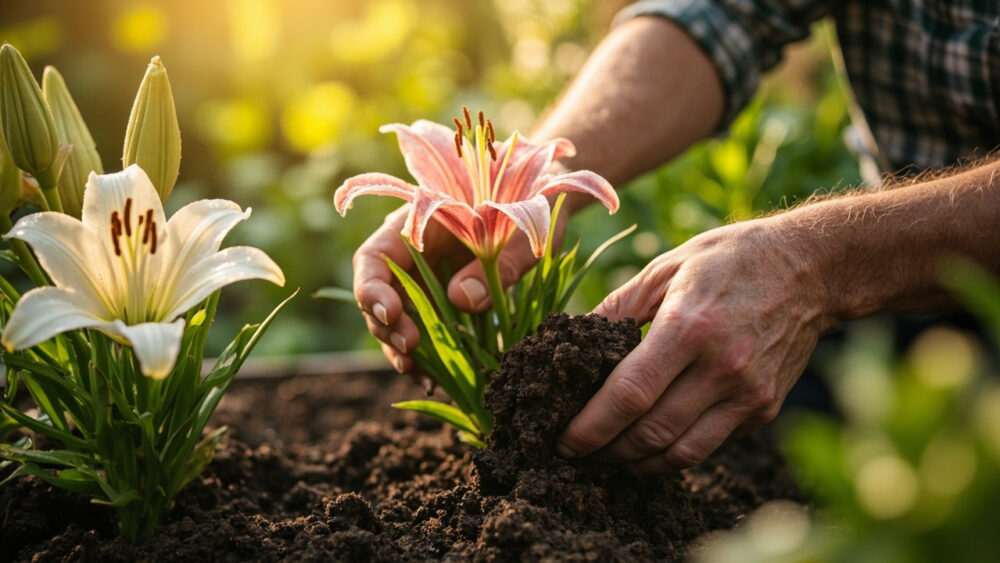
- Dig the hole: 4 to 6 inches deep for most lily bulbs, measured from the soil surface to the base of the bulb. Larger bulbs go toward 6 inches, smaller ones toward 4.
- Set the bulb root-side down: the flat basal plate with roots faces down, the pointed tip faces up. If you truly can’t tell which end is which, lay it on its side, lilies will find their way up.
- Space bulbs 8 to 12 inches apart: tighter spacing looks fuller sooner but crowds roots within a couple of years.
- Backfill and water in: firm the soil gently, then water thoroughly to settle it around the bulb and remove air pockets.
- Mulch 2 to 3 inches: this regulates soil temperature and holds moisture, especially valuable for fall plantings heading into winter.
Depth also protects the bulb from the stem-toppling problem that plagues shallow plantings once the flowers get top-heavy.
Watering and Feeding Through the Season
Lilies want consistent moisture, not soggy soil. Check the top 2 inches of soil; if it’s dry, water deeply. Once a week is typical in average conditions, more often in sandy soil or hot spells.
Overwatering is the quieter killer here, more common than underwatering. Standing water around the base, even for a day or two, invites bulb rot.
Feed with a balanced, low-nitrogen fertilizer in early spring as shoots emerge, then again right after blooming. Too much nitrogen pushes leafy growth at the expense of flowers.
Skip fertilizing once flowering finishes for the season; the plant’s energy needs to go into the bulb, not new top growth.
Feeding gets you flowers this year, but what you do right after those flowers fade decides whether you get flowers next year too.
The Mistake Almost Everyone Makes After Bloom
Here’s the sign people misread. Once the flowers drop, the stem and leaves start looking tired and a little ragged, and the instinct is to cut the whole thing back to tidy up the bed.
Don’t cut the stem down until it has yellowed and dried on its own, usually 6 to 8 weeks after the last bloom. That stem and foliage are still feeding the bulb underground, building next year’s flower.
Deadheading spent blooms is fine and encouraged, it stops the plant from wasting energy on seed pods. Just leave the green stem and leaves standing.
Cut spent flower heads off, but let the stalk finish its job before you touch it with pruners.
Problems That Actually Strike Lilies
The most damaging pest in North America right now is the scarlet lily beetlea bright red beetle that skeletonizes leaves and buds fast. Hand-pick adults and check leaf undersides for orange eggs and slug-like larvae. For heavier infestations, an insecticide labeled for lily beetle, applied exactly per the label, is the practical answer.
Botrytis blight shows up as brown spots on leaves and flowers in cool, damp, poorly ventilated conditions. Better air circulation and avoiding overhead watering late in the day head off most of it.
Bulb rot, from wet soil, shows as yellowing lower leaves and a soft, mushy bulb if you dig one up. There’s no fixing a rotted bulb. The honest move is to pull it, improve the drainage, and replant fresh next season.
Deer and rabbits treat lily buds like a buffet. A physical barrier or repellent applied per label is more reliable than hoping they skip your bed.
Note for pet owners: true lilies (Lilium species) are highly toxic to cats, capable of causing acute kidney failure from even small amounts of pollen or plant material. If your cat chews on a lily or eats pollen, treat it as an emergency and get to a veterinarian immediately, don’t wait to see if symptoms appear.
Handle the pests and the drainage, and the last thing left to get right is the harvest itself.
When and How to “Harvest” Lily Blooms
Most lily varieties bloom in mid to late summerroughly 70 to 90 days after spring growth starts, depending on the type. Asiatic lilies tend to bloom earliest, Orientals and trumpet types later in summer.
The honest answer to when you can cut stems for a vase: cut when one or two buds on the stem have just started to open, the rest will open indoors over the following days. Cut in early morning when stems are hydrated, using clean shears at an angle.
Leave at least one-third of the stem and its leaves on the plant. That remaining foliage is what recharges the bulb for next year, same principle as leaving the stalk standing after bloom.
Cut flowers last 5 to 10 days in a vase. Changing the water every couple of days and removing the orange anthers (which stain badly) extends both vase life and your countertop’s cleanliness.
Everything above comes down to a handful of numbers worth keeping close at hand.
Lilies at a Glance
- When to plant: fall, 4 to 6 weeks before hard freeze, or early spring once soil is workable and above 40°F.
- Planting depth: 4 to 6 inches, measured to the base of the bulb, root side down.
- Spacing: 8 to 12 inches apart.
- Light and soil: 6 or more hours of sun, well-drained soil, pH around 6.0 to 6.5.
- Watering: deep watering when the top 2 inches of soil dry out, roughly once a week, never soggy.
- After bloom: deadhead spent flowers but leave the green stem and leaves standing 6 to 8 weeks until they yellow on their own.
- Bloom window: mid to late summer, 70 to 90 days after spring growth starts, varying by type.
- Cat safety: true lilies are highly toxic to cats, any suspected chewing or ingestion needs a veterinarian right away.
Get the depth and drainage right at planting and lilies will forgive almost everything else you do.
The bulb you plant this fall is the flower you’ll be cutting for the kitchen table two summers from now.