The best companion plants for lettuce are ones that either shade its shallow roots, repel the pests that shred its leaves, or simply do not compete for the same nutrients and space. Chives, radishes, carrots, marigolds, and taller crops like beans or dill all earn a spot near lettuce for specific, provable reasons. Skip the crucifer family and anything that hogs root space, and you avoid the two failures that ruin most lettuce beds.
Here is what almost nobody tells you upfront: the mistake that wrecks most companion plantings has nothing to do with which plants you pick. It is spacing them like lettuce is a full-sized vegetable instead of a shallow-rooted opportunist that wants to tuck in underneath something bigger.
There is also a popular pairing everyone assumes is fine that quietly stunts lettuce all season, and a “law” of companion planting that sounds true but does not actually hold up in real beds. Stick around for the Lettuce at a Glance card at the bottom, it is built to save to your phone before you head out to the garden.
Why Lettuce Is Easy to Pair Well
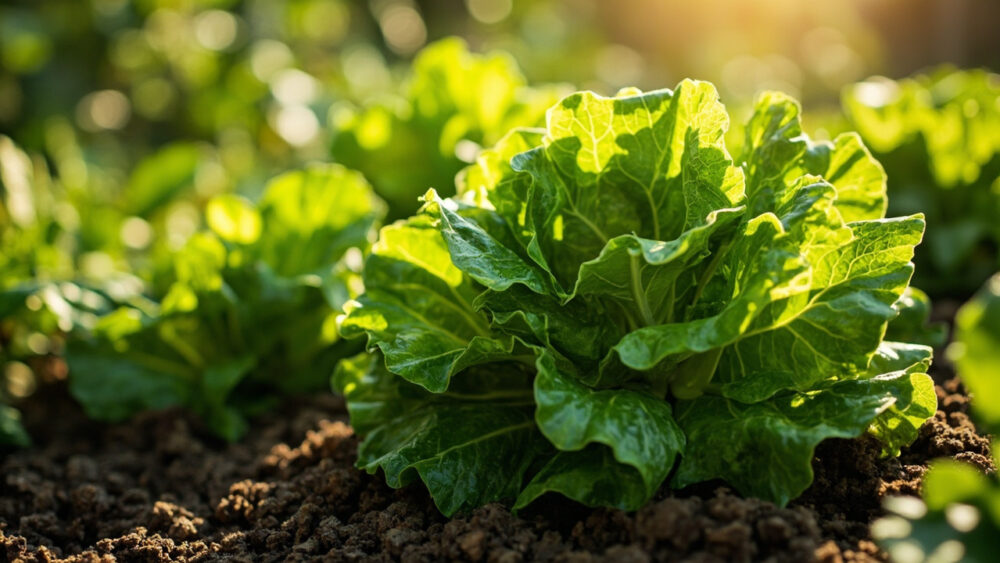
Lettuce has shallow roots, rarely more than 6 to 12 inches deep, and it matures fast, often in 45 to 65 days depending on variety. That makes it a great understory plant and a great “filler” between slower crops.
It also bolts and gets bitter in heat, so anything that throws a little afternoon shade extends your harvest window by real weeks, not days.
That shade tolerance is exactly what makes the next few pairings work.
Chives and Other Alliums
Chives, green onions, and garlic release sulfur compounds that aphids genuinely dislike. Aphids are one of lettuce’s most common pests, and a border of chives around a lettuce bed measurably cuts down on infestations compared to lettuce grown alone.
Plant them at the bed edges, not mixed directly into lettuce rows, since alliums have their own root competition to consider even though it is mild.
Next up is the classic pairing that actually earns its reputation.
Carrots
Carrots and lettuce are a genuinely good match because their roots occupy different depths and their leaves occupy different heights. Carrots dive down while lettuce spreads its shallow roots near the surface, so they are not fighting for the same soil moisture zone.
Lettuce planted alongside carrots also acts as a living mulch, shading the soil so it stays cooler and slows weed germination around the carrot rows.
Radishes take that same logic one step further, and faster.
Radishes
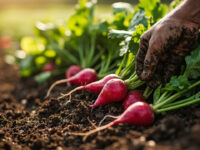
Radishes mature in 22 to 30 days, which means they come out of the ground before lettuce needs the space they were using. They also draw flea beetles away from lettuce leaves, acting as a sacrificial trap crop.
Interplant radish seed directly between lettuce transplants at initial planting, about 2 inches from each lettuce start, and pull the radishes as soon as they size up.
Now for the pairing that works through the air instead of the soil.
Marigolds and Nasturtiums
Marigolds repel aphids and some root nematodes, and nasturtiums work as a trap crop that pulls aphids onto themselves instead of your lettuce. Both also attract hoverflies and other beneficial predators that eat aphids on sight.
Plant either one at the corners of a lettuce bed or in a border row 8 to 12 inches out.
Taller companions bring a different benefit entirely, and it is the one most gardeners underuse.
Beans, Dill, and Other Light Shade Providers
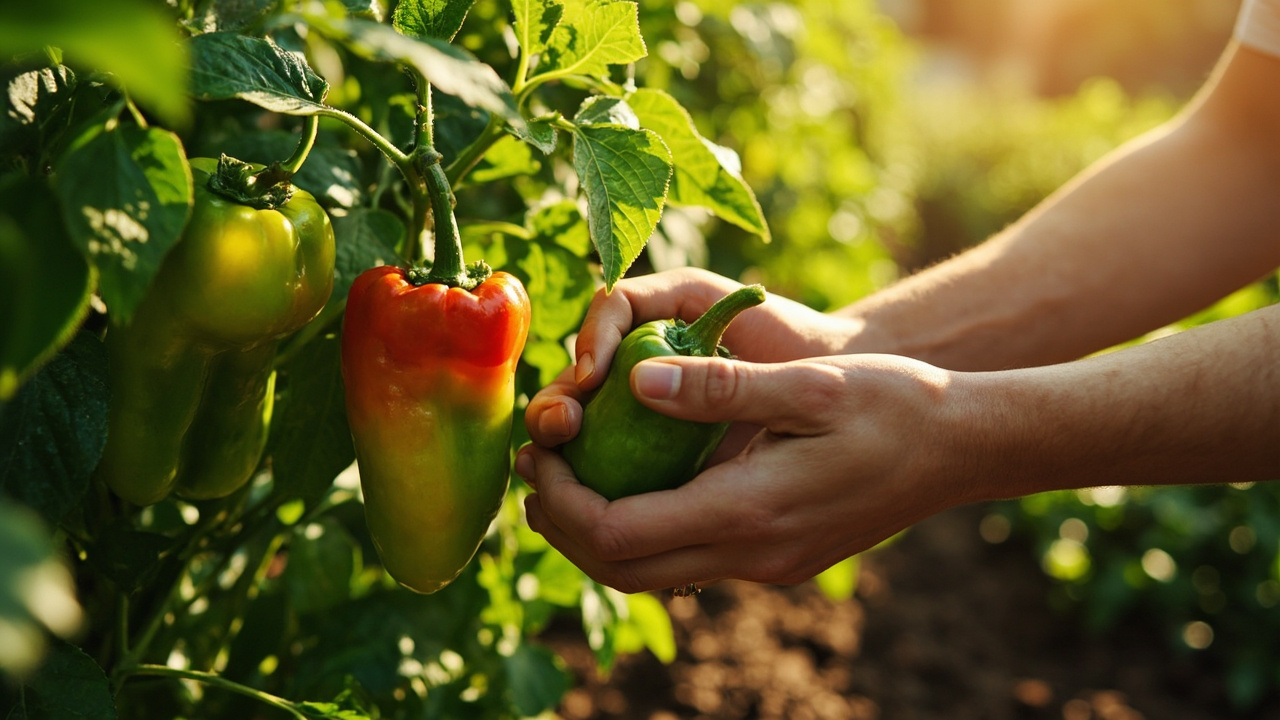
Pole beans, dill, and taller herbs cast dappled shade by midsummer, which is exactly when lettuce wants to bolt and turn bitter. Planting lettuce on the north or east side of a taller crop, so it gets morning sun and afternoon shade, can stretch a spring lettuce planting by two to three extra weeks before it goes to seed.
Dill also attracts parasitic wasps that help control cabbage worms and other leaf-eating pests in the surrounding bed.
That shade strategy only works, though, if you get the layout right, which is where most beds go wrong.
What to Never Plant Near Lettuce
Skip broccoli, cabbage, kale, and other brassicas directly next to lettuce. It is not a toxic pairing, it is a resource one: brassicas are heavy nitrogen feeders and their broad leaves shade out lettuce unevenly, causing patchy, leggy growth on the shaded side.
Fennel is worse. Fennel releases root compounds that actively inhibit the growth of many nearby vegetables, lettuce included, and it is one of the few plants worth keeping in its own bed entirely.
Skip sunflowers close in too. Their extensive root systems and allelopathic leaf drop compete hard for water and can suppress lettuce germination nearby.
None of these will kill an established lettuce plant outright, but they will produce smaller, slower, more bitter heads, and by the time you notice, the season for a redo is often gone.
The Mistake That Actually Ruins Most Attempts
If you assumed the failure point was picking the wrong companion, that guess is reasonable but it is not what actually happens in most beds. The real failure is spacing lettuce like it needs full sun and full room, when what it wants is to be tucked in close.
Lettuce planted 12 to 16 inches from its neighbors, with no shade relationship at all, gets none of the benefits above. It just sits there exposed, bolting early and drawing the same pests it would have anyway.
Good companion planting for lettuce is really a layout decision, not just a plant list.
How to Actually Lay Out the Bed
Put lettuce transplants 8 to 12 inches apart in the shadow line of a taller crop planted 18 to 24 inches away. Tuck radishes in the gaps at planting time.
Run a border of chives or marigolds along the sunniest edge of the bed, where pest pressure tends to arrive first.
- Lettuce depth: seeds go 1/4 inch deep, transplants set at the same depth they were growing in the tray.
- Soil temperature for germination: 40 to 75 F, with 60 to 65 F being ideal for fast, even sprouting.
- Shade timing: position taller companions to the south or west of lettuce so afternoon sun gets blocked first.
Get this geometry right once and you can reuse it in every lettuce bed you plant from here on.
Companion Planting Myths That Do Not Hold Up
The claim that lettuce and mint make a good pair is common online and it is a bad idea in open ground. Mint is aggressively invasive through underground runners and will crowd out lettuce roots within a season if not contained in its own pot.
Another myth: that any herb “improves flavor” in nearby vegetables. There is no real evidence lettuce tastes different based on companions. What actually changes flavor is bolting from heat stress and bitterness from water stress, both of which good companions help prevent indirectly through shade and soil moisture, not through some flavor transfer.
So the benefit is real, it is just mechanical, not magical.
Lettuce at a Glance
- When to plant: 2 to 3 weeks before your last frost for spring crops, or 6 to 8 weeks before first fall frost for a fall crop.
- Spacing: 8 to 12 inches apart for head lettuce, 4 to 6 inches for loose-leaf types grown for cut-and-come-again harvest.
- Depth: seeds at 1/4 inch, transplants set at the same soil level as their tray.
- Best companions: chives, carrots, radishes, marigolds, nasturtiums, and taller shade providers like pole beans or dill.
- Never plant nearby: fennel, broccoli, cabbage, kale, other brassicas, and sunflowers.
- Soil and water: keep soil consistently moist, about 1 inch of water per week, since drought stress is the top cause of bitter, bolted lettuce.
- Harvest window: 45 to 65 days from seed depending on variety, or pick outer leaves continuously on loose-leaf types starting around day 30.
Get the shade and spacing right and the companion list mostly takes care of itself.
Keep fennel and brassicas out of the bed, and lettuce will do the rest of the work on its own.