The most common reason a hibiscus won’t bloom is too much nitrogen and not enough light. A hibiscus getting less than 6 hours of direct sun a day, or fed a lawn-type fertilizer heavy in nitrogen, will pump out glossy dark leaves and skip flowers entirely. The fix is simple in concept: move it into more sun and switch to a bloom-friendly, lower-nitrogen feed, though you’ll wait a few weeks to see the payoff.
Here’s the loop worth opening before you touch the plant: most people blame the pot, or the watering can, first. Usually that’s not it. The real tell is somewhere else on the plant, and once you know where to look, you can nail down your specific cause in under two minutes.
Below is every likely cause ranked by how often it’s actually the culprit, a tell-apart guide so you know which one is yours, an honest recovery timeline, and a save-able diagnosis checklist at the very bottom you can run right at the plant.
Causes, Most to Least Likely
1. Not Enough Direct Sun
Hibiscus is a sun-hungry bloomer. It needs a minimum of 6 hours of direct light daily to set flower buds, and tropical types especially will sulk with less.
Confirm it: track the plant’s actual light for one day. Morning shade that clears by 10am and stays sunny after is often not enough if the afternoon side is shaded by a wall or tree.
Fix it: move containers to the sunniest spot you have, ideally south or west facing. In-ground plants that have grown shadier over the years may need nearby limbs thinned.
The next cause hides in the fertilizer bag most people reach for by habit.
2. Too Much Nitrogen
High-nitrogen fertilizer, including many all-purpose lawn and houseplant feeds, pushes leafy growth at the direct expense of flower buds.
Confirm it: check the three numbers on your fertilizer label. If the first number (nitrogen) is notably higher than the other two, that’s your feed problem.
Fix it: switch to a fertilizer formulated for blooming plants, with a lower first number and higher middle number (phosphorus). Feed on the product’s labeled schedule, not more often.
Buds can also vanish after they’ve already formed, and that’s a different animal entirely.
3. Bud Drop from Stress
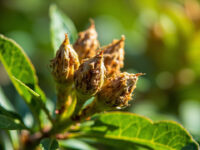
Hibiscus buds are notoriously touchy. Temperature swings, a sudden move, transplant shock, or letting the soil go bone dry even once can cause fully formed buds to yellow and drop before opening.
Confirm it: look for small yellow or shriveled buds on the ground or dropping off the plant, rather than no buds forming at all.
Fix it: keep watering consistent, avoid moving the plant once buds appear, and protect it from cold drafts, hot dry wind, and sudden nighttime temperature drops below about 50°F.
If the soil itself is the problem, it usually shows up as more than just missing flowers.
4. Underwatering or Overwatering
Hibiscus wants evenly moist soil, never soggy, never dried to a crisp. Either extreme, repeated, shuts down blooming as the plant redirects energy to survival.
Confirm it: stick a finger 1 to 2 inches into the soil. Bone dry, or waterlogged and smelling sour, both point here. Wilting leaves that recover after watering suggest underwatering; yellowing lower leaves with soggy soil suggest overwatering.
Fix it: water deeply when the top inch or two is dry, and make sure containers have drainage holes. Adjust frequency with the season rather than sticking to a fixed schedule.
Root problems can look almost identical from the outside, which is where a lot of guessing goes wrong.
5. Rootbound or Poor Nutrition
A hibiscus that’s been in the same pot for 2 to 3 years or more often runs out of room and nutrients at the same time, and blooming is the first thing it cuts.
Confirm it: slide the plant from its pot if possible. Roots circling tightly around the root ball, or roots poking out drainage holes, confirm rootbound. Pale, stunted new growth on old, exhausted soil confirms nutrition alone.
Fix it: repot into a container 2 inches larger in diameter with fresh potting mix, or top-dress and feed if the pot size is fine but the soil is old.
One more cause is often mistaken for something scarier than it is.
6. Wrong Season or Recent Pruning
Hibiscus blooms on new growth, and a hard prune, or the natural slow season as daylight shortens, can mean a genuine pause rather than a real problem.
Confirm it: check your calendar and recent pruning history. If you cut back hard in the last 4 to 6 weeks, or you’re heading into shorter, cooler days, this is likely just timing.
Fix it: nothing to fix. Keep up normal light, water, and feeding, and new growth will bring buds back on its own schedule.
Once you’ve got a suspect, here’s how to make sure you’ve got the right one.
How to Tell the Causes Apart
Where the symptom shows up matters more than the symptom itself. No buds forming at all, on a plant with plenty of healthy dark green leaves, points to low light or excess nitrogen. Buds that form then drop points to stress or watering swings, not light.
Check old growth versus new. Pale or stunted new leaves with fine, older leaves suggest a root or nutrition issue. Uniformly lush leaves everywhere with zero flowers is the classic nitrogen-heavy, sun-starved combination.
Timing is a tell too. A sudden stop right after a move, repot, or cold night is stress. A slow fade over months with no clear trigger points to light or soil exhaustion instead.
Once you know which camp you’re in, the next question is how long the fix takes to actually show flowers.
Will It Recover?
Light and fertilizer fixes are the best odds you’ll get. Correct the light or switch the feed, and you can expect new buds within 4 to 8 weeks, since the plant just needs to build fresh flowering growth.
Bud drop from stress resolves fast once conditions stabilize, often within 2 to 3 weeks, as long as the plant wasn’t also losing leaves or showing root rot.
Watering extremes recover well if caught early. Root rot from long-term overwatering is the honest exception. If roots are mushy, black, or foul-smelling, that portion of the plant will not come back, and you’re salvaging what’s left rather than reviving the whole plant.
Rootbound plants bounce back reliably after repotting, usually blooming again within 6 to 10 weeks as roots expand into fresh soil.
Cut your losses only if you’re seeing blackened stems at the base along with the no-bloom problem, since that combination usually means rot has moved past the roots.
Prevention is genuinely less work than another round of diagnosis.
How to Keep It From Happening Again
Site it right the first time. Full sun locations solve most future problems before they start.
Feed on a bloom-focused schedule, lower nitrogen, higher phosphorus and potassium, and resist the urge to feed more than the label suggests.
Water on a check-the-soil routine rather than a fixed number of days a week, and repot container hibiscus every 2 years to keep roots and soil fresh.
All of that is easier to apply once you’ve got a clear diagnosis in hand, which is exactly what’s next.
Diagnosis Checklist
- Count direct sun hours today: under 6 hours means move it to more light before checking anything else.
- Read your fertilizer’s first number: high relative to the other two means switch to a bloom formula.
- Look for yellow, shriveled buds on the ground: present means stress-related bud drop, check recent moves, cold nights, or missed waterings.
- Check soil 1 to 2 inches down: bone dry or soggy and sour-smelling means adjust your watering routine.
- Check time since last repot: over 2 to 3 years, slide the plant out and look for circling roots.
- Check time since last hard prune, or note the season: recent cutback or shortening days means give it time, no fix needed.
- Check stem bases for black or mushy tissue: present means assess for rot before assuming the fix is simple.
Run through this list once, and you’ll usually land on the real cause in under two minutes.
Fix that one thing, keep conditions steady, and the blooms come back on their own schedule.