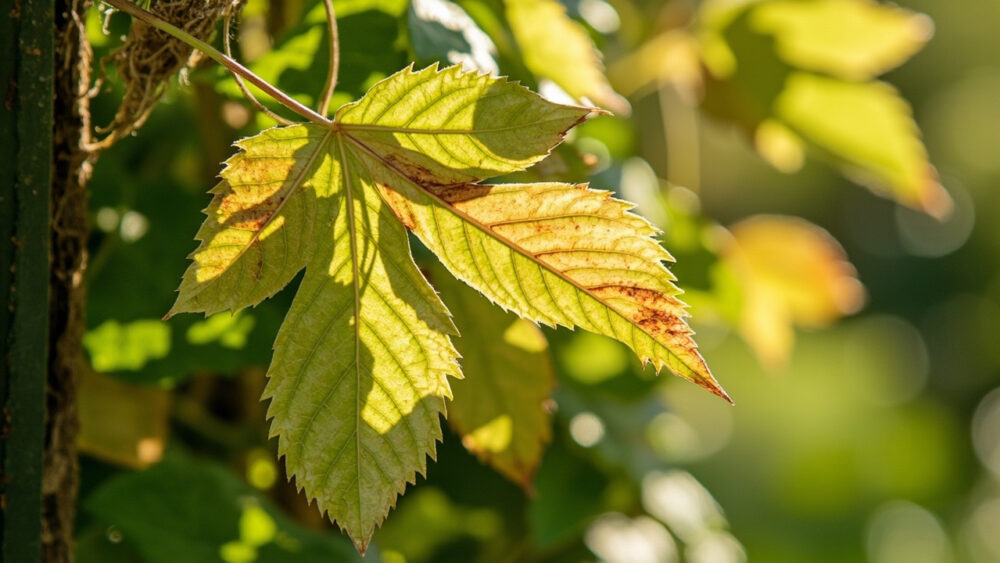
Clematis leaves turning yellow are most often telling you the roots are sitting in water they can’t drain. Clematis wants moist soil but hates wet feet, and soggy roots stop taking up nutrients even when the ground looks fine on top. Pull back the mulch, check the soil an inch or two down, and if it feels cold and soggy rather than just moist, you’ve likely found your answer.
But that’s only the most common cause, not the only one, and guessing wrong here wastes weeks. Everyone blames nitrogen deficiency first because yellow leaves scream “feed me,” and half the time that guess is wrong and an extra dose of fertilizer just makes things worse. The real cause leaves a specific signature on the plant, on which leaves go yellow first and in what pattern, and that detail is what actually tells you which of five or six culprits you’re dealing with.
Stick with this, because by the end you’ll know whether your clematis is going to bounce back or whether you’re looking at a plant that needs to come out. There’s a two-minute diagnosis checklist waiting at the bottom you can run right at the plant.
Most Likely Causes, Ranked
1. Overwatering or poor drainage
Confirm it: dig down 2 to 3 inches near the root zone. If the soil is cold, dark, and compresses into a mud ball rather than crumbling, drainage is the problem. Yellowing usually starts on lower, older leaves and spreads upward, often with a slightly wilted look even though the soil is wet.
Fix it: stop watering until the top few inches dry out. If the spot stays swampy after rain, work in coarse compost or grit around the root zone, or consider moving the plant this fall to a raised spot. Clematis roots like consistent moisture, not standing water.
Once drainage is sorted, the next question is whether the roots have enough food to work with.
2. Nitrogen or general nutrient deficiency
Confirm it: older, lower leaves yellow first while new growth at the tips stays green, and the yellowing is uniform across the whole leaf rather than blotchy or patterned between the veins.
Fix it: feed with a balanced, slow-release fertilizer in spring as growth starts, then a lighter feed after the first flush of bloom. Clematis are heavy feeders and often run out of gas by midsummer in average garden soil.
If the yellowing has a pattern instead of being solid, though, you’re likely looking at something mineral-specific, not a plain feeding problem.
3. Iron or magnesium deficiency (chlorosis)
Confirm it: the leaf turns yellow between the veins while the veins themselves stay green, like a stained-glass pattern. Iron deficiency shows up on new growth first; magnesium deficiency shows up on older leaves first.
Fix it: a soil test tells you which one and whether your pH is the real issue. Clematis prefers a near-neutral pH around 6.5 to 7.0. If soil is too alkaline, iron becomes locked up even if it’s present, and a chelated iron feed or a soil sulfur amendment corrects it over a season, not overnight.
This one is easy to confuse with simple age-related yellowing, so the vein pattern is your best friend here.
4. Clematis wilt or fungal stem disease
Confirm it: yellowing paired with sudden collapse of whole stems, blackened stem sections near the soil line, or leaves that go from green to yellow to crispy brown within days rather than weeks.
Fix it: cut affected stems back to healthy green tissue or right to the ground. Most large-flowered hybrids resprout from below the damage the same season or the next spring. Improve air circulation and avoid overhead watering that keeps foliage wet.
If the yellowing is slow and general instead of sudden and stem-specific, you’re probably not dealing with wilt at all.
5. Root stress from transplanting, heat, or drought
Confirm it: yellowing appears within a few weeks of transplanting, a hot dry stretch, or root disturbance from nearby digging, and it hits leaves at random rather than following a clear old-to-new or vein pattern.
Fix it: keep soil evenly moist (not soaked), mulch 2 to 3 inches to keep roots cool, and give the plant a season to settle. Clematis famously sulk after transplanting and often drop yellow leaves before pushing new growth.
Stress-related yellowing looks messy and inconsistent, which is itself a clue, and that’s exactly what the next section sorts out.
6. Natural old-leaf drop or normal seasonal die-back
Confirm it: only the lowest, oldest leaves near the base yellow and drop in late summer or fall, while the rest of the vine stays green and vigorous.
Fix it: nothing to fix. Clean up fallen leaves to reduce disease pressure over winter, and move on.
Now that you’ve got the individual suspects, here’s how to line them up side by side.
How to Tell the Causes Apart
Where it starts matters most. Lower leaves first usually means water, nitrogen, or normal aging. New growth first usually means iron chlorosis or a pH problem.
Pattern matters second. Solid yellow leaf means water or nitrogen. Yellow between green veins means a mineral lockup. Sudden blackened stems mean wilt, not a nutrient issue at all.
Speed is the tiebreaker. Slow yellowing over weeks points to soil and nutrition. Fast collapse over days points to disease.
Once you’ve matched your plant to a lane, the next honest question is what happens from here.
Will It Recover?
Drainage and nutrient problems have the best odds. Correct the watering or feeding and you’ll usually see new green growth within 2 to 4 weeks during the growing season.
Chlorosis recovers slowly, over a full season, since pH correction isn’t instant. Existing yellow leaves generally don’t turn green again, but new growth should come in normal.
Wilt-affected stems above the cut rarely recover, but the plant itself usually does, resprouting from the base the same year or the following spring. That’s a real loss of a season’s growth, not a dead plant.
Transplant stress resolves on its own within a season as roots re-establish, assuming you don’t compound it with more disturbance or inconsistent water.
Cut your losses only if the crown itself is soft, black, or foul-smelling at the soil line, which points to root or crown rot rather than simple yellowing, and that’s a much harder problem to save.
Prevention from here is mostly about not repeating whichever mistake caused this round.
How to Keep It From Happening Again
- Plant right the first time: clematis wants “cool feet, warm head,” meaning shaded, moist roots and sun on the top growth. Mulch heavily but keep it off the crown itself.
- Water consistently, not heavily: aim for evenly moist soil, especially the first two seasons, rather than deep soaks followed by dry spells.
- Feed on a schedule: balanced fertilizer in spring, a lighter follow-up after the first bloom flush, and skip heavy feeding late in the season.
- Check soil pH every couple of years: keep it near 6.5 to 7.0 to avoid locking up iron.
- Give it airflow: space plants and prune congested growth to cut down on the damp, still conditions that invite wilt.
Get those five habits right and yellow leaves become the exception, not the yearly event.
Diagnosis Checklist
- Dig down 2 to 3 inches near the roots: if it’s cold and soggy, suspect drainage, if it’s dry and crumbly, move to the next step.
- Look at which leaves are yellow: lower and older leaves point to water, nitrogen, or normal aging, new growth points to chlorosis.
- Check the pattern on the leaf itself: solid yellow means water or feeding, yellow between green veins means iron or magnesium.
- Check the stems: black, mushy, or suddenly collapsed stems mean wilt, not a soil issue.
- Note the timeline: yellowing over days means disease, yellowing over weeks means soil or nutrients.
- Check the crown at the soil line: soft, black, or smelly means rot, and that changes the whole prognosis.
- Ask if you transplanted or dug nearby recently: if yes within the last month or two, root stress is the likely answer.
- Confirm and treat: match your answers above to the matching cause and apply that fix this week, not next season.
Most yellow clematis leaves trace back to water or feeding, both fixable within a month once you correct course.
Run the checklist once, treat the right cause, and give it a full season before you judge the results.