Caring for gladiolus comes down to four things: full sun, corms planted 4 to 6 inches deep in well-drained soil, water during dry spells instead of a fixed schedule, and staking before the flower spikes get top-heavy, not after. Get those right and you get the tall, dramatic spires this plant is famous for. Get the depth or the staking wrong and you get flopped stalks and a season of disappointment.
Most people who struggle with gladiolus make one specific mistake with the corms before they even go in the ground, and it has nothing to do with sun or water. There’s also a sign of trouble everyone reads backward, mistaking it for a watering problem when it’s actually something else entirely. And if you’re wondering whether you need to dig these up every fall, the honest answer depends on where you live, not on what the seed catalog tells you.
Stick with me through the sections below and I’ll walk through all of it. At the bottom you’ll find a save-able Gladiolus at a Glance card with the numbers you’ll actually want on hand when you’re standing in the garden with a bag of corms.
Light, Placement, and Temperature
Gladiolus wants full sun, meaning 6 to 8 hours of direct light a day. Less than that and you get weaker stems, fewer florets, and a plant that leans hard toward whatever light it can find.
Plant after your last frost, once soil temperatures sit at 55 F or warmer. Cold, wet soil rots corms before they ever sprout, which is the single most common reason a planting fails before it starts.
Pick a spot with good airflow. Gladiolus packed against a fence or wall with no breeze is more prone to fungal trouble later in the season.
Get the placement right and the next question is almost always about water.
Watering: How Much, How Often, and How to Tell
Water gladiolus about 1 inch per week during active growth, more during hot, dry stretches, less if rain is doing the work for you. The real test isn’t a calendar, it’s the soil: push a finger 2 inches down, and if it’s dry, water.
If you assumed yellowing leaves mean you need to water more, that guess is exactly backward here. Yellowing lower leaves on gladiolus are far more often a sign of overwatering or poor drainage than drought, since soggy soil suffocates the corm and rots the roots before the leaves ever show thirst.
Once flower spikes appear, keep watering consistent. Drought stress at that stage is what causes buds to blast, meaning they dry up and never open.
Water at the soil line, not overhead, if you can manage it, since wet foliage invites the fungal problems covered further down.
Get the water right and soil becomes the next lever worth pulling.
Soil, Potting Mix, and Feeding
Gladiolus needs loose, well-drained soil. Heavy clay is the enemy here, since it holds water around the corm and invites rot even when your watering schedule is perfect. Work in compost or coarse sand if your native soil is dense.
In containers, use a standard well-draining potting mix, not garden soil straight from the yard. Pots need drainage holes without exception.
Feed lightly with a balanced fertilizer at planting, then again once flower spikes start forming. Too much nitrogen pushes lush leaves at the expense of blooms, which is a common and entirely avoidable mistake.
Soil sets the stage, but the routine tasks are what carry the plant through the season.
The Routine Tasks: Staking, Deadheading, and the Fall Dig
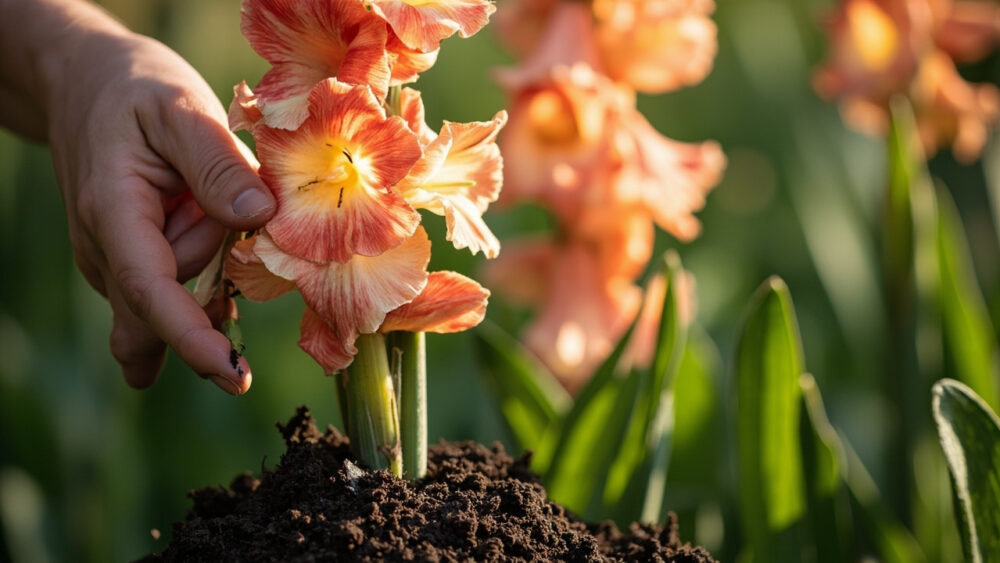
Here’s the mistake that ruins most gladiolus plantings: planting the corms too shallow. Shallow planting is the number one reason stalks flop over in summer, not wind, not weak stems. Go 4 to 6 inches deep, not the 2 inches many bags suggest, and the plant anchors itself properly from the start.
Stake tall varieties at planting time or as soon as spikes reach 12 inches, using a stake driven in beside the corm so you don’t spear it later. Waiting until the stalk is already leaning means the roots have already started to shift, and staking after the fact rarely fully corrects it.
Deadhead spent blooms as they fade, working from the bottom of the spike up, since gladiolus opens from the bottom first. Cut the whole stalk once flowering finishes, but leave the foliage standing.
Here’s the honest answer on winter: in USDA zones 8 and warmer, corms can usually stay in the ground year-round. In zone 7 and colder, dig them up after the foliage yellows and frost has killed the tops, cure them for a couple of weeks in a dry, airy spot, then store in dry peat or vermiculite somewhere cool and frost-free until spring.
Skip that dig in a cold climate and you’re gambling on corms that almost never survive a hard freeze in the ground.
Problems Most Likely to Strike
Thrips are the most common gladiolus pest, leaving silvery streaks on leaves and distorted, browning flowers. They hide inside the leaf sheaths, which makes them easy to miss until damage is obvious. Remove and destroy heavily infested foliage, and if you reach for an insecticidal treatment, follow the product label exactly.
Corm rot shows up as soft, mushy, foul-smelling corms at digging time, almost always traced back to waterlogged soil or storing corms damp. Discard any soft ones rather than replanting them.
Botrytis blight, a fungal disease, causes brown spotting on petals and leaves in cool, humid, wet weather. Improve airflow, avoid overhead watering, and remove affected foliage promptly.
None of these are usually a disease that ends the plant if you catch them early, but every one of them will end your season if you let them sit.
How to Tell Gladiolus Is Genuinely Thriving
A thriving gladiolus sends up a straight, sturdy spike with buds opening steadily from the bottom, several flowers open at once as others wait their turn above. Leaves stay a deep, even green with no streaking or yellowing.
New growth at the base means the corm is healthy and likely building next year’s offsets, the small new corms that form alongside the mother corm each season. That’s a good sign if you’re planning to save and replant them.
If stalks stand upright without leaning and the color holds strong for a week or more per bloom, you’ve got the conditions right. That’s the plant telling you to keep doing exactly what you’re doing.
Now for the card worth saving before you put the phone down and head back out to the garden.
Gladiolus at a Glance
- When to plant: after your last frost, once soil hits about 55 F or warmer.
- Depth and spacing: plant corms 4 to 6 inches deep, 4 to 6 inches apart, pointed end up.
- Light: full sun, 6 to 8 hours of direct light daily.
- Watering: about 1 inch per week, checking soil moisture 2 inches down rather than following a fixed schedule.
- Staking: stake at planting or once spikes reach 12 inches, especially for tall varieties.
- Winter care: leave corms in the ground in zone 8 and warmer, dig and store dry in zone 7 and colder.
- Bloom time: roughly 70 to 90 days from planting, depending on variety and climate.
Plant deep, stake early, and water by feel instead of habit. Get those three right and the rest of gladiolus care mostly takes care of itself.