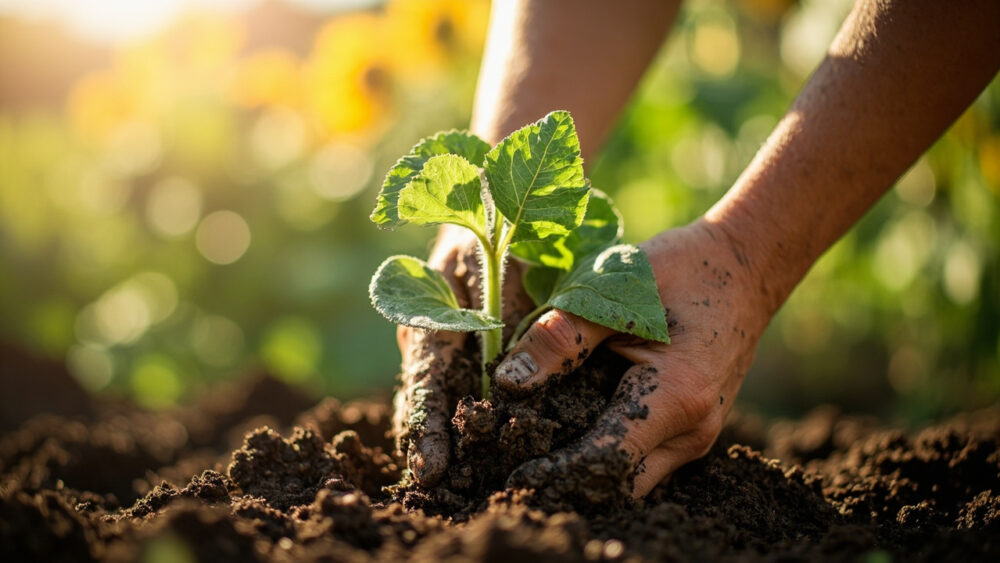
How to grow sunflowers in the fewest words possible: plant seeds 1 inch deep directly in the ground after your last frost once soil hits 55 to 60 F, give them full sun and room to spread their roots, water deeply but not often, and stop feeding them nitrogen once they hit knee height. Do that and you get stalks taller than your gutters and heads the size of dinner plates. Skip any one of those steps and you get a leggy, floppy plant that never quite gets there.
Most sunflower failures trace back to one of three things, and none of them are what people assume. It is not usually the seed, and it is not usually bad luck with weather. There is one planting mistake that quietly stunts the whole season before the plant is even six inches tall, a watering habit that looks generous but actually weakens the stem, and an honest answer about staking that most guides dodge.
Stick with me through the whole thing and you will hit the save-able Sunflowers at a Glance card at the very bottom, the version of this you actually want pinned on your phone next time you are standing in the garden with a seed packet in hand.
When to Plant Sunflowers
Wait until the soil itself has warmed, not just the calendar. Sunflower seed wants soil at 55 to 60 F at planting depth, which usually lines up with one to two weeks after your average last frost date. Push it earlier into cold, wet soil and the seed just sits there and rots instead of sprouting.
If you are in a short-season northern zone, you can start seed indoors in biodegradable pots 2 to 3 weeks before your last frost, but sunflowers hate root disturbance, so transplant gently and early, before the taproot has anywhere to go but down through the pot wall. In zones 7 and warmer you have room to stagger plantings every 2 weeks through early summer for a longer bloom run instead of one big flush.
Get the timing right and you have already dodged the mistake that sinks most first attempts.
Choosing the Spot and Prepping the Soil
Full sun is non-negotiable, 6 to 8 hours minimum, and more is better. A sunflower planted in partial shade will stretch and lean toward the light, and that lean is exactly what causes stalks to snap in a summer storm.
Soil matters less than people think in terms of richness, and more in terms of drainage and depth. Sunflowers send a taproot down 1 to 2 feet or more on tall varieties, so compacted or heavily rocky soil stops them cold. Loosen the bed 12 inches deep if you can, and skip heavy manure or high-nitrogen amendments at planting time.
That last part surprises people, because rich soil sounds like a good thing.
Planting Sunflowers Step by Step
Direct sowing works better than transplanting for most gardeners, and it is genuinely simple if you follow the numbers instead of guessing.
1. Depth
Plant seeds 1 inch deep in average soil, up to 1.5 inches in sandy soil that dries fast. Shallower than that and birds or heat will get the seed before it germinates.
2. Spacing
Space seeds 6 inches apart for giant single-stem varieties, then thin to 18 to 24 inches once seedlings hit 6 inches tall. Branching, multi-bloom varieties can go a bit tighter, around 12 to 15 inches apart at maturity. Crowded sunflowers compete for root space and end up shorter and thinner-stemmed than they should be.
3. Technique
Water the row right after planting to settle soil around the seed, then keep it consistently moist, not soaked, until germination, which takes 7 to 10 days in warm soil. Thin ruthlessly. This is the step almost everyone skips out of guilt, and it is the single biggest reason home-grown sunflowers end up smaller than the packet promised.
Get the spacing right early and watering becomes far more forgiving later.
Watering and Feeding Through the Season
Deep and infrequent beats frequent and shallow, and this is the watering habit that trips people up. Light daily sprinkling keeps roots near the surface, which is exactly what you do not want on a plant that is about to carry a heavy head six feet in the air. Water deeply once or twice a week instead, enough to soak down 8 to 12 inches, then let the top inch or two dry out between.
Feeding is where restraint pays off. A balanced fertilizer at planting is fine, but heavy nitrogen later in the season pushes lush leafy growth at the expense of stem strength and flower size. Once plants reach about knee height, ease off nitrogen and let them focus on building a head, not more foliage.
A well-watered, lightly fed sunflower builds the thick stem that keeps it standing through wind, which brings up the staking question everyone eventually asks.
Problems That Actually Strike Sunflowers
The honest answer on staking is that most branching and medium varieties do not need it if they were spaced correctly and watered deeply from the start. Giant single-stem types over 8 feet, or anything grown in a windy, exposed spot, benefit from a stake driven in at planting time, not added later once the stem has already leaned.
Birds and squirrels are the most persistent pest, especially as seed heads mature and start to nod and dry. Loosely draping mesh or a paper bag over ripening heads protects the harvest without chemicals.
Watch for these common issues:
- Powdery mildew: gray-white coating on leaves in humid weather, worse with crowded plants and overhead watering late in the day.
- Stem-boring insects and rust: weaken stalks and show up as orange-brown leaf spotting; remove and dispose of badly affected plants rather than composting them.
- Leaning or snapped stalks: almost always a spacing, sun, or staking problem, not a variety problem.
Note that sunflower leaves and stems can cause mild stomach upset in pets if eaten in quantity. If a pet eats a significant amount, call your veterinarian rather than waiting to see what happens.
Handle those few risks and the plant mostly takes care of itself right through to the harvest question everyone actually clicked here for.
When and How to Harvest Sunflowers
A sunflower is ready when the back of the head turns from green to yellow-brown and the petals have dried and dropped, usually 80 to 120 days from planting depending on variety. For cut flowers, timing is earlier and different: cut when the head is just opening, in the cool of morning, and strip lower leaves before putting stems in water.
If you are after seed, let the head dry as much as possible on the stalk first. Once the back is fully brown and seeds look plump and striped or black depending on variety, cut the head with a foot of stem attached and hang it upside down somewhere dry and ventilated for 1 to 2 weeks. Rub seeds loose over a bucket once they release easily by hand.
Everything above compresses down to the card below, the part worth actually saving.
Sunflowers at a Glance
- When to plant: direct sow 1 to 2 weeks after last frost, once soil hits 55 to 60 F.
- Depth and spacing: 1 inch deep, seeds 6 inches apart then thinned to 18 to 24 inches for tall varieties, 12 to 15 inches for branching types.
- Light and soil: full sun, 6 to 8 hours minimum, loosened soil at least 12 inches deep, no heavy nitrogen at planting.
- Watering: deep soak once or twice weekly, avoid frequent shallow watering.
- Feeding: balanced fertilizer early, ease off nitrogen once plants reach knee height.
- Common problems: powdery mildew, stem borers, rust, birds and squirrels on ripening seed heads.
- Harvest: 80 to 120 days from planting, when the back of the head turns yellow-brown and petals drop.
Get the spacing and watering right, and everything else about growing sunflowers is genuinely forgiving.
That is the whole job: patient soil, deep water, and the restraint to leave the fertilizer alone.