The best time to prune magnolia trees is right after the flowers fade in late spring or early summer, while the tree is still leafing out and before it sets next year’s buds. Deciduous magnolias like saucer and star magnolia follow that window closely. Evergreen types like southern magnolia are more forgiving and can be shaped in late spring through mid summer without losing next year’s bloom.
Get the timing for when to prune magnolia trees wrong and you will not kill the tree, but you will lose a year of flowers waiting on wood that was already carrying next spring’s buds. That is the mistake that trips up most people, and it happens quietly, months before anyone notices the tree came out bare.
Below I will walk through the exact cut points, how much a magnolia can actually take in one session, and the sign people misread as disease when it is really just the tree healing. Stick around for the Magnolia Trees at a Glance card at the bottom, it is the one worth saving to your phone before you pick up the loppers.
When to Prune, and When to Absolutely Leave It Alone
Magnolias set their flower buds for next year during summer, only a few months after this year’s bloom finishes. That gives you a short, honest window right after flowering to cut without erasing next spring’s show.
For deciduous magnolias (saucer, star, and similar types), prune within two to four weeks of the petals dropping. For evergreens like southern magnolia, the window is wider, roughly late spring into mid summer, since they bloom later and set buds on a different schedule.
Never prune magnolias in late fall, winter, or very early spring. Fresh cuts made when the tree is dormant or just waking up heal slowly and invite dieback, and any late-winter cut on a deciduous magnolia removes buds that were already formed and waiting.
Timing solves half the problem, but the other half is knowing where on the branch to actually cut.
Tools and the One Prep Step That Matters
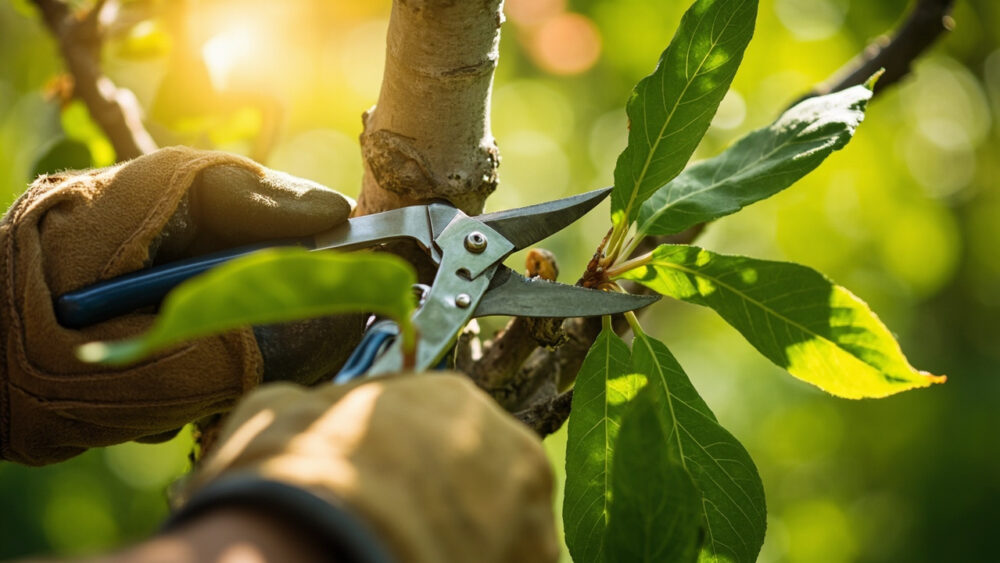
You need clean bypass pruners for anything under half an inch thick, loppers for branches up to about an inch and a half, and a pruning saw for anything bigger. Skip anvil-style pruners, they crush rather than slice and leave a ragged wound magnolias heal poorly.
The prep step nobody skips on purpose but should never skip anyway: wipe your blades with rubbing alcohol before you start, and again if you move between trees. Magnolias are not especially disease-prone, but a dirty blade can carry fungal spores or bacterial canker from a sick tree straight into a healthy cut.
Step back and look at the whole tree before you cut anything. Magnolias have a natural, somewhat irregular branching habit, and overcorrecting toward a tidy round shape is a cosmetic mistake you will be looking at for years.
Once your tools are clean and you have a plan, it is time to look at the actual cuts.
How to Prune a Magnolia Step by Step
Start with the three D’s
Remove anything dead, damaged, or diseased first, cutting back to healthy wood or all the way to the trunk if the branch is fully compromised. This alone often accounts for most of what a mature magnolia actually needs in a given year.
Cut crossing and rubbing branches
Where two branches cross and rub bark, choose the stronger, better-placed one and remove the other at its point of origin. Rubbing bark is a slow, ongoing wound and a common entry point for decay.
Cut just outside the branch collar
Find the slightly swollen ridge where a branch meets the trunk or a larger limb, that is the branch collar. Cut just beyond it, angled slightly away from the trunk, never flush against it and never leaving a long stub.
Take no more than 15 to 20 percent
Magnolias tolerate light, thoughtful pruning far better than a heavy cutback. Removing more than about a fifth of the live canopy in one season stresses the tree and can trigger a flush of weak, whippy regrowth instead of the shape you wanted.
Once the cuts are made, the tree still has some talking to do.
What to Expect in the Weeks After Pruning
Expect the cut sites to darken slightly and callus over within a few weeks, that is the tree sealing the wound on its own, and it does not need paint, tar, or any sealant product. Sealants actually trap moisture against fresh wood and can slow healing rather than help it.
If you see clear or amber sap oozing from a cut, that is not disease and it is not a bad sign. Magnolias, like many species with soft wood, weep sap after a cut and it stops on its own within a week or two.
New growth usually shows up within four to six weeks on deciduous types, sometimes faster on established evergreens in warm weather. That new growth will not carry flowers this year, but it is exactly the wood next year’s buds will form on.
That regrowth pattern is also where the next mistake usually happens.
The Mistakes That Cost You a Season of Flowers
- Pruning in late winter or early spring: this is the single most common mistake, and it removes buds the tree already set months earlier.
- Topping the tree to control height: cutting main limbs back to stubs triggers a thicket of weak upright shoots and ruins the natural branching structure for years.
- Removing more than 20 percent in one go: heavy pruning on an established magnolia is a slow-recovery mistake, not a quick fix, and often takes two or three seasons to grow out of.
- Leaving stubs instead of cutting to the collar: stubs die back, invite decay, and rarely heal cleanly.
- Pruning a young magnolia hard to force shape: trees under three or four years old should get only minimal corrective cuts, dead wood and crossing branches, nothing more, while the root system is still establishing.
Every one of these is fixable next season except the timing mistake, and even that just costs you a year, not the tree.
Magnolia Trees at a Glance
- When to prune: right after flowers fade, within two to four weeks for deciduous types, late spring through mid summer for evergreens like southern magnolia.
- When to avoid pruning: late fall, winter, and early spring, since deciduous types have already set next year’s buds by then.
- How much to remove: no more than 15 to 20 percent of the live canopy in a single season.
- Where to cut: just outside the branch collar, angled slightly away from the trunk, never flush and never leaving a stub.
- Tools needed: bypass pruners for small growth, loppers up to about 1.5 inches, a pruning saw for anything larger, blades wiped with alcohol before starting.
- What is normal after cutting: sap weeping for a week or two and new growth within four to six weeks, neither is a problem.
- Young trees: limit pruning to dead, damaged, or crossing wood only until the tree is three to four years established.
Prune a magnolia with the flowers still in your memory, not the calendar in your hand.
Get that one thing right and the rest is just clean cuts and patience.