The short answer: you don’t prune bamboo the way you prune a shrub. You cut old and damaged culms (the canes) out at ground level in late winter to early spring before new shoots emerge, thin crowded stands by removing the oldest quarter to a third of the canes, and control height by topping individual canes at a joint once they’ve reached full size, never while they’re still shooting up. That’s how to prune bamboo without stunting it or triggering a stress response that sets your whole grove back a year.
Here’s the part almost nobody gets right on the first try. Most people top a bamboo cane while it’s still actively growing, thinking they’re controlling height the way they would with a hedge. That cut doesn’t heal, doesn’t branch out below it the way a shrub would, and leaves a dead, brown stub at the top forever. There’s also the timing mistake that costs an entire season of new canes, and the honest truth about whether you can actually make bamboo shorter once it’s already tall.
Stick around for the mistakes section, because it saves more bamboo than the how-to does. And bookmark this page, because the Bamboo at a Glance card at the bottom is the version you’ll actually want pulled up on your phone next time you’re standing in front of the grove with loppers in hand.
When to Prune Bamboo, and When to Leave It Alone
Late winter through very early spring is the window for major thinning and old-cane removal, before new shoots push up. In most climates that’s roughly six to ten weeks before your last expected frost, once you can see the plant is still dormant but the ground has thawed enough to work in.
Do not do heavy pruning or thinning during the shooting season. Running bamboo and clumping bamboo alike put out their new canes in a short, intense burst, usually spring into early summer depending on species and region, and a stressed plant during that window produces fewer, thinner shoots.
Light touch-up work, removing a broken cane or snipping errant side branches, is fine any time of year. It’s the structural cuts that need the dormant window.
Get the timing right and the next question is what you’re actually cutting.
Tools and the One Prep Step That Matters
You need loppers for canes under about an inch and a half, a pruning saw for anything thicker, and hand pruners for the small side branches and leaf clusters. Bamboo culms are hollow but surprisingly tough and fibrous, so dull blades will crush rather than cut clean.
Sharpen and disinfect your blades before you start, and again between plants if you’re working more than one stand. That’s the prep step people skip, and it matters more with bamboo than with most shrubs because a ragged cut on a hollow cane collects water and rots downward into the rhizome.
Wipe blades with rubbing alcohol or a diluted disinfectant, let them dry, and you’re set.
Once your tools are ready, the actual cutting follows a specific order.
Step 1: Remove Dead and Damaged Canes First
Cut any brown, cracked, or leaning culm all the way down at ground level, as close to the soil as you can get without gouging the rhizome. These canes are done contributing and just crowd the stand.
Step 2: Thin the Oldest Canes
Bamboo canes darken and get a slightly rougher, duller look as they age, usually losing the bright green sheen by year three or four depending on species. Remove roughly 20 to 30 percent of the oldest canes at ground level each year in an established stand.
This is not optional cosmetics. Thinning opens light and air into the base, which is what actually drives strong new shoot production, not fertilizer.
Step 3: Cut for Height, Only on Mature Canes
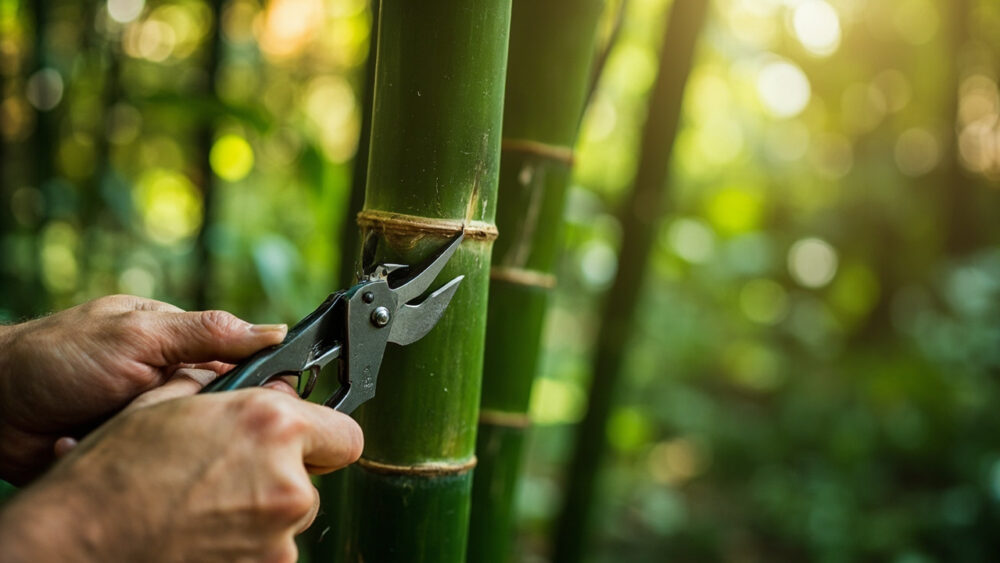
To shorten a cane, cut it just above a node (the ringed joint), never mid-internode where it will just split and die back to the nearest joint anyway. Only do this on canes that have finished their full-season growth and hardened off, which you can tell because the cane has stopped elongating and the leaves have fully unfurled.
A capped cane will not regrow taller from that cut, and it will not branch out below the cut either, so think of height reduction as permanent for that individual cane.
Step 4: Clean Up Low Branches and Leaf Litter
Strip the small twiggy side branches off the lower third of canes you’re keeping, if you want the classic clean-stemmed look. This is purely cosmetic and fine to do any time.
Once the cuts are made, the plant’s response tells you if you did it right.
What Happens After You Prune
A properly thinned stand pushes new shoots at the base within a few weeks of the growing season starting, often thicker and more numerous than the year before because you’ve freed up light and root energy. That’s the payoff for cutting old canes at ground level rather than leaving a jungle.
If you assumed a topped cane would leaf out and branch below the cut like a topped tree, that’s the guess that disappoints most people. It won’t. The cut cane stays exactly the height you left it, permanently, and any new height in the stand comes only from brand-new shoots next season, not regrowth from old canes.
That’s actually good news for control freaks: once a cane is capped at the height you want, it’s done changing.
Knowing that changes how you should think about the mistakes that actually cost people a season.
The Mistakes That Cost You a Season
- Topping during active shoot growth: cutting a still-elongating shoot stops it cold and it never resumes growing, leaving a permanently short, often weak cane in the stand.
- Cutting mid-internode instead of at a node: the hollow section between joints will crack, collect water, and rot down into the cane instead of healing.
- Skipping annual thinning: an unthinned stand gets progressively weaker new shoots every year because old canes are hogging light and root energy.
- Pruning right at planting or right after transplant: a newly planted bamboo needs its full canopy to build root mass; heavy cutting in year one delays establishment by a full growing season.
- Confusing running bamboo pruning with rhizome control: pruning the canes does nothing to stop a running species from spreading underground. That requires a physical rhizome barrier or root pruning at the soil line with a spade, done separately from canopy work.
Every one of these is recoverable except the topping-height mistake, so that’s the one to slow down and get right the first time.
With the timing and the mistakes covered, here’s the whole thing distilled down to what you’ll actually want in front of you next time you’ve got loppers in hand.
Bamboo at a Glance
- When to prune: late winter to very early spring, before new shoots emerge, roughly six to ten weeks ahead of your last frost.
- How much to thin: remove 20 to 30 percent of the oldest, dullest canes at ground level each year.
- Where to cut for height: just above a node, only on canes that have finished elongating for the season.
- What never regrows taller: a capped cane stays that height permanently and won’t branch below the cut.
- Tools needed: loppers for thin canes, a pruning saw for thick ones, sharpened and disinfected before you start.
- Avoid entirely: heavy cutting during active shoot season, cuts mid-internode, and pruning in the first year after planting.
- Running species reminder: canopy pruning does not control spread; that needs a rhizome barrier or spade-line root pruning.
Cut old canes at the base every dormant season and the stand takes care of itself. Everything else is just cleanup.