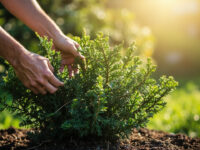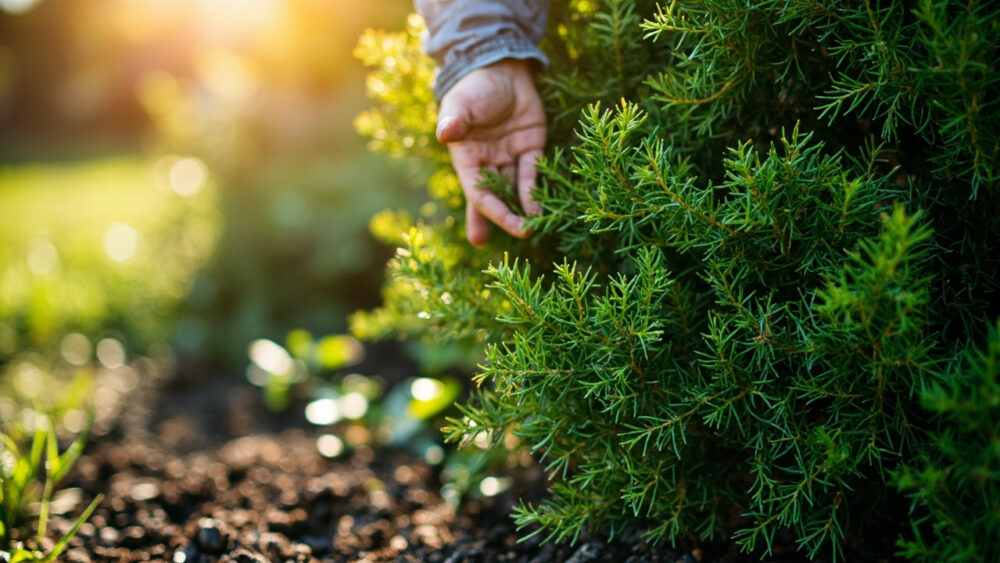
Most arborvitae grow 6 to 12 inches per year once established, though the fast-growing types like Green Giant can put on 3 feet a year under good conditions while the slow, dense types like Dark American or Hetz Midget barely manage a few inches. So the honest answer to how fast do arborvitae grow depends entirely on which one you planted, and that single fact changes everything else about your timeline.
There is also a stage most people do not expect: a newly planted arborvitae often does almost nothing for the first year, sometimes two, and that stall gets mistaken for a dying tree when it is actually a root system playing catch-up.
Stick around and I will show you how to tell if your specific arborvitae is on pace or genuinely stalled, what actually speeds growth up versus what just wastes your money, and there is a save-able quick-reference card at the bottom with the growth rates by type side by side.
The Realistic Growth Timeline
Year one after planting is the quiet year. The tree is building roots, not height, even in a variety rated for fast growth. Do not judge speed by this year.
Years two and three usually show the real number kicking in, once roots have caught up with the top growth. A Green Giant might jump 2 to 3 feet a year here. A slower globe or dwarf type might do 3 to 6 inches.
By year four or five, most arborvitae are growing at whatever their mature annual rate will be for the rest of their life, assuming the site is decent. That rate holds for years, sometimes decades, until the tree approaches its mature height and growth naturally tapers.
The number that actually matters is not this year’s growth, it is the average over three to five years.
What Actually Controls the Speed
Variety is the biggest factor by far. Green Giant and Leyland-type hybrids are bred for speed and can hit 30 to 60 feet tall over a couple decades. Emerald Green, the classic narrow privacy screen, is a moderate grower, more like 6 to 9 inches a year. Globe and dwarf forms grow so slowly you measure progress in years, not seasons.
Climate and site come next. Arborvitae generally thrive in USDA zones 3 through 8, and within that range, full sun, consistent moisture, and well-drained soil produce noticeably faster growth than shade, drought stress, or heavy wet clay.
Soil compaction and root competition from nearby trees quietly slow a lot of arborvitae that look otherwise healthy.
Two identical arborvitae from the same nursery can grow at completely different rates a few years later, just because one sits in better soil.
Reading Your Own Tree, Stage by Stage
If you assumed a stalled arborvitae means something is wrong, that guess is often backwards. The first 12 to 18 months after transplant is supposed to look slow. What you want to see is steady, if modest, new growth at the tips each spring, and foliage that stays a healthy green rather than dulling out or browning at the interior.
Measure it. Mark the height in fall and check again the following fall. That single number tells you more than staring at it every week ever will.
New growth that is soft, bright green, and appearing at multiple points on the plant is the sign of an actively growing tree, not a stalled one.
How to Legitimately Speed It Up
Consistent water is the single biggest lever you actually control. Arborvitae roots are shallow and dry out fast in the first two years. A deep soak once a week, more in extended heat, does more for growth rate than almost anything else you can buy.
A layer of mulch, 2 to 3 inches, keeps roots cool and moist and cuts down on the competition from weeds and grass that quietly steal water and nutrients.
A balanced, slow-release fertilizer in spring can help on poor soils, but skip the urge to overfeed. Too much nitrogen pushes soft, weak growth that winters poorly.
What does not work: pruning to “encourage” faster growth. Arborvitae are not like hedges that respond to hard cuts with a growth spurt, they respond with stress and sometimes bare patches that never fill back in.
Get the roots right and the top growth takes care of itself.
When Slow Growth Is Normal vs a Real Problem
A slow first two years is normal. A slow year five, on an otherwise healthy-looking tree that has had consistent water and decent soil, is worth investigating.
Signs of an actual problem rather than a naturally deliberate grower: browning that starts at the base and moves up, thin or see-through patches in the interior, needles that pull off easily, or a trunk that feels loose at the base when you push on it gently.
Bagworms, spider mites, and root rot from poorly drained soil are the usual culprits behind a true stall. Cultural fixes like improving drainage and watering correctly handle most of it; for anything that looks like an active insect or fungal issue, treat it with a product labeled for that pest and follow the label exactly.
If the tree is a genuinely slow variety and everything else looks green and healthy, the answer is simpler than a diagnosis: you just planted a slow grower, and that was never going to change.
Arborvitae: Quick Reference
- Average growth rate: 6 to 12 inches per year for moderate varieties once established, after an initial slow year or two.
- Fast varieties: Green Giant and similar hybrids can grow 2 to 3 feet per year and reach 30 to 60 feet at maturity.
- Moderate varieties: Emerald Green and similar privacy types typically grow 6 to 9 inches per year, reaching 12 to 15 feet.
- Slow varieties: Globe and dwarf forms grow just a few inches a year and stay small for a decade or more.
- Establishment period: Expect little visible growth for the first 1 to 2 years after transplanting while roots develop.
- Best growing zones: USDA zones 3 through 8, with full sun and well-drained, consistently moist soil producing the fastest rates.
- What speeds growth: Deep weekly watering, 2 to 3 inches of mulch, and a light spring feeding on poor soils.
- What does not help: Hard pruning or heavy fertilizing, both of which stress the plant rather than accelerate it.
Know your variety, give it consistent water, and judge it over years rather than weeks.
That is the whole trick to a healthy, appropriately paced arborvitae.