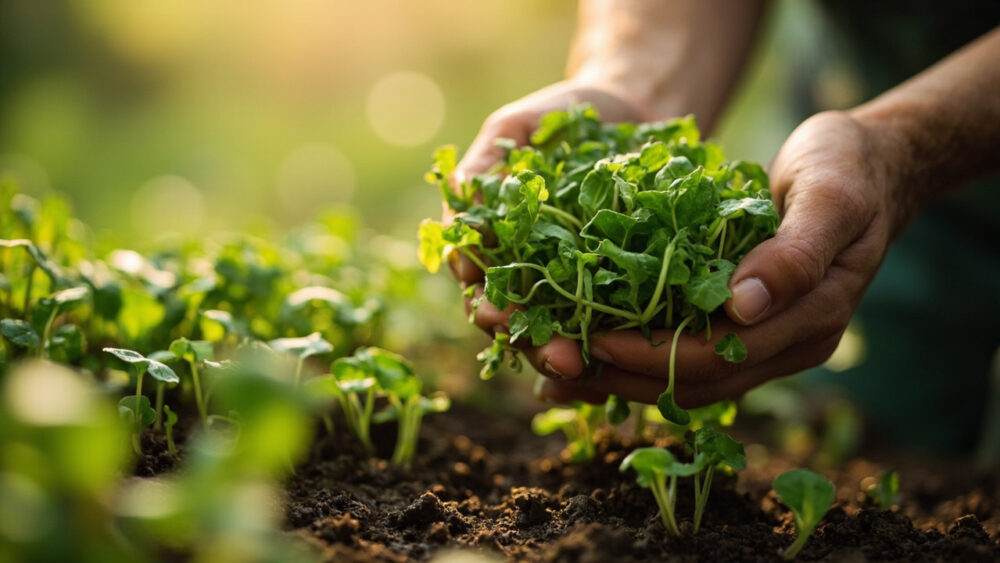
Most microgreens are ready to harvest 7 to 14 days after seeding, right around the point when the first true leaves appear above the two seed leaves (the cotyledons). That is the window for flavor, texture, and nutrition. Wait for a true leaf on most crops, but a few, like radish and sunflower, are best cut a day or two before the true leaf shows.
Knowing when to harvest microgreens is the easy part once you have grown a tray or two. The part that trips people up is everything around it: cutting too early because the tray “looks full,” letting a tray go a few days too long and losing that clean snap, and using a knife or scissors in a way that bruises half the stems before they ever hit a salad.
There is also a question most first-time growers do not know to ask yet, which is whether a tray can be cut twice. The honest answer surprises people, and it is not the one you would guess by looking at how fast the leaves come back.
Stick with this one. The save-able Microgreens at a Glance card is waiting at the bottom, with every number in one place.
The Real Ready Signs
Height is a decent rough guide, most microgreens are ready somewhere between 1 and 3 inches tall, but height alone lies to you depending on the variety and how thick you seeded the tray. The signs that actually matter are visual and textural.
The true leaf test
Every seedling starts with two seed leaves, flat and a bit rubbery, holding the last of the seed’s stored energy. The true leaf is the next set, smaller, often a slightly different shape, and it signals the plant has shifted into active growth. For most greens, sunflower being the notable exception, you want that first true leaf just starting to unfurl.
The color and stand test
Color should be even and saturated, not pale or yellow-tinged at the base. Stems should stand upright on their own rather than flopping over, which is a sign they are still too young or the tray got too little light. Give the tray a gentle brush with your hand: if it springs back instead of staying flattened, it is ready.
Those two checks together beat a ruler every time.
The Timing Window, and What Happens If You Miss It
Different crops move at different speeds, and this is where a lot of people guess wrong. If you assumed slower growers like beet and chard just need extra patience, that is true, but the bigger mistake is treating fast growers like radish and mustard the same way. They can go from perfect to bitter and tough in under 48 hours.
Fast crops (radish, mustard, arugula, broccoli) are usually ready in 7 to 10 days. Slower crops (beet, chard, basil, cilantro, amaranth) often take 12 to 21 days. Sunflower and pea shoots sit in between, typically 8 to 12 days, and are cut for tenderness rather than waiting for a true leaf at all.
Harvest too early and you lose flavor concentration and yield, the leaves taste watery and thin. Harvest too late and stems toughen, flavor turns sharp or bitter in the brassicas especially, and mold risk climbs since older, denser canopies trap more moisture at the soil line.
That mold risk is the real reason timing matters more than people expect.
How to Cut Without Wrecking a Tray
Damage at harvest is the single most common way people ruin a tray they grew perfectly. Bruised or crushed stems brown within hours and turn a beautiful harvest into something you have to pick over before you can use it.
- Stop watering 12 to 24 hours before harvest so the medium is barely damp, not wet. Wet stems bruise easier and the greens hold excess water that speeds spoilage.
- Use a sharp tool, a clean pair of scissors or a sharp knife, never dull kitchen shears that crush more than they cut.
- Cut just above the soil line, about a quarter inch up, in one clean pass rather than sawing back and forth.
- Work in small sections so you are not dragging a full handful sideways and crushing the greens underneath it.
- Lay cuttings flat in a wide, shallow container rather than piling them into a bag, which bruises the bottom layer under the weight of everything above.
Get the cut right and the next step gets a lot easier.
Right After the Cut
Microgreens are almost entirely water by weight, and that water starts leaving the moment you cut. Speed and dryness are what buy you shelf life.
Rinse only if needed, a light spray to knock off loose hull debris, then get them dry fast. A salad spinner works well; wet greens in storage rot within a day or two.
Pack them loosely in a container lined with a dry paper towel, lid on but not sealed airtight, and refrigerate right away. Handled this way, most microgreens hold decent quality for 5 to 10 days, with tender types like sunflower and pea shoots on the shorter end.
That storage window is generous, but it is not the only reason to think ahead about the tray itself.
Can You Cut a Tray Twice?
Here is the answer that surprises most new growers: no, not really, and this is different from a garden bed where cutting lettuce encourages a second flush. Microgreens are harvested by slicing through the stem near the base, which removes the only growing point the plant has. There is no regrowth coming.
A few exceptions exist, pea shoots and some grasses like wheatgrass can occasionally push a weak second cutting under ideal light and warmth, but the yield is thin and the flavor drops off. Do not plan around a second harvest from the same seeding.
What actually keeps a steady supply going is staggered seeding, starting a new tray every 3 to 5 days so one is always in the ready window while another is just germinating.
That rhythm is really the whole game once you have the cut and the timing down.
Microgreens at a Glance
- When to harvest: 7 to 14 days after seeding, generally at the first true leaf, except sunflower and pea shoots which are cut a bit earlier for tenderness.
- Fast crops: radish, mustard, arugula, and broccoli are typically ready in 7 to 10 days and turn bitter quickly if left too long.
- Slow crops: beet, chard, basil, and amaranth often take 12 to 21 days and are more forgiving of a late cut.
- Ready signs: even, saturated color, stems standing upright without support, and the first true leaf just unfurling above the seed leaves.
- How to cut: stop watering 12 to 24 hours ahead, use a sharp blade or scissors, and cut about a quarter inch above the soil line in one clean pass.
- After harvest: dry the greens thoroughly, store loosely in a container with a dry paper towel, refrigerated, for roughly 5 to 10 days.
- Regrowth: most microgreens do not regrow after cutting, so stagger new trays every 3 to 5 days for a continuous supply.
Get the true leaf and the cut right, and everything else about microgreens takes care of itself.
The rest is just timing the next tray so you never run out.