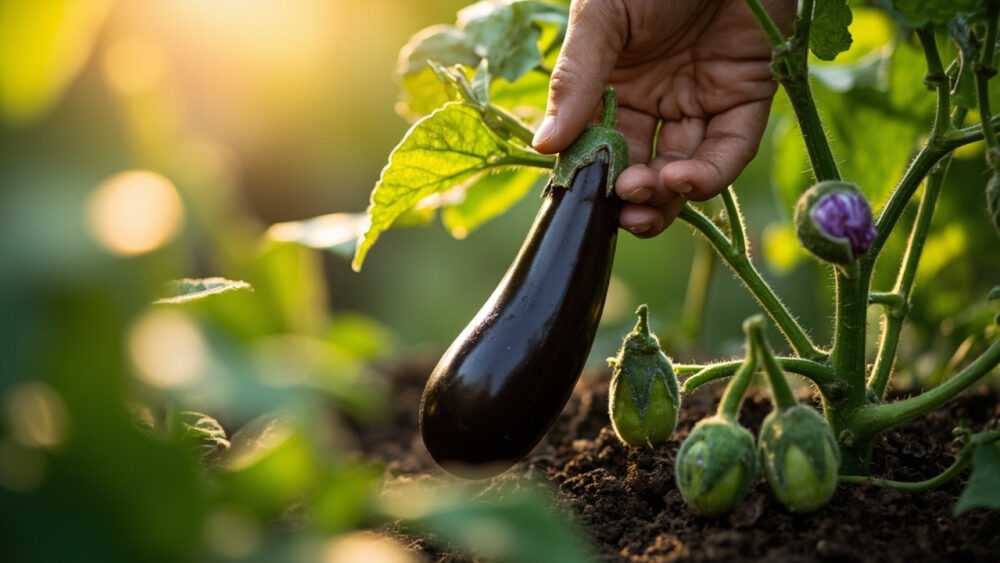
Eggplant moves through six distinct stages between seed and harvest: germination, seedling, vegetative growth, flowering, fruit set, and fruit maturation. The whole run takes 100 to 140 days depending on variety, and eggplant growing stages move noticeably slower than tomatoes or peppers, especially early on. That slowness fools a lot of gardeners into thinking something is wrong when nothing is.
Here is the loop worth opening now: most eggplant failures happen at one specific stage, and it is not the one people worry about. There is also a sign of a stalled plant that looks almost identical to a healthy one resting, and mixing the two up leads to a lot of unnecessary yanking and replanting.
Stick with this to the end and you will get a save-able Eggplant at a Glance card with every timeframe and number in one place.
Germination: Days 1 to 14
Eggplant seed needs warmth to sprout, more than most vegetable seed. Soil at 70 to 90°F germinates in 7 to 10 days; soil in the 60s can take three weeks or simply rot the seed first. This is the stage where a heat mat earns its keep.
Sow seed a quarter inch deep in a light seed-starting mix, kept consistently moist but never soggy. You will see a bent stem push through first, then two seed leaves unfold.
Cold, slow germination is where a lot of eggplant seasons quietly end before they start.
Seedling stage: Weeks 2 to 6
Once the seed leaves open, true leaves follow within a week. Growth here is genuinely slow, slower than you will believe if you have started tomatoes before.
Seedlings want 14 to 16 hours of strong light a day. A sunny windowsill is not enough; without a grow light or very bright exposure, stems stretch thin and pale reaching for more.
Do not transplant outside yet. Eggplant will not tolerate anything below 50°F, and a single chilly night can set a young plant back for weeks.
Slow does not mean stalled, and that distinction matters more at this stage than any other.
Hardening off and transplanting: 2 to 3 weeks after your last frost
Wait until nighttime lows sit reliably above 55°F and soil temperature has warmed past 65°F. Eggplant is more cold-sensitive than tomatoes and peppers, so if you would push those out early, hold eggplant back a bit longer.
Harden seedlings off over 7 to 10 days, adding outdoor time gradually and starting in shade before full sun.
Space plants 18 to 24 inches apart in rows 24 to 30 inches apart, and set them at the same depth they grew in their pot, unlike tomatoes, eggplant does not want to be buried deeper.
This transplant shock recovery period is exactly where the guessable mistake happens, and it is not the one most people expect.
The stage where most eggplant plants actually fail
If you assumed the seedling stage is the fragile one, that is a fair guess, and it is wrong. The real danger zone is the two to three weeks right after transplant, during early vegetative growth.
Eggplant sulks hard after transplanting. Leaves can droop, purple undersides show up on stems, and the plant may sit still for 10 to 14 days doing seemingly nothing.
Most gardeners panic here and either drown the plant with water or yank it thinking it is dying. Neither helps.
The actual fix is patience plus warmth. Keep soil evenly moist, not wet, and if nights are still cool, cover plants or wait it out. Cold soil and cold air, not underwatering, cause most of this stall.
Once nighttime temperatures hold above 60°F, growth resumes fast, and that resumption is the real sign to watch for next.
Vegetative growth: Weeks 3 to 8 after transplant
Healthy resumption looks like new leaf growth at the top of the plant, a visibly thickening main stem, and leaves that hold their shape in the morning instead of drooping until 10 a.m.
Feed with a balanced fertilizer or compost at planting and again three to four weeks later. Too much nitrogen here buys you a lush, leafy plant with few flowers, which is the opposite of what you want.
Plants typically reach 18 to 30 inches tall with branching stems by the end of this stage, depending on variety.
Once the plant is bushy and dark green, it is building toward the stage everyone is actually waiting for.
Flowering: Weeks 6 to 10 after transplant
Star-shaped purple or white flowers appear at branch joints, usually once the plant has 8 to 12 true leaves. Each flower is self-pollinating, but bees and wind-assisted movement improve fruit set noticeably, especially in still, humid weather.
Flowers that drop without setting fruit usually mean temperature stress, either nights still dipping below 60°F or days pushing past 95°F. That is normal for a stretch and not a sign of disease.
Gently shaking flowering branches midday can help pollen move if you are getting a lot of drop.
Once you see the flower base swell into a tiny bulb, fruit set has actually begun.
Fruit set and sizing: Weeks 8 to 12 after transplant
The tiny bulb behind a spent flower is the fruit forming. From here to harvest-ready size takes 3 to 5 weeks depending on variety and heat.
This is the stage that separates a stalled plant from a resting one, the second loop worth resolving now. A resting plant still has firm, dark leaves and steady, if slow, fruit swelling. A stalled plant has yellowing lower leaves, dropped flowers with no fruit behind them for weeks, and soil that is either bone dry or waterlogged an inch down.
Consistent watering matters enormously here, roughly 1 to 1.5 inches a week. Irregular water causes bitter fruit and blossom end issues later.
Once fruit skin turns glossy and taut, you are in the final stretch.
Fruit maturity and harvest: When skin stops being glossy
Harvest when fruit is glossy, firm, and has reached typical size for its variety, that glossiness is the tell, not size alone. A dull, matte skin means the fruit is overripe, and seeds inside will have hardened and turned bitter.
Press a thumb gently against the skin: it should spring back. If your thumbprint stays dented, it is overripe.
Cut fruit with a sharp knife or shears rather than pulling, leaving a short stem cap attached, and expect 4 to 8 fruits per plant depending on variety and season length.
Regular harvesting every 5 to 7 days keeps the plant setting new flowers instead of pouring energy into oversized fruit.
Eggplant at a Glance
- When to plant: start seed indoors 8 to 10 weeks before last frost, transplant outside 2 to 3 weeks after last frost once nights stay above 55°F.
- Soil temperature: germinate at 70 to 90°F, transplant once soil is above 65°F.
- Spacing: 18 to 24 inches between plants, 24 to 30 inches between rows.
- Planting depth: quarter inch for seed, same depth as the nursery pot for transplants.
- Days to harvest: 100 to 140 days total from seed, or 60 to 80 days after transplant.
- Watering: 1 to 1.5 inches per week, consistent, never letting soil dry out completely.
- Harvest sign: glossy, taut skin that springs back under gentle thumb pressure, not dull or dented.
The plant that looks stalled after transplant almost always is not, it just needs warmth and time. Watch skin glossiness, not size, and you will never guess wrong at harvest.