You harvest snap peas when the pods are plump and fill out the pod wall but still snap cleanly and juicy when you bend one in half, usually 60 to 70 days after planting and about 2 to 3 weeks after the plants finish flowering. The pod should look glossy and rounded, not flat and not bulging so hard the seeds show through. Get this window right and you get weeks of sweet, crisp peas. Get it wrong in either direction and you get either thin, disappointing pods or tough, starchy ones that taste like the inside of a paper bag.
Here is where most people trip up: they wait for the pod to look like a snow pea (flat) or a shelling pea (round and bulging with visible seed bumps), when snap peas actually want to be caught in between. There is also a picking mistake that snaps the whole vine off at the base instead of just the pod, and it costs you the rest of that plant’s production for the season.
Stick around for the part on how often you actually need to be out there checking plants, because it is more frequent than most new gardeners expect. And save the Snap Peas at a Glance card at the very bottom, it has the numbers you will want pinned to your phone before you go out to the garden.
The Ready Signs: What a Perfect Snap Pea Pod Looks and Feels Like
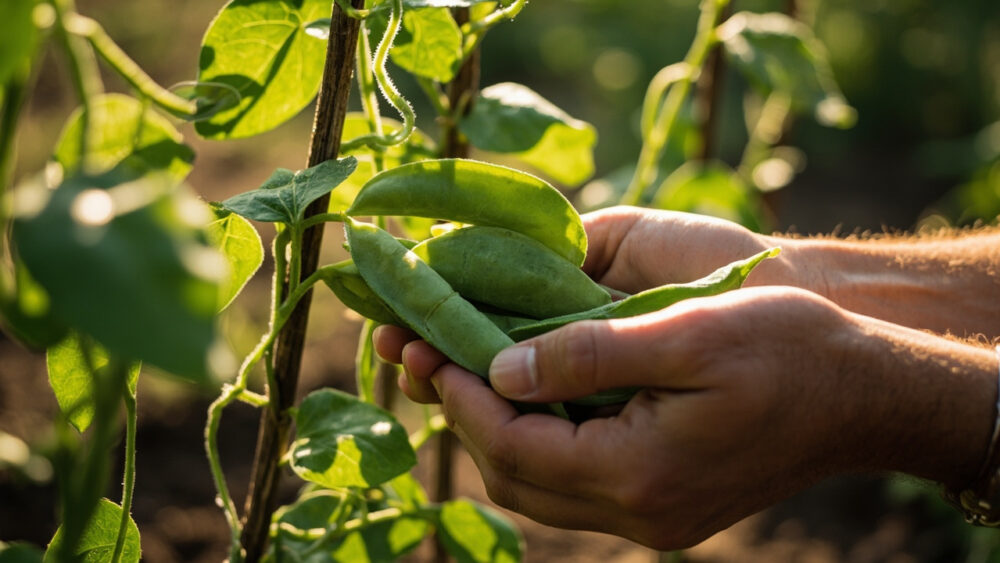
A ready snap pea pod is plump but not tight. Run your finger along it and you should feel the peas inside as gentle bumps, not sharp ridges straining the pod wall.
Color matters too. The pod should be a bright, deep green, glossy rather than dull or pale.
The snap test
Pick one and bend it. A ready pod snaps clean and audibly, with a little bead of moisture at the break.
If it bends and folds like a rubber band instead of snapping, it is not ready yet.
Once you know that snap, you will hear it before you even look at the next pod.
The Timing Window, and What Everyone Gets Wrong About It
Snap peas mature roughly 60 to 70 days from seeding, but the number that actually matters is 7 to 10 days after the flowers drop and the pod starts forming. That is your real countdown.
If you were assuming bigger is always better and waiting for the pod to bulge like a shelling pea, that guess costs you flavor and texture. An overgrown snap pea gets tough, the sugars convert to starch, and the pod wall turns fibrous and stringy.
Go too early and you lose the other direction. Underdeveloped pods are thin, watery, and mostly crunch with little sweetness, because the sugar content in peas builds fast in the final few days before full plumpness.
The honest window is narrow, often just 2 to 4 days of true peak on any given pod. That is exactly why one big harvest day rarely works.
That narrow window is also why checking plants only once a week quietly wrecks half your crop.
How Often to Check, and Why Daily Beats Weekly
In warm weather, snap pea pods can go from underripe to overripe in 3 to 4 days. In cooler spring conditions that stretches to 5 or 6 days.
Check plants every 1 to 2 days once flowering starts, not once a week. This is the follow-up question most people do not think to ask until their harvest is half woody pods and half wasted potential.
Peas also do not ripen all at once on the same plant. Lower pods mature first, upper ones follow over the next couple weeks.
That staggered ripening is actually good news, since it means your harvest window is really a harvest season.
How to Pick a Snap Pea Without Damaging the Vine
Snap pea vines are brittle, and this is the mistake that quietly shortens the whole season. Use two hands: hold the vine stem with one hand near the pod’s stem attachment, and pull or snip the pod off with the other.
Pulling with one hand yanks the entire vine section down or snaps it off at a leaf node, and that node was going to produce more flowers and pods later.
If pods are clustered tight, use small scissors or garden snips instead of your fingers. It is faster and it protects the tendrils that are still climbing your trellis.
- Locate the pod’s short stem where it meets the main vine.
- Steady the vine with one hand.
- Snap or snip the pod stem with the other hand, close to the pod.
- Move to the next pod without tugging the vine sideways.
Handled gently, one plant will keep pushing out new flowers and pods for 4 to 6 weeks.
What to Do With Them in the First Hour After Picking
Snap peas start losing sweetness the moment they leave the vine, faster than almost any other garden vegetable. The sugar-to-starch conversion begins within hours at room temperature.
Get them into the refrigerator as soon as possible, ideally within 30 to 60 minutes of picking. Do not wash them until right before you use them, since moisture sitting on the pods speeds spoilage.
Store unwashed pods in a loosely closed bag or container in the crisper drawer. Handled this way they hold good flavor and crunch for 5 to 7 days.
If you picked more than you can eat fresh this week, do not let them sit and go soft in a bowl on the counter.
Keeping the Harvest Coming, and What to Do With a Glut
The single biggest thing that extends a snap pea harvest is consistent picking. Leaving even a few pods to go overripe signals the plant to slow down flower production, since its job is done once seed is maturing.
Pick every ready pod every time you check, even if you do not need them all yet.
Snap peas do not store long-term fresh, so a real glut means blanching and freezing. Blanch whole pods 1 to 2 minutes in boiling water, cool immediately in ice water, drain well, and freeze in a single layer before bagging.
Snap peas are also a cool-season crop that stalls and eventually stops producing once daytime temperatures push consistently past 80 to 85°F, so a strong late-season push is often the plant’s last real flush before the heat shuts it down.
Once you see that slowdown, that is your plant telling you the season is closing, not a problem to fix.
Snap Peas at a Glance
- When to plant: 4 to 6 weeks before your last spring frost, once soil hits about 45°F, or in late summer for a fall crop timed to mature before hard frost.
- Days to harvest: roughly 60 to 70 days from seeding, or 7 to 10 days after flowers drop and pods start forming.
- Ready signs: pod is plump, glossy, deep green, and snaps cleanly with a little moisture at the break, not floppy and not bulging tight.
- How often to check: every 1 to 2 days once flowering begins, since peak ripeness lasts only 2 to 4 days per pod.
- How to pick: hold the vine steady with one hand, snap or snip the pod off with the other, never pull with one hand.
- After harvest: refrigerate unwashed within 30 to 60 minutes, use or freeze within 5 to 7 days.
- Keep it producing: pick every ready pod every time, expect the vines to slow and stop once days run consistently past 80 to 85°F.
If you remember one thing, remember the snap test, not the size of the pod. A clean, juicy snap beats a big bulging pod every time.