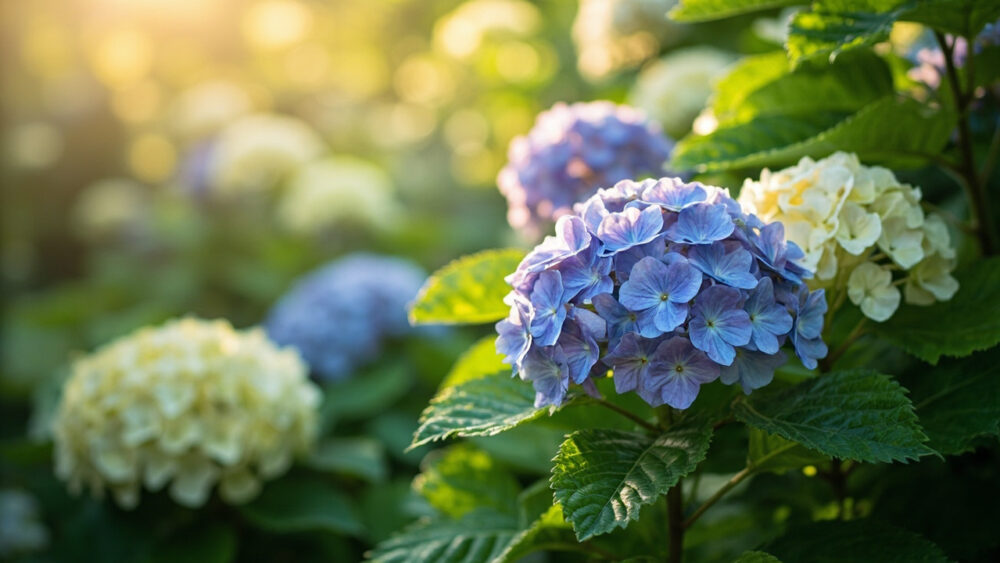
Most hydrangeas bloom from late spring into fall, roughly June through September, with the peak show in July and August. The exact window depends on which type you’re growing and how far north you are. In warm zones the first flowers can open in May, in cold zones you might not see color until July.
That’s the short answer, but it skips the part that actually matters to you standing in front of your own bush right now. What controls that timing is not the calendar, it’s last year’s growth and this year’s weather, and there’s one common mistake with pruning shears that erases a whole season of flowers before it starts.
Stick around for how to read your specific plant, how to stretch the bloom season longer than it wants to go naturally, and the honest list of reasons a hydrangea refuses to flower. There’s a save-able quick-reference card waiting at the bottom once you’ve got the full picture.
How Long the Bloom Season Actually Lasts
A healthy hydrangea doesn’t bloom all at once and quit. Individual flower heads last four to eight weeks, and because a mature shrub sends up blooms in waves, the whole plant can stay in color for two to three months straight.
Bigleaf hydrangeas (the classic mophead and lacecap types) usually start the show in early to mid summer and taper by early fall. Panicle types like Limelight often don’t get going until midsummer but push well into October, fading to a dusty pink or tan instead of dropping petals outright.
Smooth hydrangeas (Annabelle types) bloom earlier and burn out a bit sooner than panicle types. Oakleaf hydrangeas split the difference, blooming early summer with color that lingers as the leaves turn color in fall.
Knowing which type you own changes everything else on this page, so let’s sort that out next.
What Actually Controls Bloom Timing
Three things decide when your hydrangea flowers: type, climate, and wood age. Type matters most. Bigleaf and oakleaf hydrangeas bloom on “old wood,” meaning the stems that grew last year. Panicle and smooth hydrangeas bloom on “new wood,” the stems that grow fresh each spring.
Climate shifts the whole window earlier or later. In zone 8 or 9, bigleaf hydrangeas can start blooming in May. In zone 5, that same variety might not open a flower until July, if the buds survived winter at all.
Reblooming varieties (sold under names like Endless Summer) flower on both old and new wood, which is why they’re forgiving of a late frost that kills the old buds. If you’re not sure what you have, watch where the first flowers appear this year. Buds low on old stems mean old-wood bloomer, buds on this year’s new green growth mean new-wood bloomer, and knowing that answers most of your other questions.
That distinction is also the key to getting more flowers, not just understanding the ones you already have.
How to Get More Blooms, or a Longer Show
If you assumed more fertilizer means more flowers, that’s usually not it, and heavy nitrogen feeding actually pushes leafy growth at the expense of blooms. What moves the needle is light, water, and pruning timing.
Give bigleaf and oakleaf types morning sun and afternoon shade. Full, blazing afternoon sun stresses the plant into fewer, smaller blooms even if the plant itself looks fine. Panicle hydrangeas tolerate more sun and actually flower better with it.
Water deeply once or twice a week during bloom season rather than a light daily sprinkle. Hydrangeas wilt fast in heat and a stressed plant shortens its own bloom time to conserve energy.
For more flowers next year, feed with a balanced, phosphorus-leaning fertilizer in early spring, not late summer. Late feeding pushes soft new growth that winter kills, which costs you next year’s buds.
Pruning is where most of the damage happens, and that’s worth its own section.
Why Your Hydrangea Isn’t Blooming
This is the complaint that brings most people to this page, so here’s the honest rundown of causes, roughly in order of likelihood.
- Wrong-time pruning: cutting an old-wood bloomer back hard in fall or spring removes the buds before they ever open. This is the single most common cause.
- Late frost damage: a cold snap after buds have formed on old wood kills the flower before it shows, even though the plant looks green and healthy.
- Too much shade: not enough light to trigger flowering, especially under trees that have filled in since planting.
- Too young: a hydrangea planted within the last year or two may need another season to establish before it commits energy to flowers.
- Too much nitrogen: lush green growth with no buds usually points to overfeeding or lawn fertilizer runoff nearby.
Most of these are fixable next season, not fatal, which is the honest prognosis worth hearing.
Pruning and Deadheading Without Losing Next Year’s Flowers
Deadheading spent blooms doesn’t extend an individual flower’s life, but it tidies the plant and redirects energy while new buds form elsewhere on the shrub. Snip just below the spent flower head, leaving the stem and leaves intact.
For old-wood bloomers (bigleaf, oakleaf), prune right after flowering finishes, never in fall or early spring. That gives new buds the full growing season to form and harden off before winter.
For new-wood bloomers (panicle, smooth), prune in late winter or very early spring while the plant is still dormant. Since the flowers form on growth that hasn’t happened yet, you can’t accidentally cut off this year’s blooms.
On old-wood types in cold climates, a loose layer of mulch or leaves over the base in late fall protects the lowest buds from a hard freeze. That single habit saves more blooms than any fertilizer schedule will.
Get the timing right once and it becomes automatic every year after, which is really the whole trick.
Hydrangeas: Quick Reference
- Bloom window: late spring through fall, typically June through September, peaking in July and August.
- Bloom duration: individual flower heads last four to eight weeks, whole shrub often colorful for two to three months.
- Bigleaf and oakleaf types: bloom on old wood, prune only right after flowering ends.
- Panicle and smooth types: bloom on new wood, prune in late winter or early spring while dormant.
- Light needs: morning sun with afternoon shade for bigleaf and oakleaf, more sun tolerated by panicle types.
- Most common no-bloom cause: pruning old wood at the wrong time or losing buds to a late frost.
Match your pruning to your type and the rest mostly takes care of itself.
Your hydrangea isn’t broken, it’s just telling you what kind it is.