The honest answer to how to prune hydrangeas depends entirely on which type you have, and that single fact is why more hydrangeas get butchered than almost any other shrub in the yard. Bigleaf and oakleaf hydrangeas bloom on old wood, so you prune them right after flowering and never in late winter or spring. Panicle and smooth hydrangeas bloom on new wood, so late winter dormant pruning is exactly right for them.
Get that one distinction backwards and you will not kill the plant, but you will cut off an entire season of flowers without knowing why until July, when the leaves come in green and healthy and every bloom is missing.
That mix-up is the mistake that ruins most attempts, and it is coming up in detail below. So is the sign almost everyone misreads on a hydrangea in early spring, the one that makes gardeners grab the loppers when they should be putting them away. Stick around for the “how much wood to actually remove” question too, since the honest answer surprises people who assume more cutting means more blooms. Save-able specifics for all four common types are waiting in the Hydrangeas at a Glance card at the bottom.
When to Prune, and When to Leave the Loppers in the Shed
Split your hydrangeas into two camps before you cut anything. Bigleaf hydrangea (Hydrangea macrophylla, the big mophead and lacecap types) and oakleaf hydrangea (Hydrangea quercifolia) set next year’s flower buds on this year’s growth, starting as early as mid to late summer. Prune them within a few weeks after the flowers fade, before that bud-setting window closes.
Panicle hydrangea (Hydrangea paniculata, including Limelight and PeeGee types) and smooth hydrangea (Hydrangea arborescens, including Annabelle) bloom on wood grown that same spring. Prune those in late winter or very early spring, while the plant is still dormant and before new growth pushes, generally a few weeks before your last expected frost.
Never prune bigleaf or oakleaf types in fall or late winter on the assumption that “dormant season is safe pruning season.” That rule only applies to the new-wood bloomers.
Knowing which camp your shrub is in decides everything else you do this year.
The One Prep Step Nobody Skips on Purpose, But Should Never Skip Anyway
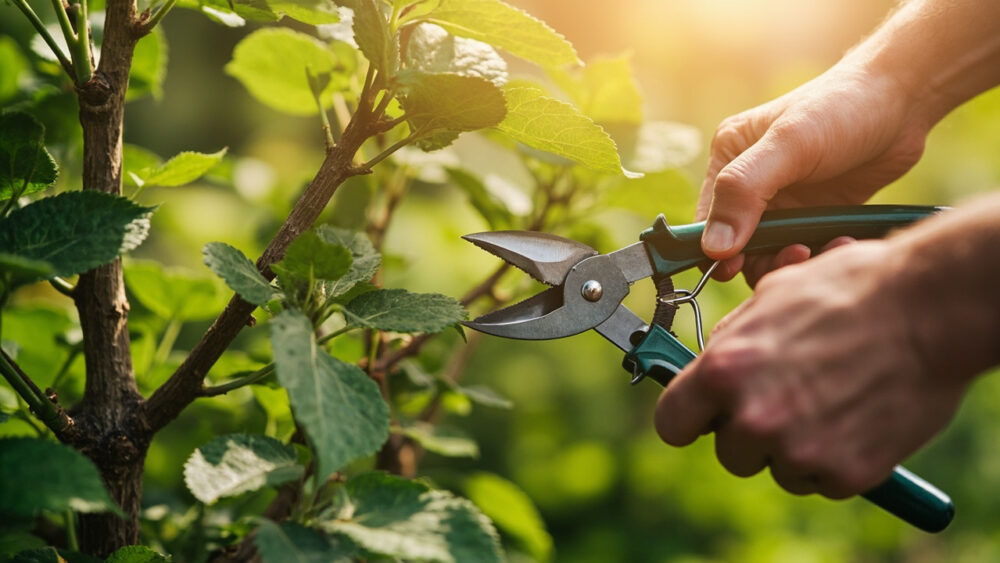
You need bypass pruners for stems under about half an inch thick, and bypass loppers for anything thicker at the base of an older oakleaf or panicle hydrangea. Clean cutting tools matter less for hydrangeas than for roses, but a dull blade that crushes stems instead of slicing them invites rot at the cut, especially on the soft, pithy stems of bigleaf types.
The prep step that actually matters is identification, not tool sharpening. Walk the shrub and confirm which type you have before the first cut, because bigleaf and panicle hydrangeas can look similar from a distance in winter with no leaves or flowers to guide you.
Bigleaf stems are thick, somewhat pithy, and often still hold papery brown flower heads from last season. Panicle hydrangea stems are woodier and more uniform, closer to a lilac’s structure.
If you genuinely cannot tell which type you own, wait one full bloom cycle and prune right after that bloom instead of guessing in winter.
Once you know what you are holding, the actual cutting takes ten minutes.
How to Prune Hydrangeas Step by Step
Old-wood types (bigleaf, oakleaf): right after flowering
Cut spent flower heads back to the first strong, healthy-looking bud below the flower, usually 3 to 6 inches down the stem. Remove no more than about a third of the total plant in any one year on established shrubs.
Take out any dead, damaged, or crossing stems at the base at the same time, cutting flush to the ground or to a healthy lower joint.
On oakleaf hydrangea specifically, resist cutting hard into old wood for shaping. It is slower to rebound and can skip a full bloom season if cut back too aggressively.
New-wood types (panicle, smooth): late winter, before growth starts
These can take a much harder cut. Reduce the whole plant by roughly a third to a half of its height, cutting to a strong pair of buds.
Smooth hydrangea (Annabelle types) actually tolerates being cut nearly to the ground, 6 to 12 inches, every year if you want a firmer, more compact plant with sturdier stems.
Panicle hydrangea prefers a lighter hand than that, mostly shaping and thinning rather than a stump cut, or the resulting growth gets floppy under the weight of the flower heads.
Cuts are the easy part. What the shrub does over the following weeks is where the real questions start.
What to Expect After You Cut
Here is the sign almost everyone misreads. In early spring, an old-wood hydrangea often looks half dead, with some stems leafing out low and other upper stems staying bare and brown. If you assume those bare upper stems are dead and lop them off, you are cutting away buds that were about to flower.
Wait until you see clear green leaf growth (or its total absence) before deciding a stem is dead. Scratch the bark lightly with a thumbnail: green underneath means alive, brown and dry all the way through means dead.
New-wood types respond faster and more predictably. Expect vigorous new stems within a few weeks of the spring cut, with flower buds forming on that new growth by summer.
Bigleaf hydrangeas pruned correctly right after flowering usually push new buds within the same season, invisible until the following spring.
Patience during that bare-looking stretch is what separates a good bloom year from a ruined one.
The Mistakes That Cost You an Entire Season of Blooms
Pruning bigleaf or oakleaf hydrangeas in fall or late winter is the single most common flower-killing mistake, since you are cutting off buds that are already set for next year.
Assuming “more cutting means more flowers” is the second-biggest mistake, and it runs backwards for old-wood types. Hard pruning a bigleaf hydrangea removes the very growth that was going to flower, leaving you with a leafy, bloomless shrub for a year.
Shearing the whole shrub into a ball with hedge trimmers ranks third. It removes buds unevenly, wounds far more stems than needed, and produces a shrub that looks tidy but blooms sparsely.
Ignoring winter dieback is the quiet fourth mistake. In colder zones (roughly zone 5 and the colder edge of zone 6), bigleaf hydrangea stems can die back from frost even when the roots survive fine, and cutting all the way to live tissue in spring is a repair job, not a style choice.
Get the timing and the type right, and hydrangea pruning stops being guesswork and turns into routine yard maintenance.
Hydrangeas at a Glance
- Bigleaf and oakleaf hydrangeas: prune right after flowering, within a few weeks, never in fall or late winter.
- Panicle and smooth hydrangeas: prune in late winter to very early spring, before new growth starts.
- How much to remove: about a third of the plant on old-wood types, up to a third to a half on new-wood types, and smooth hydrangea can be cut nearly to the ground.
- Where to cut: just above a healthy, strong-looking bud, 3 to 6 inches below spent flowers on old-wood types.
- Tools needed: bypass pruners for thin stems, bypass loppers for thick old growth, both cleaned and sharp.
- Sign of trouble: bare upper stems in early spring on an old-wood hydrangea are often alive, not dead, so scratch the bark before cutting.
- Cold climates: in zone 5 and colder pockets of zone 6, expect some winter dieback on bigleaf types and prune dead wood back to live tissue in spring, separate from the after-bloom prune.
When in doubt, prune less and wait a season rather than guess and cut hard. A hydrangea forgives a light touch far more easily than it forgives the wrong timing.