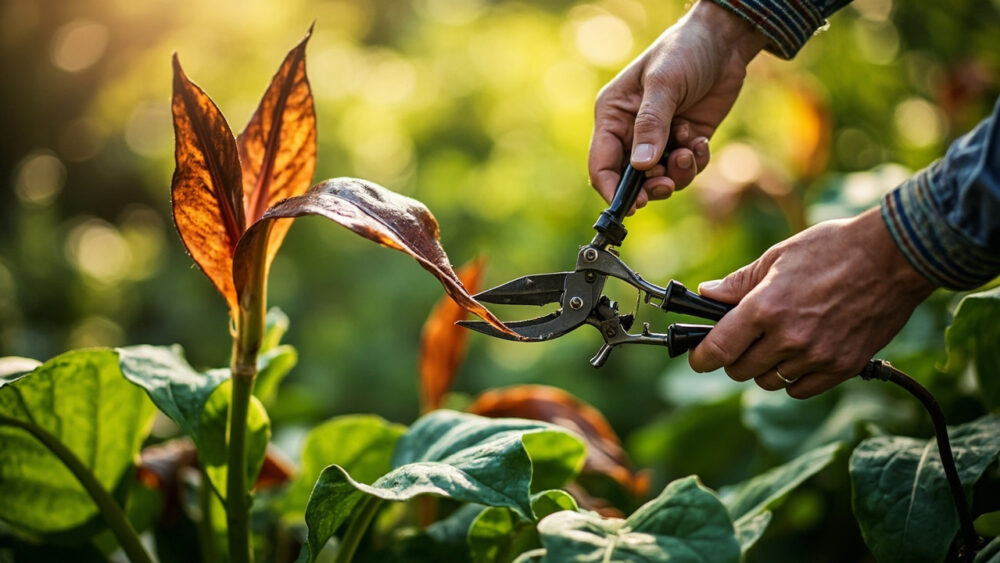
You prune canna lilies by cutting spent flower stalks down to the next leaf junction, removing yellowed or storm-damaged leaves at the base, and cutting the whole plant back to 4 to 6 inches after frost blackens it in fall. That’s how to prune canna lilies in one sentence, but the details are where most people either get bigger blooms or end up with a floppy, flowerless mess. Cannas are forgiving plants right up until you cut the wrong thing at the wrong time.
There’s one cut almost everyone gets backward, and it costs an entire round of blooms without them ever knowing why. There’s also a sign on the leaves that people read as “the plant is dying” when it usually means the opposite. And if you’re standing there wondering whether to cut the stalk or the whole rhizome clump, that’s the exact question this guide answers next.
Stick around for the “Canna Lilies at a Glance” card at the very bottom. It’s the short version you can screenshot before you walk back outside with the shears.
When to Prune, and When to Leave It Alone
Cannas get pruned at three separate moments, not one. Deadheading spent blooms happens continuously through the summer bloom season, as often as every few days once flowering starts. Leaf and stalk cleanup happens whenever you spot yellow, torn, or diseased foliage, which could be anytime from late spring on.
The hard cutback happens once, in fall, after the first frost blackens the foliage, or before you dig and store rhizomes in zones colder than about 7 where cannas can’t overwinter in the ground.
The mistake is pruning hard in spring or early summer because a plant looks leggy. Cannas are supposed to look a little wild before they bloom. Cut them back hard mid-season and you remove the growth that was about to flower, setting the plant back weeks.
Knowing when not to cut matters as much as knowing when to, and that shapes exactly how you approach the tools next.
Tools and the One Prep Step That Actually Matters
You need bypass pruners or a sharp knife for stalks, and clean garden shears for the fall cutback. That’s the whole tool list. The prep step people skip is wiping the blades with rubbing alcohol between plants, especially if any canna nearby has shown streaky or mottled leaves.
Canna mosaic virus spreads on cutting tools, and it doesn’t show up as anything dramatic at first, just faint yellow streaking along the veins that a lot of gardeners write off as a nutrient issue. If you’re cutting one canna after another without cleaning the blade, you can move that virus down the whole row without ever knowing you did it.
There’s no cure once a plant has it, only removal, so the wipe-down is cheap insurance against a problem you can’t fix later.
With clean tools in hand, here’s exactly where to make each cut.
How to Prune Canna Lilies Step by Step
Deadheading the Flower Stalk
Cannas bloom in clusters up a single stalk, opening a few flowers at a time from the bottom up. Once a bloom fades and browns, snap or cut it off at its own short stem, just above where it joins the main stalk.
Do not cut the whole flower stalk yet if there are still unopened buds above the spent bloom. That’s the backward cut. Take the whole stalk too early and you throw away flowers that hadn’t opened.
Once every bloom on that particular stalk has finished and the whole stalk is spent, cut it down to the first full leaf, about 2 to 4 inches below where the flowers were. A new stalk will usually rise from that leaf joint within two to three weeks in warm weather.
Removing Damaged or Yellowing Leaves
Cut individual leaves at the base of the leaf stem, right where it meets the main stalk. Don’t leave a stub, and don’t tear the leaf off by hand, which can strip bark-like tissue down the stalk and open a wound insects and rot can use.
Remove leaves that are more than half yellow, torn from wind or hail, or showing fungal spotting. Leave leaves that are still mostly green even if they have some tattering, since they’re still feeding the rhizome.
The Fall Hard Cutback
After the first hard frost blackens and collapses the foliage, cut every stalk down to 4 to 6 inches above the soil. In zones 8 and warmer, you can often leave the cut stubble in place over winter as light mulch.
In zones 7 and colder, this is also your signal to dig the rhizomes within a week or two, before the ground gets cold enough to damage them, and store them dry and frost-free over winter.
Cutting is only half of it, and what happens in the two weeks after tells you whether you did it right.
What to Expect After You Cut
After deadheading, expect a new stalk from the same leaf axil within two to three weeks in warm conditions, slower if nights have dropped below 60°F. After removing damaged leaves, expect no regrowth from that spot. Cannas don’t push new leaves from a cut leaf base, only from the crown.
If you assumed cutting back hard mid-summer would push the plant to rebloom faster, that guess is exactly backward. A mid-summer hard cutback removes the stored energy the plant needs to flower again, and you’ll often get several weeks of pure leaf regrowth with no blooms at all before it recovers.
The honest fix if you’ve already done this: keep the plant fed and watered and wait. It will bloom again this season in most climates, just later than it would have otherwise. Nothing is permanently lost, just delayed.
That delay is exactly the kind of mistake that’s easy to avoid once you know what causes it, and there are a few more just like it.
The Mistakes That Cost You Flowers
- Cutting the whole stalk at the first faded bloom. You lose every bud still waiting to open above it.
- Hard pruning in spring or midsummer “to tidy it up.” This removes the growth about to flower and sets bloom back weeks.
- Tearing leaves off by hand instead of cutting. This strips stalk tissue and invites rot and borers into the wound.
- Skipping tool sanitation. Canna mosaic virus moves easily on dirty blades and has no cure once a plant is infected.
- Cutting back before frost out of impatience. The foliage is still feeding the rhizome for storage right up until frost kills it, so an early cutback means a smaller, weaker rhizome next spring.
Every one of those is reversible except the virus, which is the one reason the tool-wiping step is worth the extra thirty seconds.
Here’s the whole thing condensed to what you actually need on hand while you’re standing at the plant.
Canna Lilies at a Glance
- Deadhead: cut spent blooms at their own short stem, and only remove the full stalk once every flower on it has finished.
- Leaf cleanup: cut damaged or half-yellow leaves at the base against the main stalk, never tear by hand.
- Fall cutback: after the first hard frost blackens the foliage, cut all stalks down to 4 to 6 inches.
- Digging rhizomes: in zones colder than 7, dig within one to two weeks of the fall cutback, before hard ground sets in.
- Never cut hard mid-season: a summer hard prune removes stored energy and delays reblooming by weeks.
- Tool care: wipe blades with rubbing alcohol between plants to stop the spread of canna mosaic virus.
- Regrowth timing: expect a new flower stalk within two to three weeks of deadheading in warm weather.
The whole job comes down to patience with the buds and honesty about frost. Cut too soon and you throw away flowers, cut too late and you risk the rhizome, but hit that window and cannas reward you all season long.