The real answer to when to plant hibiscus is two to three weeks after your last frost date, once nighttime temperatures hold above 50°F and soil has warmed to at least 60°F. Plant a container hibiscus too early and it just sits there sulking, sometimes dropping leaves, sometimes rotting at the roots if a cold snap hits wet soil. Plant it too late into summer heat without babying it, and you spend your first month fighting transplant stress instead of growing flowers.
Here is the part almost nobody tells you straight: the calendar date matters less than what your soil is actually doing, and most ruined hibiscus starts trace back to one specific mistake that has nothing to do with frost at all. There is also a sign gardeners misread constantly, a wilted, droopy-looking plant right after planting that people assume means it is dying, when it is usually doing something completely normal.
Stick with me through the sections below and I will walk through your exact window, what too-early and too-late really cost you, and the prep that makes the transition close to invisible to the plant. The save-able Hibiscus at a Glance card is waiting at the bottom once you have the full picture.
The Planting Window, Anchored to Frost and Soil
Hibiscus, whether you have the cold-hardy perennial types (Hibiscus moscheutos and Hibiscus syriacus, rose of Sharon) or the tender tropical hibiscus (Hibiscus rosa-sinensis), all share one non-negotiable rule: no planting until frost risk has passed. That is typically two to three weeks past your last average frost date, not the date itself, because a late frost is common enough to punish anyone who plants right on the line.
Soil temperature matters just as much as air temperature. You want the ground at 60°F or warmer at a 4-inch depth, measured with a simple soil thermometer in the morning before the sun warms the surface artificially.
Cold soil stalls root growth even if the air feels pleasant, and stalled roots mean a plant that just sits there for weeks doing nothing visible above ground.
Tropical hibiscus is far less forgiving of cool nights than the hardy types, and that difference is exactly where the next mistake comes from.
Reading Your Own Yard Instead of a Chart
Regional averages are a starting point, not a promise. Your actual yard might run a full two to three weeks ahead of or behind your town’s average, depending on a few things you can check yourself.
- Microclimate check: a south-facing wall or a spot tucked against the house often warms up 1 to 2 weeks earlier than an open bed.
- Low spots and frost pockets: these hold cold air and frost longer, sometimes 2 weeks past the rest of the yard.
- The soil feel test: squeeze a handful from 4 inches down. Cold and clammy means wait. Cool but crumbly and slightly warm to the touch means you are close.
- New growth on nearby perennials: if hostas, daylilies, or other reliable warm-soil perennials are pushing up strong new growth nearby, your soil has likely crossed that 60°F threshold.
Your own thermometer and your own soil beat any regional chart every time.
The Guess Everyone Makes About Wilting, and Why It’s Wrong
If your hibiscus droops or drops a few leaves the first few days after planting, your instinct is probably to assume it is dying or that you did something wrong. That guess is understandable, but it is usually incorrect.
Transplant droop is normal for the first 3 to 7 days as roots adjust to new soil and the plant recalibrates its water uptake. What actually signals trouble is different: leaves that turn black or mushy at the base, stems that go soft, or a smell of rot at the soil line. That combination points to cold, wet soil and root rot, not simple adjustment stress.
Ordinary wilting with leaves that still look green and firm just needs consistent moisture and a few more days.
Panic-watering a droopy hibiscus is actually the second most common mistake, and it is worth understanding exactly why before you touch that hose again.
What Planting Too Early Actually Costs You
Plant into soil still under 55°F and tropical hibiscus roots essentially stop developing, even while the plant looks alive on top for a while. Cold, wet soil around dormant roots is also the single biggest setup for root rot, especially in heavier clay soils that drain slowly.
A surprise late frost can blacken new growth overnight, and on tropical hibiscus that damage does not always recover, sometimes forcing you to cut the plant back hard or start over entirely.
Hardy hibiscus is more forgiving of an early planting since it is bred for cold tolerance, but it still resents sitting in saturated, chilly ground before its roots are active.
Too-early planting steals weeks of growing time from a plant that then has to catch up all summer, and catching up is exactly what too-late planting also forces, just from the other direction.
What Planting Too Late Costs You
Wait too long, into the thick of summer heat, and you trade frost risk for heat stress. A hibiscus planted into 90°F afternoons with no root system established yet will wilt hard daily and demand water almost every day for its first two to three weeks.
Late planting is recoverable where early planting sometimes is not, but it means more work from you: extra watering, temporary afternoon shade with a shade cloth or umbrella, and a later start to real flowering.
Hibiscus that goes in too late in a short-season climate may also not have enough warm weeks left to establish before fall cooling begins, which matters most for tropical types that need to build root mass before their first cool night.
None of this means you missed your chance, it just changes what the first month looks like.
The Prep That Makes the Whole Window Work Better
Do this before your window opens, not during it. Amend the planting site two to four weeks ahead with 2 to 3 inches of compost worked into the top 8 to 10 inches of soil, especially in clay or sandy extremes where hibiscus struggles most.
Check drainage now: dig a hole 12 inches deep and wide, fill it with water, and if it has not drained within a few hours, you have a drainage problem to fix with raised beds or heavy amendment before planting day, not after.
If you are moving a hibiscus from a nursery pot, start hardening it off about a week before the transplant date. Set it outside in a sheltered spot for a few hours a day, increasing gradually, so the shift in light and wind is not a shock all at once.
Get this groundwork done early and the actual planting day becomes the easy part.
Planting Depth and Spacing That Actually Matter
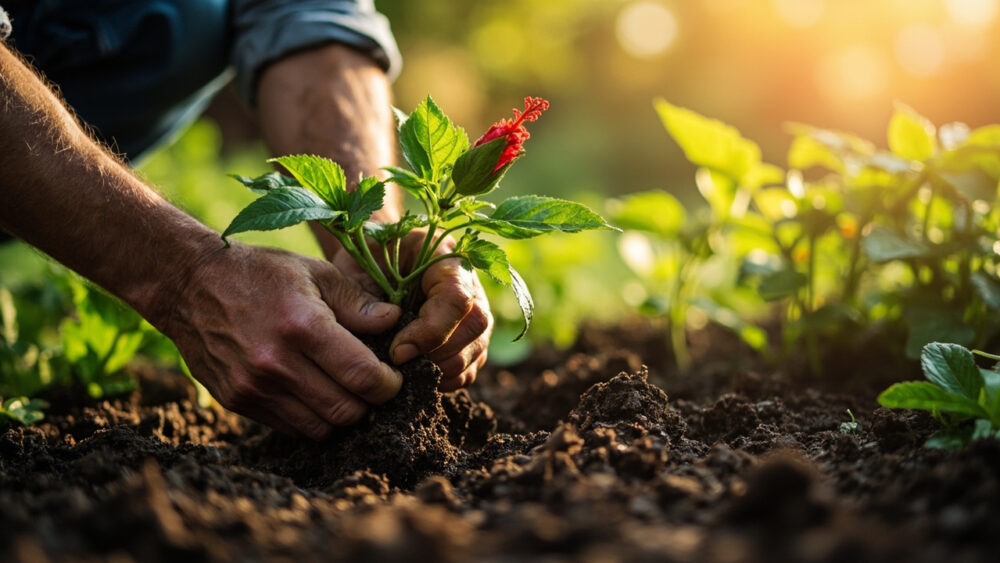
Set the hibiscus at the same depth it was growing in its container. Planting too deep buries the crown and invites rot; planting too shallow exposes roots to drying out.
Spacing depends entirely on the type. Tropical hibiscus grown as a shrub wants 3 to 6 feet between plants depending on the mature variety. Hardy hibiscus (rose mallow) needs 2 to 4 feet since it dies back and regrows from the base each year. Rose of Sharon, which becomes a small tree-like shrub, wants 4 to 6 feet minimum to avoid a crowded hedge look nobody wanted.
Water thoroughly right after planting, then keep soil consistently moist, not soggy, for the first two to three weeks while roots establish.
Get the depth and spacing right once and you avoid problems that are much harder to fix a year down the road.
Zone and Region Notes Worth Knowing
Hardy hibiscus (moscheutos types) and rose of Sharon survive winters reliably in USDA zones 5 through 9, and in those zones you can plant established nursery stock any time from your safe spring window through late summer, as long as you allow 6 to 8 weeks before your first fall frost for roots to settle in.
Tropical hibiscus is a different commitment outside zones 9 through 11. In colder zones it is essentially a container plant that summers outdoors and comes inside before nights drop below 50°F, which changes your “planting” question into more of a “moving outdoors” question each year.
Gulf Coast and desert Southwest gardeners often get a genuine second planting window in early fall once summer’s worst heat breaks, giving tropical hibiscus a gentler establishment period than a June planting would.
Wherever you garden, the same underlying rule holds: warm, workable soil and settled nights beat any date on a calendar.
Hibiscus at a Glance
- When to plant: two to three weeks after your last frost date, once soil hits at least 60°F at 4 inches deep.
- Soil check: squeeze a handful from 4 inches down, it should feel cool but crumbly, not cold and clammy.
- Spacing: 3 to 6 feet for tropical hibiscus shrubs, 2 to 4 feet for hardy rose mallow, 4 to 6 feet for rose of Sharon.
- Planting depth: same depth as the nursery container, crown at soil level, never buried.
- Hardiness: hardy hibiscus and rose of Sharon suit zones 5 through 9, tropical hibiscus is reliable year-round only in zones 9 through 11.
- First-week normal: mild wilting or a few dropped leaves for 3 to 7 days is typical transplant stress, not failure.
- First-week warning sign: blackened or mushy stems and a rotten smell at the soil line, which means cold, wet soil and root rot, not simple adjustment.
Get the soil temperature right and the rest of hibiscus care is genuinely forgiving.
When in doubt, wait one more week for the soil, not the calendar, to tell you it’s time.