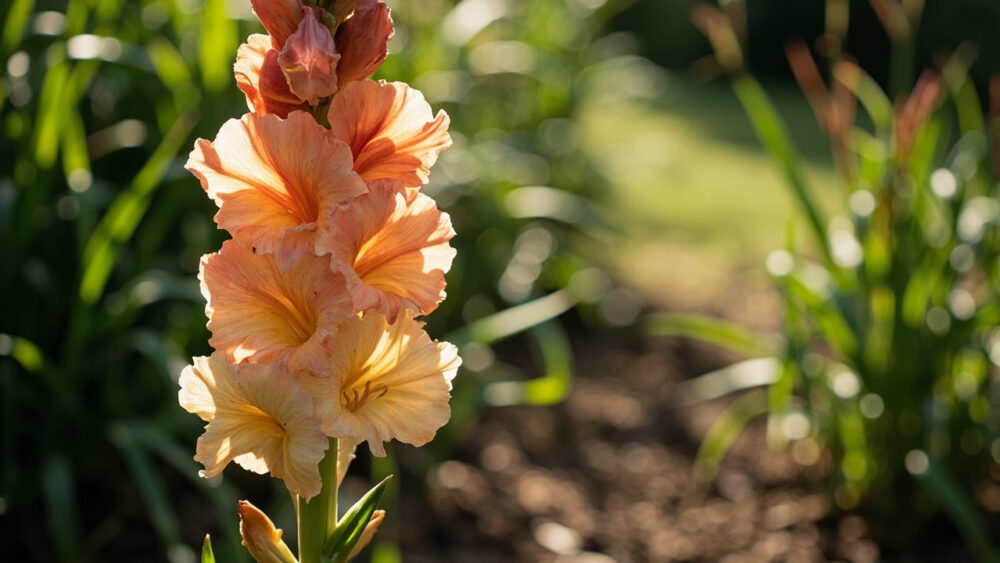
Gladiolus come back every year on their own only if you garden in zone 8 or warmer. Below that, the corms won’t survive winter in the ground and the plant behaves like an annual unless you dig it up. That’s the honest, direct answer to do gladiolus come back every year, but it’s not the whole story.
Where you live changes everything here, and so does what you do this fall. There’s also a sneaky detail most people miss: even in mild zones, a gladiolus clump that “comes back” isn’t always the same plant you’d recognize, it’s often a crowd of offshoots that bloom differently than the original.
Stick with me through the zone breakdown, the winter reality, and the overwintering steps, and I’ll give you a save-able quick-reference card at the bottom that sums up exactly what to expect from your own plants next season.
The Plain Answer: It Depends on Your Zone
Gladiolus corms are winter-hardy roughly in zones 8 through 11. If you’re in that range, you can leave the corms in the ground and they’ll send up new shoots on their own next spring, no digging required.
In zones 7 and colder, a hard freeze reaches deep enough into the soil to turn the corms to mush over winter. Mulch helps a little at the borderline in zone 7, but it’s not reliable insurance.
If you garden in zone 6 or below, treat in-ground survival as a lost cause. The plant will still bloom beautifully this season, it just won’t reappear next spring unless you intervene.
That intervention is exactly what the next two sections cover.
What Actually Happens Over Winter
If you assumed a gladiolus corm just naps through the cold like a tulip bulb, that guess is what wrecks most first attempts. Tulips are built for freezing ground. Gladiolus corms are not, they’re native to warmer climates and have no real frost tolerance once the soil around them drops much below the mid 40s Fahrenheit for an extended stretch.
In hardy zones, the corm stays put, stays alive, and by next season it has usually produced one or more new cormlets clustered around the base of the original. That’s the “crowd of offshoots” I mentioned. Over a few years an unthinned clump can get crowded enough that bloom size actually shrinks.
In cold zones left untouched, the corm rots in place sometime after the first hard freezes, and by spring there’s nothing there to sprout.
Which brings up the real question for most readers: what do you actually do about that.
How to Get Them to Return: Digging and Storing Corms
If you’re outside the hardy zones and want the same plant back, digging the corms up is the standard fix, and it’s genuinely not hard.
Wait until after the foliage yellows following the first light frost, then lift the corms with a garden fork, shaking off loose soil. Cut the stems back to about an inch or two above the corm.
Cure them somewhere dry and ventilated, out of direct sun, for one to two weeks, until the outer skin feels papery rather than damp.
Then store for winter:
- Pack corms in dry peat moss, vermiculite, or even dry paper bags with a little air circulation.
- Keep them somewhere cool and dark, ideally 35 to 45 degrees Fahrenheit, like an unheated basement, garage, or root cellar that won’t freeze.
- Check occasionally through winter and toss any that go soft or moldy, one bad corm can spread rot to its neighbors.
Replant them once the soil has warmed to around 55 to 60 degrees Fahrenheit in spring, roughly the same window you’d plant summer squash.
Done right, this gets you the same corms, and often more of them, blooming again next year.
But storing corms isn’t the only honest option, and for a lot of gardeners it isn’t even the best one.
When Treating Gladiolus as an Annual Is the Smarter Move
Digging, curing, and storing corms takes real effort and a cool, dry storage spot that not every household has. If you don’t have that space, or you just don’t want the extra fall chore, there’s nothing wrong with letting gladiolus be a one-season annual.
Fresh corms are inexpensive and widely available every spring, and buying new ones each year sidesteps the entire storage gamble, including the disease and rot risk that builds up in corms stored under imperfect conditions.
It’s also worth knowing that saved corms don’t always perform identically the next year. Bloom color and size can drift slightly as cormlets mature and take over from the original corm, especially in named varieties.
If your goal is consistent, predictable blooms with zero winter labor, starting fresh annually is a completely legitimate choice, not a failure.
Whichever path you pick, the card below is what to tape inside the shed door.
Gladiolus: Quick Reference
- Core answer: gladiolus reliably return on their own only in zones 8 through 11, where corms survive winter in the ground.
- Zones 7 and colder: treat as an annual unless you dig and store the corms, since ground freezes deep enough to rot them.
- Digging time: lift corms after the first light frost yellows the foliage, usually late summer into mid fall depending on planting date.
- Curing: dry corms one to two weeks in a shaded, ventilated spot until the skin feels papery, not damp.
- Storage conditions: pack in dry peat moss or vermiculite and keep at 35 to 45 degrees Fahrenheit, dark, and frost-free all winter.
- Replanting: return corms to the ground once soil hits about 55 to 60 degrees Fahrenheit in spring.
- Clump behavior: hardy-zone corms multiply into cormlets over the years, which can crowd the clump and shrink bloom size if never thinned or divided.
Now you know exactly what your zone, your soil, and your storage space decide for you.
Match the plan to your climate, and gladiolus will keep showing up, either in the ground or fresh from the bag, every single year.