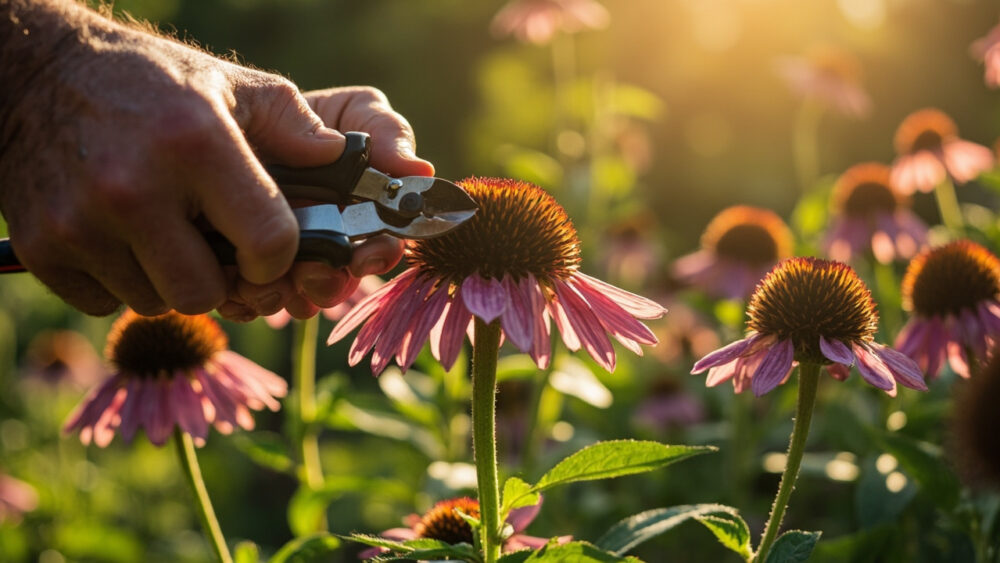
You deadhead coneflowers by snipping the flower stem down to the first full set of leaves or to a side bud once the petals droop and the center cone turns brown and dry. Do it through the whole bloom stretch, roughly early summer into early fall depending on your zone, and stop cutting about six weeks before your first fall frost. That single habit, done right, is what separates a coneflower patch that reblooms hard for months from one that quits by August.
Here is where most people go wrong, though, and it is not the cutting itself. It is timing the last round and knowing which spent blooms to leave alone on purpose, because leaving some up is not laziness, it is strategy.
There is also a stubborn myth about how much to remove that costs people flowers all season, and a sign of “done blooming” that half of gardeners misread completely. Stick with me through the how-to and the mistakes, and the save-able Coneflowers at a Glance card is waiting at the bottom.
When to Deadhead, and When to Leave the Cones Alone
Start deadheading as soon as the first flush of blooms fades, usually four to six weeks after the plant opens its first flowers. A spent coneflower tells you it’s done: petals go limp and droopy, color washes out, and the center cone dries and darkens from green-orange to a deep rust brown.
That’s your cue, not the moment petals first start looking tired.
Keep deadheading through summer as new flushes come and go. Stop actively deadheading roughly six weeks before your average first frost date, and let that final round of blooms go to seed instead.
Those late seed heads feed goldfinches through fall and winter, and coneflowers are one of the best plants for that. Cutting everything right up to frost gains you nothing since new buds won’t have time to open anyway.
The stems you leave standing over winter aren’t neglect either, they’re habitat.
Tools and the One Prep Step That Actually Matters
You only need bypass pruners or sharp garden scissors. Skip anvil-style pruners on soft flower stems, they crush more than they cut and leave a ragged wound that dries out slowly.
The prep step nobody skips on purpose but everyone skips by accident: wipe your blades with rubbing alcohol before you start, especially if you’ve been in other beds that day. Coneflowers are generally tough and disease-resistant, but aster yellows and powdery mildew both spread easily on dirty pruners, and a clean cut heals faster than a torn one regardless.
Do this in the morning after dew has dried, or in early evening. Cutting stressed, wilted midday plants isn’t harmful exactly, but you’ll see the cuts more clearly and stems snap cleaner when they’re turgid.
Tools sorted, now the part everyone thinks they already know.
Where to Cut
Follow the flower stem down from the spent bloom until you hit the first full, healthy leaf or a side branch with a smaller bud already forming. Cut just above that point, at a slight angle.
Don’t just snip the head off an inch below the cone. That leaves a bare, ugly stub that won’t rebloom and just sits there browning.
How Much to Take
This is the guess that trips people up: many assume deadheading means taking a little off the top, just the dead flower itself. That barely does anything on coneflowers.
You need to cut back to a leaf node or branch point, which is often four to eight inches down the stem, sometimes more on tall varieties. The plant redirects energy into that side bud, not into thin air above a bare stick.
Cutting shallow is the single biggest reason people say deadheading “didn’t work” for their coneflowers. It’s not that the technique fails, it’s that they never went deep enough to reach a growth point.
What Happens After You Cut
Expect new buds to show within one to two weeks in warm weather, a little slower if nights have cooled below the 50s. Each cut stem typically branches into two or three smaller flower stalks instead of one, so your second flush is often bushier, if slightly shorter, than the first.
Don’t panic if a plant looks a little sparse for a week or two after a hard round of deadheading. That’s normal recovery, not decline.
Feed lightly if your soil is lean, a balanced granular fertilizer or an inch of compost worked into the surface gives the plant fuel for that second round. Skip heavy nitrogen, which pushes leafy growth at the expense of blooms.
Now for the mistakes that actually cost people flowers, not just the small stuff.
The Mistakes That Cost You Blooms
The most common mistake is exactly the guess I flagged above: snipping too shallow, right below the flower head instead of down to a leaf node. Fix it by always tracing the stem to the next healthy leaf pair before you cut, every time.
Second is deadheading too late into fall and expecting a flush that never has time to open before frost kills it. Past that six-week-before-frost mark, let it ride.
Third, and this one surprises people: shearing the whole plant flat with hedge clippers to save time. It works in a pinch on a huge overgrown patch, but you’ll get a rougher-looking rebound and you lose the ability to leave a few choice stems for seed.
Last, pulling instead of cutting. Yanking a spent bloom can tear living tissue down into the stem and invite rot, especially in humid weather.
Get those four right and your coneflowers will out-bloom nearly anything else in the border through late summer.
Coneflowers at a Glance
- When to deadhead: starting four to six weeks after first bloom, continuing through summer, stopping about six weeks before your first fall frost.
- Where to cut: down the flower stem to the first full leaf or side bud, not just below the dead cone.
- How much to remove: often four to eight inches of stem, whatever it takes to reach a real growth point.
- Tools: bypass pruners or sharp scissors, wiped clean with rubbing alcohol before use.
- Recovery time: new buds within one to two weeks in warm weather.
- Late season: leave the last flush to go to seed for finches and winter interest.
- Biggest mistake: cutting too shallow, which leaves a bare stub instead of triggering a new flush.
Cut deep enough to reach a leaf or bud, and stop worrying about the exact date.
Everything else about coneflowers takes care of itself.