Philodendron micans care comes down to three things this plant is unusually picky about: bright indirect light, soil that dries partway before the next drink, and humidity above what most living rooms offer naturally. Get those three right and the velvety, bronze-green leaves come in fast and full. Get any one wrong and the vine goes leggy, dull, or drops leaves from the base while still pushing new growth at the tip, which is the single most confusing symptom this plant produces.
Most people kill the momentum on this plant in one of two ways: they baby the soil into staying wet, or they hang it somewhere that looks bright to the human eye but reads as dim to a plant. Both mistakes look identical from across the room. The leaves just get smaller and less shiny, and most owners blame everything except the actual cause.
I will walk through light, water, soil, routine care, the problems that actually show up on micans, and the real signs of a plant that is thriving instead of just surviving. Save-worthy summary card is at the bottom if you want the fast version pinned on your phone before you walk away from this plant today.
Light, Placement, and Temperature
Philodendron micans wants bright, indirect light, close to an east or west window, or a few feet back from an unobstructed south window. Direct midday sun scorches the velvety leaf surface into dull brown patches. Too little light and the famous bronze sheen fades to plain flat green, with leaves shrinking as vines stretch toward whatever light source they can find.
If you assumed a north-facing room is fine because the plant “just needs some light,” that guess is what produces the long, sparse vines nobody likes. Micans in low light survives for months before it visibly struggles, then declines fast once it does.
Keep it between 65 and 80°F. Below 55°F for any stretch causes leaf drop and slows growth hard. Keep it off cold windowsills and away from heating vents.
Light is the foundation, but water is where most people actually lose the plant.
Watering: How Much, How Often, and How to Tell
Water when the top 1 to 2 inches of soil are dry to the touch, roughly every 7 to 10 days indoors, less in winter. Push a finger into the pot rather than going by the calendar. Micans in a well-draining mix in a bright spot dries faster than the same plant in low light, so the schedule shifts with the season and the room.
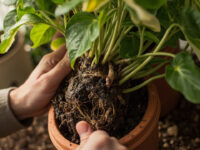
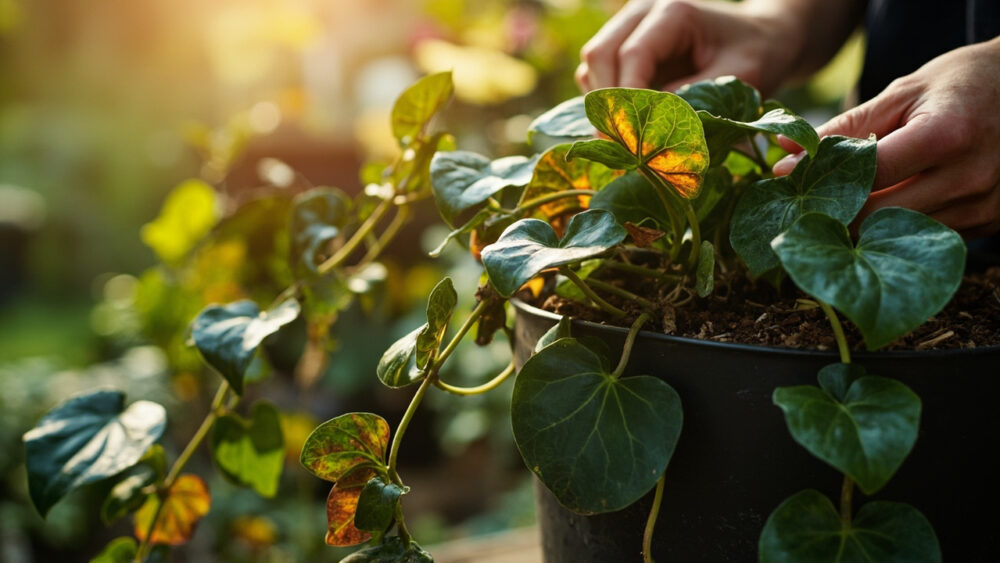
Overwatering, not underwatering, is the mistake that ends most people’s plant. Constantly damp soil rots the roots quietly, and the first visible sign is often yellowing lower leaves that people mistake for a light problem or a feeding problem. If the soil feels wet at 2 inches down and leaves are yellowing, stop watering and check the roots before doing anything else.
Underwatered micans tells you plainly: leaves go slightly limp and matte, soil pulls away from the pot edge, and a thorough watering perks the vine back up within a day.
Water thoroughly until it runs from the drainage holes, then let the excess drain fully. Never let the pot sit in standing water.
Get the water right and the next question is almost always about the mix it’s sitting in.
Soil, Potting Mix, and Feeding
Use a loose, well-draining mix built for aroids: standard potting soil cut with perlite, orchid bark, or coarse sand, roughly two parts potting soil to one part chunky amendment. Straight potting soil alone holds too much water for this plant’s taste and sets up the rot problem above before you even start watering wrong.
A pot with a drainage hole is non-negotiable here. Micans in a sealed decorative pot with no way for water to escape is one of the fastest routes to root rot, regardless of how carefully you water.
Feed monthly during spring and summer with a balanced liquid houseplant fertilizer diluted to half strength, and skip feeding entirely in fall and winter when growth slows. Over-fertilizing shows up as crispy brown leaf edges and salt crust on the soil surface, and it is easy to mistake for underwatering.
With the mix and feeding sorted, the plant mostly runs itself, but a few recurring chores keep it looking good.
Pruning, Repotting, and Cleaning: The Routine Tasks
Prune anytime during the growing season to control length, remove bare or leggy stems, and force fuller growth. Cut just below a node, the small bump where a leaf or aerial root emerges, since new growth only breaks from these points.
Repot every 1 to 2 years, or sooner if roots are circling the pot’s edge or emerging from the drainage holes. Spring into early summer is the easiest window, since the plant recovers fastest during active growth. Go up one pot size, not several, since an oversized pot holds excess moisture the roots cannot use fast enough.
Wipe the velvety leaves gently with a damp soft cloth every few weeks. Dust dulls the leaf sheen that makes this plant worth growing in the first place, and it also blocks light the leaf is trying to use.
Even with good routine care, a few problems show up often enough that you should know them by sight.
The Problems Most Likely to Strike Micans
Here is the honest answer to the question most people are about to ask next: yellowing leaves almost never mean the plant needs water. They usually mean the opposite.
- Yellow, mushy lower leaves: overwatering or root rot. Check the roots; trim any brown, soft, or foul-smelling sections and repot into fresh dry mix.
- Brown, crispy leaf edges: low humidity, too much direct sun, or fertilizer buildup. Move it out of direct light and flush the soil with plain water occasionally.
- Small, faded, less velvety leaves: insufficient light. Move it closer to a bright window.
- Leggy stems with wide gaps between leaves: also low light, sometimes combined with old age on the vine. Prune and propagate the tips.
- Spider mites or mealybugs: fine webbing or small cottony clusters on stems and leaf undersides. Isolate the plant and treat with insecticidal soap or a labeled houseplant insecticide, following the product label exactly.
Philodendron micans is toxic to cats and dogs if chewed or eaten, due to calcium oxalate crystals that cause mouth and throat irritation, drooling, and vomiting. If you suspect a pet has eaten any part of this plant, contact your veterinarian rather than waiting to see what happens.
Once you’ve ruled out the usual suspects, it helps to know exactly what “thriving” is supposed to look like.
How to Tell Micans Is Actually Thriving
A thriving micans pushes a new leaf every 2 to 4 weeks during spring and summer, each one slightly larger than the last, unfurling with that deep bronze-green sheen intact. Vines lengthen steadily rather than stalling for months, and the leaves sit close together instead of spacing out along a bare stem.
Healthy roots are pale tan to white and firm, visible if you check during a repot. Aerial roots forming at the nodes are a good sign, not a problem, and can be tucked into soil or left to climb a support.
If new leaves are coming in smaller than the ones before them, something upstream, usually light, is falling short even if everything else looks fine.
Here’s the whole thing distilled, worth saving before you set the phone down and go check on your plant.
Philodendron Micans at a Glance
- Light: bright, indirect light near an east or west window, or a few feet back from unobstructed south light, no direct midday sun.
- Temperature: 65 to 80°F, never below 55°F, away from cold drafts and heating vents.
- Watering: when the top 1 to 2 inches of soil are dry, roughly every 7 to 10 days in season, less in winter, always with drainage.
- Soil: loose, well-draining aroid mix, about two parts potting soil to one part perlite or bark.
- Feeding: balanced liquid fertilizer at half strength once a month, spring through summer only.
- Repotting: every 1 to 2 years in spring, one pot size up, sooner if roots circle the pot or poke through drainage holes.
- Toxicity: toxic to cats and dogs, contact a veterinarian for any suspected ingestion.
Get the light and the watering rhythm right and everything else on this plant is easy.
Everything else, the feeding, the pruning, the pot size, is just fine-tuning around those two decisions.