Growing elephant ear plant comes down to three things: warm soil, rich soil, and water that never really lets up. Plant the tuber (or a potted start) after your soil has warmed past 65°F, give it big, loose, organic-rich ground in part shade to filtered sun, and keep it consistently moist all summer. Do that and you get leaves the size of trash can lids by August.
Most people who fail at this don’t fail from neglect. They fail from planting too early into cold, wet soil, which just rots the tuber before it ever gets going. There’s also a watering mistake almost everyone makes in the first two weeks, and a sign on the leaves that people misread as disease when it’s actually the plant telling you it’s happy.
Stick with me through the sections below and I’ll walk you through timing, siting, planting depth, feeding, the real threats to watch for, and what “harvest” even means for a plant most people grow for its foliage. Save-able specifics are waiting in the Elephant Ear Plant at a Glance card at the very bottom.
When to Plant Elephant Ear
Wait for soil, not the calendar. Elephant ears (Colocasia and Alocasia types) are tropical, and they sulk or rot in cold ground. Don’t plant until nighttime lows are reliably above 55°F and soil temperature at a 4 inch depth is at least 65°F, which is usually two to four weeks after your last spring frost.
In zones 8 and warmer, tubers can go straight into garden soil outdoors. In zones 7 and colder, start tubers indoors in pots four to six weeks before your last frost, then move them out once it’s warm, or just buy an already-growing potted plant and skip the guessing entirely.
This is the mistake that costs people the whole season: planting a tuber into cold, damp spring soil because the calendar says it’s planting time. It just sits there and rots.
Get the timing right and the next decision is where you actually put it.
Choosing the Spot and Prepping the Soil
Elephant ears want part shade to dappled sun, roughly four to six hours of gentle morning light with afternoon shade in hot climates. Full, blasting afternoon sun in zones 8 and up will scorch the leaves; in cooler northern zones, more sun is tolerated and even helps the plant size up.
Soil prep matters more here than for almost anything else you’ll grow. These are heavy feeders that want soil closer to a swamp margin than a vegetable bed. Work in 3 to 4 inches of compost or aged manure over the planting area, and make sure the spot drains without staying waterlogged for days.
A boggy low spot near a downspout is often ideal, as long as water moves through rather than standing stagnant for a week straight.
Once the ground is rich and the light is right, it’s time to actually get the tuber in.
Planting Elephant Ear Step by Step
1. Check the tuber
A healthy tuber feels firm and heavy, with visible growth points or eyes on top, similar to a potato. Soft, mushy, or moldy spots mean rot, and that tuber won’t recover once planted.
2. Set the depth
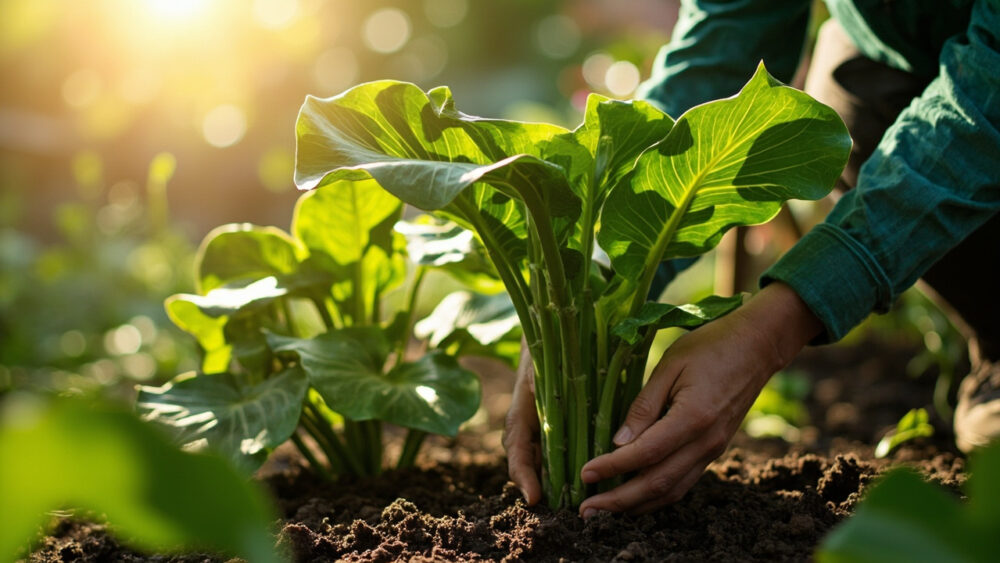
Plant tubers 2 to 4 inches deep, growth points facing up. Larger tubers go on the deeper end of that range, small offset tubers shallower.
3. Space for the mature size
Space plants 2 to 4 feet apart depending on variety. Some Colocasia types spread 4 to 6 feet wide at maturity, so crowding them now just means transplanting frustration later.
4. Water in immediately
Soak the planting area right after planting so the soil settles around the tuber with no air pockets.
Getting it in the ground correctly is half the job, keeping it alive through summer is the other half.
Watering and Feeding Through the Season
If you assumed elephant ears want the same watering as most houseplants, that guess undersells them badly. These plants are closer to a marsh species than a typical container plant, and they want soil that stays evenly moist, almost never fully drying out, through the entire growing season.
Check soil an inch down every couple of days in hot weather. If it’s dry at that depth, water deeply. In-ground plants in average summer weather often need watering two to three times a week; potted ones may need it daily once the leaves get large.
Feed monthly with a balanced fertilizer, or every two weeks with a diluted liquid feed, from the time growth starts through mid-summer. Stop feeding about six weeks before your first fall frost so the plant can start settling toward dormancy.
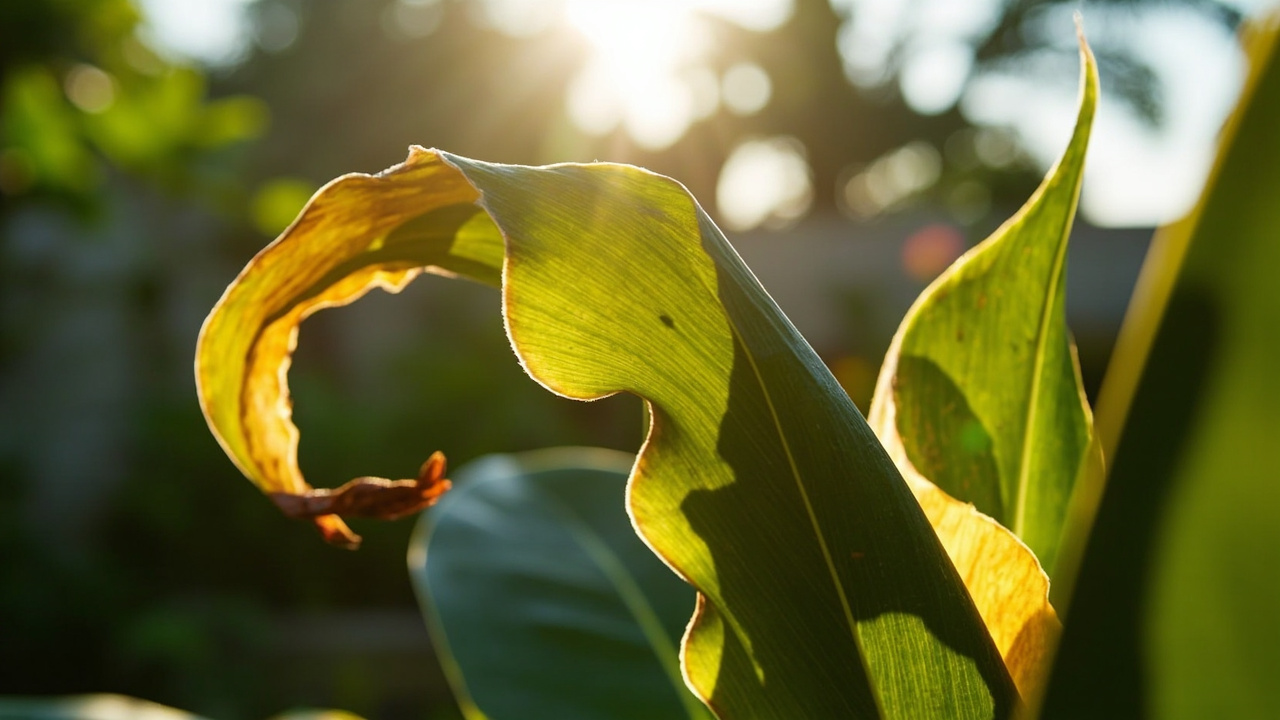
Here’s the sign people misread: yellowing on the oldest, lowest leaf as a new leaf unfurls is normal aging, not disease or overwatering, as long as the rest of the plant looks vigorous.
Feed and water right and the plant grows fast, but fast growth also invites its own set of problems.
Problems That Actually Show Up
Slugs and snails are the most common early-season threat, chewing ragged holes in young leaves overnight. Handpick in the evening or use a labeled slug bait according to the product instructions.
Spider mites show up as fine stippling and webbing, usually on plants grown too dry or in too much heat with poor air movement. Regular watering largely prevents them.
Root and tuber rot comes from soil that’s soggy and cold rather than soggy and warm. It’s the number one killer, and it’s almost always a planting-time or drainage mistake rather than a mid-season one.
Yellowing that spreads across multiple leaves at once, rather than just the oldest one, usually signals underfeeding or a cold spell rather than pests.
Elephant ear is toxic to dogs, cats, and people if chewed or swalloweddue to calcium oxalate crystals that cause mouth and throat irritation, drooling, and swelling. If a pet or child has bitten into a leaf or stem, contact a veterinarian or poison control right away rather than waiting to see what happens.
Keep the roots warm, the soil evenly damp, and pests in check, and you’re mostly just watching the plant get bigger from here.
When and How to “Harvest” Elephant Ear
Most gardeners grow elephant ear for its leaves, not a crop, so there’s no harvest date the way there is for a vegetable. The plant matures into full, dramatic form over 10 to 14 weeks after planting, with leaves reaching 18 to 36 inches long depending on variety and growing conditions.
If you’re growing an edible taro-type Colocasia specifically for the corms, that’s a different timeline: corms are ready 7 to 12 months after planting, once the foliage begins to yellow and die back naturally in fall. Taro corms require proper cooking before eating, since raw tissue carries the same irritating calcium oxalate crystals as the leaves.
In zones colder than 8, dig tubers after the first light frost blackens the foliage, let them cure in a dry spot for a few days, then store in dry peat or vermiculite somewhere cool and frost-free for replanting next season.
That’s the honest answer to the harvest question: for most growers, the real payoff is the leaf, and it just keeps coming until frost ends the show.
Elephant Ear Plant at a Glance
- When to plant: after soil hits at least 65°F, usually two to four weeks past your last spring frost.
- Light: part shade to filtered sun, four to six hours, with afternoon shade in hot climates.
- Planting depth and spacing: tubers 2 to 4 inches deep, plants spaced 2 to 4 feet apart.
- Watering: keep soil consistently moist, checking an inch down every couple of days in heat.
- Feeding: balanced fertilizer monthly, or a diluted liquid feed every two weeks, stopping six weeks before first fall frost.
- Biggest threat: tuber rot from cold, waterlogged soil, almost always caused by planting too early.
- Toxicity: toxic to pets and people if chewed, contact a veterinarian or poison control immediately for any suspected ingestion.
Warm soil at planting and steady moisture all summer solve most elephant ear problems before they start.
Get those two things right and the leaves take care of the rest.