Learning how to grow staghorn fern comes down to three things most houseplants do not need: no soil at all, a mount instead of a pot, and light that stays bright but never direct. Staghorns are epiphytes, meaning in the wild they clamp onto tree bark with a shield frond and never touch dirt. Get that mount, that light, and a watering rhythm that mimics rain-then-dry right, and a small pup fern will turn into a two-foot wall specimen in three to five years.
Here is where almost everyone gets tripped up. The instinct is to pot a staghorn like a regular fern, in a container with potting mix, and water it on a weekly schedule. That is the single mistake that kills more staghorns than any pest or disease ever will.
There is also a sign growers misread constantly, a frond behavior that looks like disease but is not, and an honest answer about when this plant actually “produces” anything worth harvesting. Stick around, because the save-able Staghorn Fern at a Glance card is waiting at the bottom once you have the full picture.
When to Start a Staghorn Fern
Staghorns are tropical epiphytes native to warm, humid forests, so they have no frost tolerance and no dormant planting window like a bulb or a shrub. The best time to mount or repot one is late spring through mid summerwhen the fern is actively growing and warm air speeds up recovery from root disturbance.
Indoors, that translates to whenever your home stays above 65°F with decent light, which for most of the country means April through August. If you live in USDA zones 9 through 11, you can grow staghorns outdoors year-round on a shaded patio or tree trunk, but bring them in or add frost cloth anytime temperatures threaten to dip below 50°F.
Timing the mount right is only half the job, the spot you choose matters just as much.
Choosing the Spot and Skipping the Soil
Staghorns want bright, indirect light, the kind you get a few feet back from an east or west window, or dappled shade under taller trees outdoors. Direct noon sun scorches the fronds; deep shade produces thin, stretched growth and no new shield fronds at all.
Skip soil entirely. The plant’s roots are built to grip bark and pull moisture from humid air, not to sit in a wet, dense medium. Potting mix around a staghorn’s roots stays too damp for too long and rots them from the inside before you see a single yellow leaf.
Instead, plan on a mount: a slab of untreated wood, cork bark, or a wire basket lined with sphagnum moss. Humidity matters too. Below 40% relative humidity, fronds will crisp at the tips regardless of how well you water.
Once you have the mount picked out, the actual planting takes about fifteen minutes.
Planting a Staghorn Fern Step by Step
- Soak the root ball. Submerge the fern’s roots and any moss packed around them in room-temperature water for 10 to 15 minutes before mounting.
- Build a moss bed. Spread a 1 to 2 inch pad of dampened sphagnum moss on your mounting board, centered where the plant will sit.
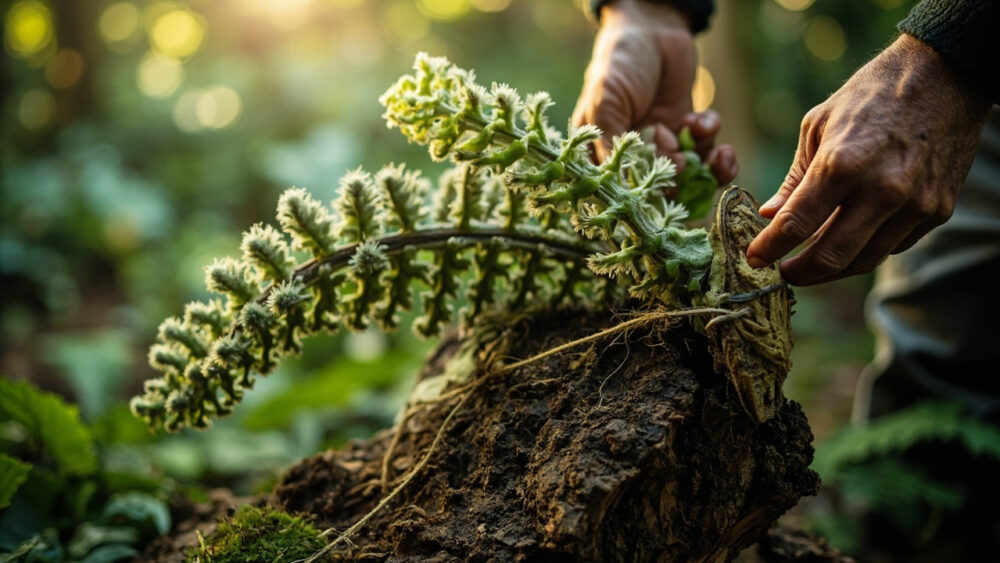
- Position the root ball. Set the fern’s roots directly on the moss with the shield frond facing outward and slightly upward, never buried and never touching soil.
- Secure it. Wrap fishing line, twine, or copper wire around the root mass and moss, crossing it several times to hold everything snug against the board without crushing the roots.
- Mount it vertically or at an angle. Hang the board on a wall, fence, or tree trunk in bright indirect light, allowing at least 12 to 18 inches of clearance for fronds to fan out as it matures.
The line or wire will loosen as the fern grows and its own roots take over the job of gripping the mount.
Watering and Feeding a Mounted Staghorn
If you assumed a weekly watering schedule works here the way it does for a pothos, that guess is exactly what causes root rot. Staghorns want a soak-then-dry cycle, not a steady drip.
Submerge or thoroughly mist the entire mount once every 7 to 10 days indoors, more often (every 3 to 5 days) in hot, dry weather or low-humidity homes. Let the moss and roots dry out between waterings; a staghorn that stays constantly damp will rot at the base within weeks.
Feed lightly during the growing season, spring through early fall, with a balanced liquid houseplant fertilizer diluted to half strength, applied once a month by misting it directly onto the fronds. Staghorns absorb nutrients through their foliage, not through roots the way soil-grown plants do, so foliar feeding is not optional, it is the only way food reaches the plant.
Get the watering rhythm wrong even once in a while and the plant usually forgives you, but the fastest way to lose a staghorn for good is next.
The Problems That Actually Take Down a Staghorn
Brown, papery patches on the lower shield fronds look alarming, but that is not disease. Those are the fern’s own basal fronds dying back naturally as they harden into the shield that anchors it to the mount. Leave them alone and never peel them off.
Root and crown rot from overwatering is the real killer, showing up as a soft, blackened base and fronds that go limp all at once rather than yellowing gradually. There is no fix once the crown has gone soft. Prevention through proper drying time between waterings is the only real defense.
Scale insects and mealybugs are the most common pests, appearing as small brown bumps or cottony clusters along the fertile fronds. Treat them with insecticidal soap or a horticultural oil, following the product label exactly, and isolate the plant from neighbors while you work through treatment.
Staghorn ferns are not considered toxic to cats, dogs, or people, but any plant ingestion that causes vomiting, drooling, or lethargy in a pet is worth a call to your veterinarian.
Once pests and rot are under control, the last honest question is when this plant actually gives you something back.
When a Staghorn Fern “Matures” and What You Actually Harvest
Staghorns do not flower and there is no fruit or crop to harvest in the traditional sense, so if you were hoping for a bloom date, that is the honest answer to the question you were about to ask. What you are waiting for instead is the fertile fronds, the antler-shaped ones, developing spore patches on their undersides, a felty brown patch near the frond tips that signals full maturity.
That first spore patch typically appears two to five years after mounting a young division, depending on light and warmth. Established plants also send up “pups,” small offset ferns at the base, which you can separate and mount on their own board once they have a few fronds and a visible root mass, usually after a year or two attached to the parent.
That pup is your real harvest, a brand new staghorn ready to start the whole process again.
Staghorn Fern at a Glance
- When to plant: late spring through mid summer, once indoor temperatures stay above 65°F, or year-round outdoors in zones 9 through 11.
- Light: bright, indirect light. Direct sun scorches fronds, deep shade stalls growth.
- Growing medium: no soil, ever. Mount on wood or cork bark with a sphagnum moss pad against the roots.
- Watering: soak or thoroughly mist every 7 to 10 days indoors, letting the mount dry between waterings. Increase frequency in dry heat.
- Feeding: half-strength balanced liquid fertilizer misted onto fronds once a month, spring through early fall.
- Common problems: root and crown rot from overwatering, scale and mealybugs on fertile fronds. Brown basal fronds are normal shield growth, not disease.
- Maturity: spore patches on fertile fronds appear in two to five years. Pups can be separated and mounted after a year or two of growth.
The whole plant hinges on one habit: soak it well, then leave it alone until it is dry again. Master that rhythm and everything else about growing a staghorn fern falls into place.