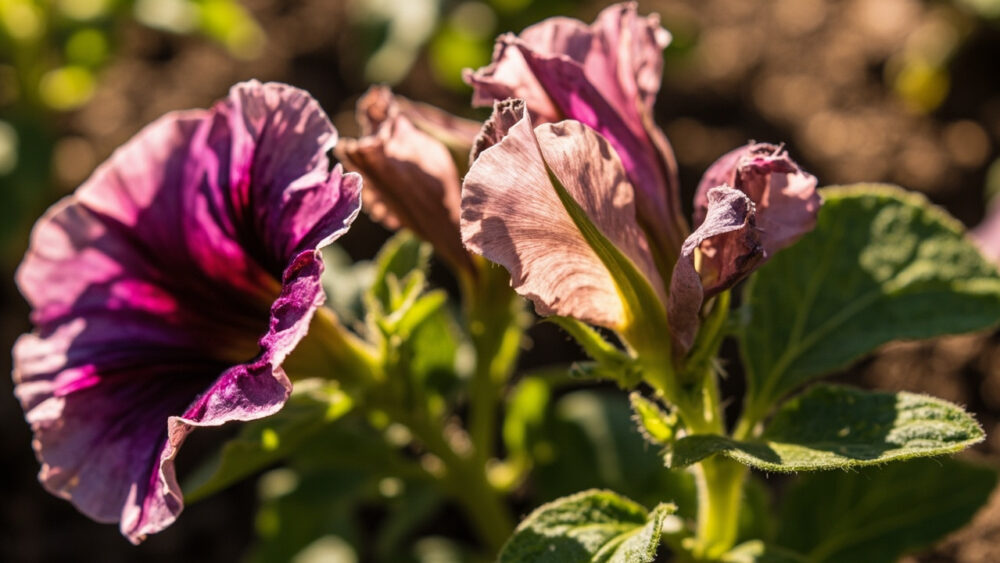
Petunias wilting is almost always thirst, not disease. Petunias are shallow-rooted and grow fast in full sun, so they dry out quicker than most bedding plants, and a hanging basket or container can go from fine to flopping in a single hot afternoon. Check the soil an inch down before you do anything else: if it’s dry and crumbly, water deeply and most plants stand back up within a couple hours.
But not every wilting petunia bounces back with a drink, and that’s the part everyone gets wrong. Overwatered plants wilt too, and they look almost identical from a few feet away, which is why so many people respond to root rot by watering more and finish the job.
There’s one detail on the plant, where the wilting starts and whether the soil is wet or dry underneath, that tells you exactly which of these problems you’re dealing with. Stick around, because the save-able diagnosis checklist at the bottom will let you run through all of it in about two minutes, right at the plant.
Most Likely Causes, Ranked
1. Underwatering
Confirm it: soil an inch below the surface feels dry, crumbly, or pulls away from the pot edge. Leaves look limp but still green, no yellowing.
Pots feel light when you lift them.
Fix it: water slowly until it runs from the drainage holes, not just a splash on top. Petunias in full sun containers often need water daily once summer heats up.
In-ground petunias usually need it every 2 to 3 days without rain.
That’s the easy one to fix, but it’s also the one that hides a worse problem underneath.
2. Overwatering or Root Rot
Confirm it: soil is wet or soggy an inch down, and the plant is wilting anyway. Stems near the base may feel soft or look dark and mushy.
Pull gently on a stem and check if roots feel brown and slimy instead of white and firm.
Fix it: stop watering and let the soil dry out fully before the next drink. If drainage is poor, repot into fresh, well-draining potting mix and a container with real drainage holes.
Trim off any blackened roots or stems with clean scissors.
Advanced root rot often can’t be reversed, so catching it early matters more than any fix after the fact.
If the soil test told you it’s wet, don’t reach for the watering can again until you rule out heat next.
3. Heat Stress and Midday Wilt
Confirm it: soil moisture is actually fine, but the plant droops hard in the afternoon sun and perks back up by evening or the next morning. Temperatures are pushing past 90°F.
Fix it: this is often just the plant protecting itself, not a real emergency. Water in the early morning so roots are hydrated before the heat hits, and give afternoon shade if you’re in a consistently hot climate.
Don’t water again in the heat of the day just because it’s wilting, you’ll risk pushing it into overwatered territory.
If it recovers on its own by nightfall, cross this one off and look at what’s actually in the soil instead.
4. Transplant Shock
Confirm it: the wilting started within a few days of planting or repotting. Roots may have been disturbed, broken, or left exposed to sun and wind during the move.
Fix it: keep soil evenly moist, not soggy, for the first week or two, and give the plant a break from harsh afternoon sun while it settles in.
Most petunias recover within 5 to 10 days once new roots establish.
Avoid fertilizing right away, stressed roots don’t need the extra push.
If the timing doesn’t line up with a recent move, the cause is more likely something happening below the soil line right now.
5. Fungal Wilt or Stem Rot
Confirm it: one section of the plant wilts while the rest looks fine, or the stem near the soil line is discolored, girdled, or feels papery and collapsed. Often follows a cool, wet stretch or overcrowded, poorly ventilated planting.
Fix it: remove and discard affected stems or the whole plant if the main stem is compromised. Improve air circulation by spacing plants and avoiding overhead watering that keeps foliage wet.
There’s no reviving a stem that’s already rotted through at the base.
This is one of the few causes here where starting over is the honest answer.
Now that you’ve got the individual suspects, here’s how to line them up side by side.
How to Tell the Causes Apart
Location on the plant is your fastest clue. Whole-plant wilting with dry soil points to thirst; whole-plant wilting with wet soil points to root rot.
One-sided or single-stem wilting, especially with a discolored base, points to fungal rot.
Timing matters too. Wilting that shows up daily in the afternoon and recovers overnight is heat, not water.
Wilting that started right after planting is shock, and it should ease within a week or two.
Old lower leaves yellowing along with wilting usually means overwatering or root rot, since drought-stressed petunias tend to stay green while they droop.
Once you know which one you’re looking at, the next honest question is whether it’s coming back.
Will It Recover?
Underwatering has the best odds. A plant that’s simply dry usually perks up within a couple hours of a deep watering, even if it looked completely flat beforehand.
Heat stress and transplant shock both resolve on their own with time and consistent, moderate watering, no dramatic intervention needed.
Root rot is a mixed bag. Caught early, with mushy roots trimmed and drainage fixed, plants can recover over 1 to 2 weeks.
Caught late, with most of the root system brown and collapsed, the plant usually won’t make it and replacing it is the more realistic path.
Fungal stem rot rarely reverses once the stem base is visibly rotted, so cut losses there rather than waiting it out.
Recovery odds are good for most causes, which makes prevention worth the five minutes it takes.
How to Keep It From Happening Again
Check soil moisture by feel, not by schedule. An inch down, dry means water, damp means wait.
Use containers and beds with real drainage, and avoid letting pots sit in trays of standing water.
Space plants so air moves between them, which cuts down on fungal problems significantly.
Water at the base in the morning rather than overhead in the evening, keeping foliage dry overnight.
Feed lightly every couple weeks during bloom season since petunias are heavy feeders, but skip fertilizer on stressed or newly transplanted plants.
Get these habits right and you’ll rarely see wilting that isn’t just an honest, fixable thirst.
Diagnosis Checklist
- Press a finger into the soil one inch down: dry means check underwatering, wet means check root rot.
- If dry, water deeply now and recheck the plant in two hours for recovery.
- If wet, tug gently on a stem near the soil and feel the roots: firm and white is fine, soft and brown means root rot.
- If roots are rotted, stop watering, trim affected roots and stems, and repot into fresh, well-draining soil.
- If soil moisture looks normal, note the time of day: afternoon droop that recovers by evening is heat stress, not a fix-it problem.
- If wilting began within days of planting or repotting, treat it as transplant shock and give it one to two weeks before judging.
- If only one stem or side of the plant is wilting, inspect the base for dark, mushy, or papery tissue signaling fungal rot.
- If the stem base is rotted through, remove that growth or the whole plant rather than waiting for recovery.
- Going forward, water by feel each morning and keep foliage dry overnight to avoid repeating the cycle.
Most wilting petunias are telling you something simple: too dry, too wet, or too hot, in that order of likelihood.
Run the checklist once and you’ll know which one you’ve got before you even reach for the watering can.