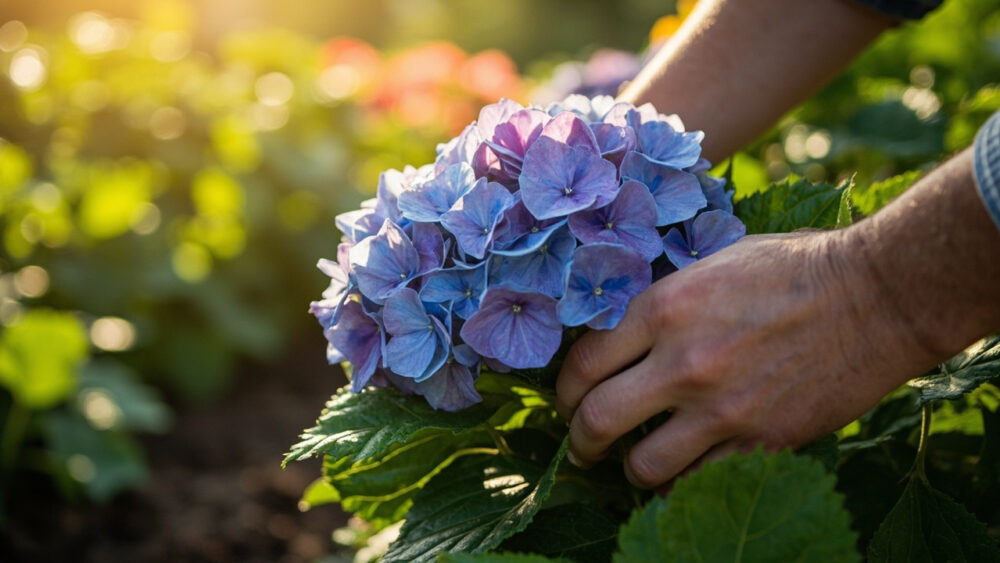
Here’s how to grow hydrangeas: plant them in spring or early fall in a spot with morning sun and afternoon shade, in rich soil that drains but never dries out, spaced 3 to 10 feet apart depending on the variety, and keep that soil evenly moist all season. Get those basics right and hydrangeas practically grow themselves. Get them wrong and you end up with the two most common complaints I hear: a plant that wilts every hot afternoon, or one that grows fine but refuses to bloom.
That second problem is the one that trips up almost everyone. Most hydrangea disappointment has nothing to do with the soil or the water. It comes down to pruning at the wrong time and cutting off next year’s flowers without knowing it. There’s also the color question everyone asks the minute they see a blue or pink bloom, and the honest answer surprises people who’ve already tried to fix it.
I’ll walk through timing, siting, planting, feeding, the problems that actually show up on hydrangeas, and when to expect blooms. Save the “Hydrangeas at a Glance” card at the very bottom for the numbers you’ll want again in three months when you’ve forgotten all of this.
When to Plant Hydrangeas
Plant in early spring after your last frost, once soil is workable, or in early fall while soil is still warm but temperatures have cooled off. Fall planting gives roots months to settle before summer heat hits, which is why a lot of experienced gardeners prefer it. Spring works fine too, just don’t rush it while soil is still cold and soggy.
Avoid planting in the dead heat of summer if you can help it. A young hydrangea put in the ground in July has to build roots and fight heat stress at the same time, and that combination kills more new plants than winter cold ever does.
In zones 3 and 4, stick to spring planting so roots have a full season to establish before winter. In zones 6 and warmer, fall planting is often the better call.
Timing gets the plant in the ground safely, but where you put it decides whether it thrives.
Choosing the Spot and Prepping the Soil
Hydrangeas want morning sun and afternoon shade, roughly 4 to 6 hours of direct light with relief during the hottest part of the day. Full sun in hot climates scorches leaves and dries the plant out fast. Full shade gives you a healthy bush with few or no flowers.
Soil matters more than most people expect. Hydrangeas want rich, well-draining soil that still holds moisture, which is a narrower window than it sounds. Work 2 to 3 inches of compost into the top 12 inches of soil before planting, especially in sandy or heavy clay ground.
If water pools on the surface an hour after a hard rain, improve drainage before you plant, not after.
This is also where the color question starts, though the fix isn’t in the soil bag you might be picturing.
Bloom color on many hydrangeas, especially bigleaf types, depends on soil pH, not on plant food or luck. Acidic soil, below pH 6, tends to produce blue blooms. Alkaline soil, above pH 7, pushes toward pink. You can nudge color with soil amendments over a full season, but you cannot force a white or panicle hydrangea to turn blue. Those varieties bloom white or cream by genetics, and no amount of aluminum sulfate changes that.
Good soil sets the stage, but the way you actually get the plant in the ground decides how well it takes.
Planting Hydrangeas Step by Step
1. Dig the right hole
Dig a hole twice as wide as the root ball but no deeper. Planting too deep is one of the most common mistakes and it smothers roots slowly over a season or two.
2. Set the crown at soil level
The top of the root ball should sit level with, or very slightly above, the surrounding soil. If it sinks after settling, add soil underneath rather than piling it on top.
3. Space for the mature size
Dwarf varieties need 3 to 4 feet between plants. Standard bigleaf and panicle types need 5 to 8 feet. Oakleaf and some panicle varieties want up to 10 feet since they get genuinely large. Crowded hydrangeas fight for water and air circulation, which invites disease later.
4. Backfill and water immediately
Backfill with the amended soil, firm it gently, and water deeply right away, enough to settle air pockets around the roots. Add 2 to 3 inches of mulch around the base, keeping it a couple inches clear of the stems.
The plant is in the ground now, but the next few months of watering decide whether it actually settles in.
Watering and Feeding Through the Season
Hydrangeas need consistent moisture, more than most shrubs you’ll grow. Their big leaves lose water fast, and that famous afternoon wilt is often just heat stress, not a sign of a dying plant. Check soil 2 inches down; if it’s dry there, water deeply at the base.
Give new plants about 1 inch of water a week, more during heat waves, less if you’re getting regular rain.
Feed lightly in early spring with a balanced, slow-release fertilizer, then again in early summer if growth looks weak. Skip a second feeding in the exact middle of summer. Too much nitrogen too late pushes leafy growth at the expense of flower buds, which is another quiet way people talk themselves out of blooms.
If you’re growing a bigleaf variety and chasing a specific bloom color, this is also when soil amendments for pH do their slow work over the growing season, not overnight.
Watering keeps the plant alive, but a handful of specific threats can undo a healthy season fast.
Problems That Actually Strike Hydrangeas
Wilting leaves in full afternoon sun are usually heat response, not disease. If the plant perks back up by evening or the next morning, it’s fine. If it stays wilted after a cool, watered night, check roots for rot.
Powdery mildew shows up as a white, dusty coating on leaves in humid weather with poor airflow. Space plants properly and water at the base, not overhead, to cut down on it. A fungicide labeled for powdery mildew helps if it takes hold; follow the label exactly.
Leaf spot diseases cause brown or purple spots, usually from wet leaves sitting in still air. Remove affected leaves and improve spacing before reaching for a spray.
Aphids and Japanese beetles both target hydrangeas. Aphids cluster on new growth and are usually manageable with a strong water spray or insecticidal soap. Beetles are more stubborn and often need hand removal in the morning when they’re sluggish.
The real bloom-killer, though, is pruning at the wrong time. Bigleaf and oakleaf hydrangeas set next year’s buds on old wood by mid to late summer. Prune them in fall or early spring and you cut off flowers before they ever open. Panicle and smooth hydrangeas bloom on new wood, so they’re far more forgiving and can be pruned in late winter or early spring.
If you’re not sure which type you have, prune lightly and only right after flowering, and you’ll rarely go wrong.
Head off these problems early and the payoff is the part everyone’s actually waiting for.
When Hydrangeas Bloom and How to “Harvest” Them
Hydrangeas don’t get harvested like a vegetable, but the question behind this click is really about when you’ll see flowers and when it’s safe to cut them. Most varieties bloom in early to mid summer, with some panicle types continuing into fall. Newly planted hydrangeas often take a full year or two to bloom well as roots establish first.
Cut flowers for arrangements once blooms feel slightly papery and firm at the base, not fresh and floppy. Cutting too early gives you blooms that wilt in the vase within a day. Cut early morning, put stems in water immediately, and strip lower leaves.
One honest safety note: hydrangeas are considered toxic to pets and mildly toxic to humans if eaten in quantity, causing symptoms like vomiting or lethargy. If you suspect a pet or child has eaten a significant amount, call a veterinarian or doctor rather than waiting to see what happens.
All that’s left is the quick card to save before you close this tab.
Hydrangeas at a Glance
- When to plant: early spring after last frost, or early fall while soil is still warm, avoiding peak summer heat.
- Light needs: morning sun with afternoon shade, roughly 4 to 6 hours of direct light.
- Spacing: 3 to 4 feet for dwarf types, 5 to 8 feet for standard bigleaf and panicle types, up to 10 feet for oakleaf.
- Watering: about 1 inch per week, checking soil moisture 2 inches down, more during heat waves.
- Pruning rule: bigleaf and oakleaf bloom on old wood, prune right after flowering only, panicle and smooth types bloom on new wood and tolerate late winter pruning.
- Bloom time: early to mid summer through fall for some panicle varieties, with new plants often taking a year or two to flower well.
- Toxicity note: toxic to pets and mildly toxic to people if eaten, contact a veterinarian or doctor for suspected ingestion.
Get the light, water, and pruning timing right and hydrangeas forgive almost everything else.
When in doubt about pruning, do less, later, right after the blooms fade.