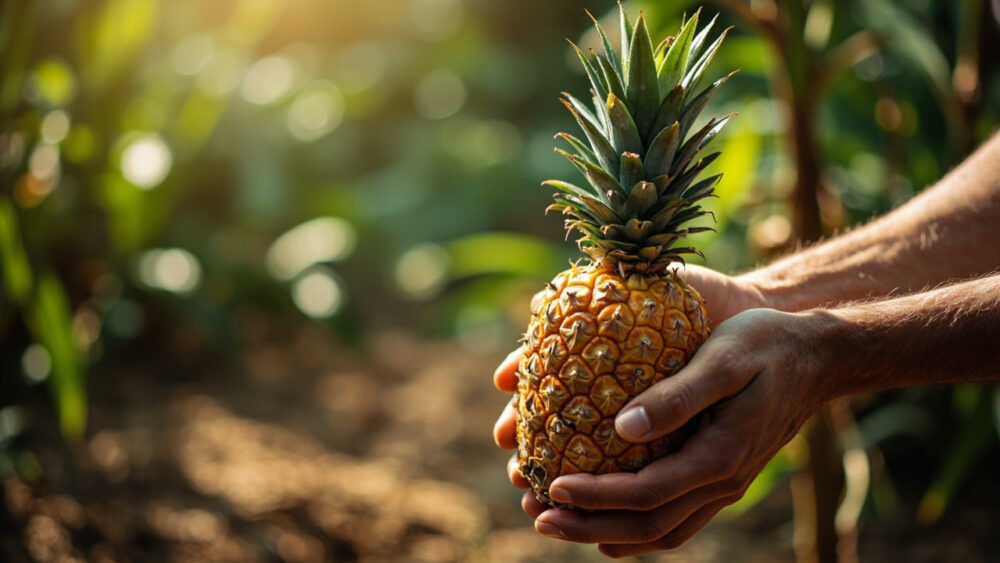
A whole, uncut pineapple keeps best sitting upright on the counter at room temperature for 2 to 3 days, or in the fridge for up to a week if you need more time. Once you cut it, the clock speeds up fast: refrigerate the pieces in an airtight container and use them within 4 to 5 days. That’s the short version of how to store pineapples, but the details are where most people lose half the fruit to mush or mold before they ever get to eat it.
Here’s what trips people up. Most folks think refrigerating a whole pineapple right away is the safe move, but that guess actually stalls ripening and can leave you with a fruit that’s permanently underripe and starchy. There’s also a step almost everyone skips that determines whether your cut pineapple lasts 3 days or 7, and a smell test that tells you the truth faster than any date on a calendar ever will.
Stick around for the full breakdown, because at the bottom I’ve got a save-able Pineapples at a Glance card with every number in one place, worth bookmarking before you forget it.
The Right Way to Store a Whole Pineapple
If your pineapple isn’t fully ripe yet, leave it on the counter, stem end up, out of direct sun. Ripening continues at room temperature but stalls in the fridge, so cold storage too early locks in whatever ripeness level you bought.
Once it’s ripe (see the signs below), move it to the fridge if you’re not eating it in the next day or two. Store it upright, uncut, in the crisper drawer or on a shelf where it has a little room to breathe.
Don’t wrap a whole pineapple in plastic. The skin is doing the protective job already, and trapping moisture against it invites soft spots and mold at the base.
A whole ripe pineapple in the fridge holds well for 5 to 7 days.
How Long Pineapple Keeps, Method by Method
Timing depends entirely on whether it’s whole, cut, or frozen, so here’s the real breakdown instead of one blanket number.
- Whole, on the counter: 2 to 3 days once ripe, longer if still greenish and firming up.
- Whole, in the fridge: 5 to 7 days.
- Cut, in the fridge: 4 to 5 days in an airtight container, ideally with any juice included.
- Frozen chunks: 8 to 12 months for best quality, though it stays safe to eat well beyond that.
Freezing is the one method most people never think to use, and it’s the difference between tossing half a pineapple and having smoothie fruit for months.
The Prep Step Almost Everyone Skips
Washing the outside before you cut matters more than people assume. The skin isn’t sealed, and whatever’s on the rind, dirt, bacteria, handling residue, can get dragged straight into the flesh by your knife.
Rinse the whole pineapple under cool running water and pat it dry before cutting, every time, even if you’re not eating the rind.
After cutting, dry storage matters just as much as the wash. Pineapple releases a lot of juice, and pooled liquid in a container speeds up spoilage rather than slowing it.
Store cut pieces in a container with a tight lid, and if there’s excess juice, either drain some off or plan to use the fruit within the shorter end of that 4 to 5 day window.
No blanching is needed here, that’s a vegetable-freezing step and pineapple doesn’t need it, but a quick pat-dry after rinsing genuinely extends how long the fruit holds.
The Signs a Pineapple Has Turned
Forget the old advice about pulling a leaf from the crown, that test tells you almost nothing reliable about ripeness or spoilage. What actually matters is smell, feel, and color together.
A pineapple that’s gone bad smells sharp, almost like vinegar or fermenting alcohol, instead of sweet. That smell alone is reason enough to toss it.
Soft, mushy spots, especially near the base, mean fermentation has already started inside even if the outside still looks decent. Mold at the crown or base is a hard no, don’t try to cut around it.
Cut pineapple that’s turned will look slightly translucent or glassy at the edges and taste sour rather than tart-sweet.
If the smell and the calendar disagree, trust the smell every time.
The Mistakes That Ruin a Batch
Most ruined pineapple comes down to a handful of repeat offenders, and once you know them they’re easy to avoid.
- Refrigerating an unripe pineapple: it stalls ripening instead of speeding it up, leaving you with starchy, sour fruit permanently.
- Storing it upside down or on its side: juice and sugar naturally settle toward the base, and upright storage helps distribute sweetness evenly as it finishes ripening.
- Leaving cut pineapple in a bowl on the counter: it’s fine for an hour or two, but past that, bacteria multiply fast in that sugar-rich fruit at room temperature.
- Skipping the airtight container: loosely covered pineapple picks up fridge odors and dries out at the edges within a day.
- Waiting for visible mold before tossing: the fermented smell shows up before the mold does, and by the time you see fuzz, more of the fruit is affected than you’d think.
Get the storage right and the ripeness call right, and a single pineapple can realistically feed you across a week between fresh eating and freezer stashing.
Pineapples at a Glance
- Ripe, uncut, room temp: 2 to 3 days, upright and out of direct sun.
- Ripe, uncut, fridge: 5 to 7 days, unwrapped in the crisper.
- Cut, fridge: 4 to 5 days, airtight container, drain excess juice.
- Frozen chunks: 8 to 12 months for best quality.
- Prep step: rinse the whole fruit and dry it before cutting.
- Ripeness fix: leave unripe fruit on the counter, don’t refrigerate it early.
- Spoilage sign: sour or vinegar smell, soft spots near the base, mold at crown or base.
When in doubt, smell it before you eat it, not after.
Store it upright, keep it dry, and use the freezer before you use the trash can.