The best time to plant figs is in early spring, two to four weeks after your last frost date, once soil temperature holds above 60°F, or in fall in the mildest climates (zones 9 and up) where winters stay above 20°F. Container-grown fig trees are forgiving about exact timing, but they are not forgiving about cold, wet roots, and that is where this answer to when to plant figs gets more specific than most people expect.
Most fig failures do not happen because someone planted on the wrong week. They happen because the tree went into the ground with warm air and cold soil, or into a spot that floods every March, or into a hole dug the same day the tree came home with no hardening off at all.
Stick around for the mistake that kills more fig trees than any frost does, the soil test that tells you your real window better than any calendar, and the at-a-glance card at the bottom you can screenshot before you touch a shovel.
The Real Planting Window for Figs
Figs want to go in the ground when the danger of hard frost has passed but the tree still has time to root in before summer heat hits full force. That usually means two to four weeks after your last average frost date in the spring, once nights are reliably staying above 40°F.
Soil temperature matters more than the calendar. Figs root poorly in cold, wet ground, so wait until soil at 6 inches deep reads 60°F or warmer on a simple soil thermometer.
In zone 9 and warmer, fall planting works well too, roughly six to eight weeks before your first expected frost, giving roots time to establish before winter dormancy.
Get that timing right and everything else about growing figs gets easier.
How to Find Your Actual Window, Not the National Average
Your neighbor two towns over might already be planting while your soil is still a cold, dense sponge. Local soil temperature and your specific microclimate decide your window, not a generic zone map.
Squeeze a handful of soil from the planting spot. If it forms a muddy ball that stays packed, it is still too wet and cold. Loose, crumbly soil that breaks apart is ready.
Check a south-facing wall or a spot near pavement. These warm up two to three weeks earlier than open lawn and can extend your effective window on both ends.
If you assumed the last frost date on a seed packet or app was the finish line, that number only tells you when frost risk drops, not when your soil is actually warm enough to grow roots.
Once your soil passes the squeeze test and the thermometer agrees, you are not just in the window, you are in the best part of it.
What Happens If You Plant Too Early
Here is the part everyone gets wrong: they think an unexpected late frost is the real danger of planting too early. It is not the main one.
Cold, saturated soil is the bigger threat. Fig roots sitting in ground below 55°F for weeks barely grow, and the tree can rot at the root collar before it ever leafs out.
A young fig planted into 45°F clay in early March often looks fine for a month, then declines slowly all summer with no obvious single cause. That slow fade is root suffocation, not frost damage, and by the time you notice it, the damage is usually done.
A light, late frost on actual leaves is rarely fatal. Figs push new growth from lower buds even after a freeze nips the tips.
Waiting even ten extra days for the soil to warm protects the tree more than any frost blanket does.
What Happens If You Plant Too Late
Planting deep into summer heat brings a different problem: not cold roots, but not enough runway. A fig planted in July has maybe eight to ten weeks before growth slows for the year, and that is not much time to build the root mass it needs to survive its first winter.
Late-planted figs also struggle with transplant stress compounded by heat stress. Leaves scorch, the tree drops foliage to cope, and root establishment stalls right when it should be accelerating.
This does not mean summer planting is a death sentence. Container figs can go in almost any time with consistent watering and afternoon shade for the first few weeks.
It does mean you should expect a smaller, more fragile tree heading into fall, one that needs extra winter protection its first year regardless of your zone.
That extra protection question comes up constantly, and it depends entirely on where you garden.
Prep Before the Window Opens
Do this work before planting day, not on it. Dig the hole and amend the soil a week or two ahead so the ground has time to settle and you are not making decisions on the fly.
Figs want a spot with 6 to 8 hours of direct sun and, critically, sharp drainage. If water sits in the planting hole more than a few hours after a hard rain, pick a different spot or build a raised mound 12 to 18 inches high.
Space trees 10 to 15 feet apart for standard varieties, or 6 to 8 feet for dwarf types kept pruned and contained.
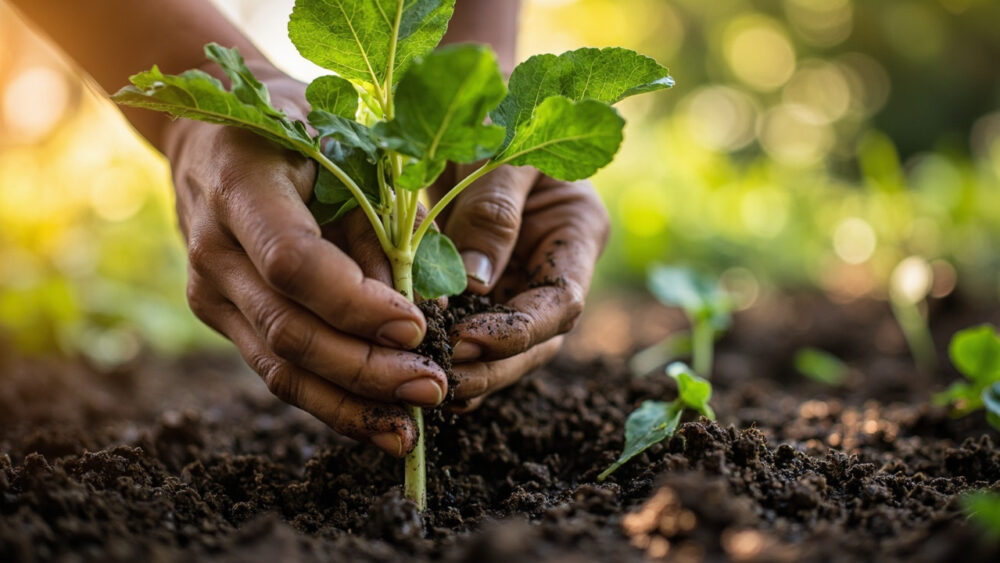
Dig the hole only as deep as the root ball and twice as wide, so roots spread laterally into loosened soil instead of hitting a hard-walled pit.
If the tree came in a container, water it well the day before so the root ball holds together during transplant.
With the hole ready and the soil right, all that is left is matching your zone to how much winter protection this tree will actually need.
Zone and Region Notes That Actually Change Your Plan
In zones 8 and warmer, figs can stay in the ground year-round with little fuss, and both spring and fall planting work well.
In zones 6 and 7, spring planting is safer than fall. It gives the tree a full growing season to establish before facing a winter that can still hit single digits.
In zone 5 and colder, figs need serious winter protection or container culture that lets you move the tree into an unheated garage or basement for winter. Plant these in spring only, and treat the first winter as the real test of the plant, not the first frost.
Coastal and Pacific Northwest gardeners often deal with cool, wet spring soil that stays below 60°F later than inland areas, so wait for that soil thermometer more than the date on any chart.
Wherever you garden, the same rule holds underneath all the regional detail, and that is what the card below is for.
Figs at a Glance
- When to plant: two to four weeks after last frost in spring, or six to eight weeks before first frost in fall for zone 9 and warmer.
- Soil temperature target: 60°F or warmer at 6 inches deep, checked with a soil thermometer.
- Sun and drainage: 6 to 8 hours direct sun, and a spot that does not hold standing water after rain.
- Spacing: 10 to 15 feet apart for standard varieties, 6 to 8 feet for dwarf types.
- Planting depth: same depth as the root ball, hole twice as wide, no deeper.
- Cold zones (5 and below): spring planting only, plan for winter protection or container overwintering.
- Warm zones (8 and up): flexible spring or fall planting, minimal winter protection needed.
Get the soil temperature right and the site well-drained, and the exact week you plant matters far less than people assume.
Everything else with figs, the pruning, the fruiting, the winter care, gets easier once the roots start in the right conditions.