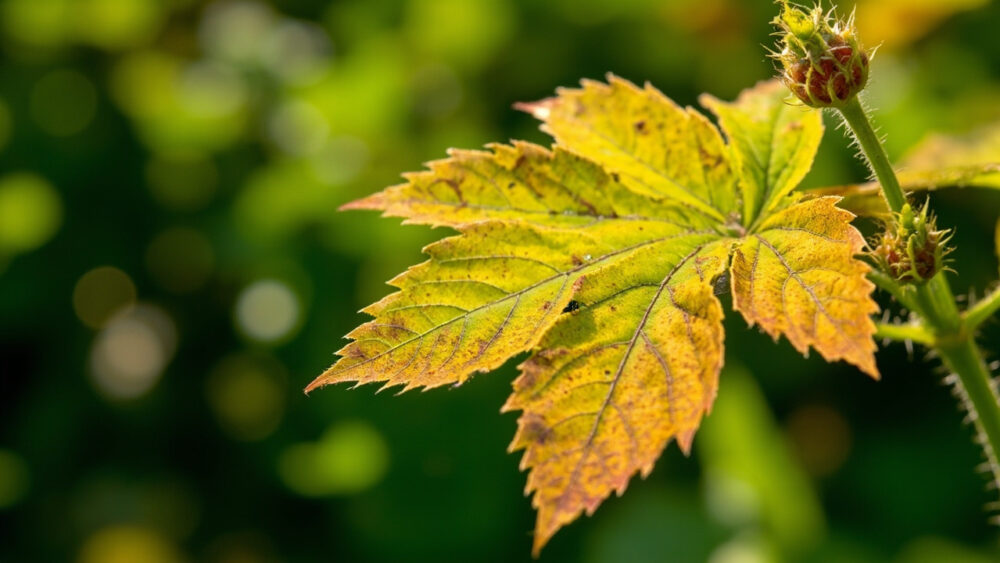
Nine times out of ten, yellow raspberry leaves mean iron chlorosis from soil pH that is too highand you fix it by acidifying the soil, not by feeding the plant more nitrogen. The leaves go yellow between dark green veins, usually on new growth first, because the roots can’t pull iron out of alkaline soil even when plenty is there.
But that’s just the most common answer, not the only one. Overwatering causes a nearly identical yellow that everyone blames on “not enough fertilizer,” root rot mimics a nutrient problem until you dig and find mush instead of firm white roots, and a virus can cause yellowing that no amount of fixing anything will ever reverse.
The one detail that tells you which cause you’re actually dealing with is where the yellowing starts on the leaf and where it starts on the plant. Stick with this, because the bottom of this page has a two-minute diagnosis checklist built to run right at the plant.
Most Likely Causes, Ranked
1. Iron chlorosis from high soil pH
Confirm it: look at the newest leaves at the cane tips. If they’re yellow with veins staying distinctly green (a stark, almost painted-on pattern), and a soil test reads above 6.8 to 7.0, this is your cause. Raspberries want pH around 6.0 to 6.5.
Fix it: work elemental sulfur into the soil around the root zone per the product label, and expect it to take weeks to months to shift pH, not days. Chelated iron sprayed on foliage gives faster, temporary greening while the soil catches up.
That’s the common cause, but water management causes the exact same look for a completely different reason.
2. Overwatering or poor drainage
Confirm it: push a finger 2 inches into the soil near the crown. If it’s soggy, and the yellowing shows up on lower, older leaves first with a slightly droopy or dull look rather than crisp veining, water is the problem, not iron.
Fix it: let the top 2 to 3 inches of soil dry between waterings, and if the bed stays wet for days after rain, raise the planting into a mounded row or raised bed. Raspberries hate wet feet more than almost any other fruit crop people grow.
If the soil has been wet for a while, check the next cause before you assume you’ve caught it in time.
3. Root rot (Phytophthora)
Confirm it: pull back soil at the base of a struggling cane and look at the roots. Healthy roots are firm and light colored. Rotted roots are dark, mushy, and strip apart in your fingers, often with a sour smell.
Fix it: there’s no curing infected roots. Remove and destroy badly affected canes, improve drainage immediately for anything left, and don’t replant raspberries in that exact spot for at least a couple of years. This one is honestly the hardest cause to walk back from.
If the roots looked fine, the answer is probably simpler and further up the plant.
4. Nitrogen deficiency
Confirm it: older, lower leaves turn uniformly pale yellow to light green, no distinct vein pattern, often starting on the oldest canes and the base of the plant, especially in sandy or heavily leached soil.
Fix it: apply a balanced fruit fertilizer or composted manure in early spring at label rates. Don’t overdo it once summer’s underway, since heavy nitrogen late in the season pushes soft cane growth that winters poorly.
If feeding doesn’t touch it within a couple of weeks, look at what’s living in the soil instead of what’s missing from it.
5. Spider mites or aphids
Confirm it: flip a yellowing leaf over. Fine stippling, tiny moving dots, webbing in the leaf axils, or clusters of small soft-bodied insects point to mites or aphids, usually worse in hot, dry weather for mites.
Fix it: a strong water spray knocks down light infestations. For heavier ones, insecticidal soap or a horticultural oil applied per the product label works well; always follow label instructions on timing and coverage.
Insects cause patchy, speckled yellowing, which is a very different picture from the next cause.
6. Viral infection
Confirm it: irregular yellow mottling, ring patterns, or blotchy mosaic coloring that doesn’t match any clean vein pattern, especially if it’s spreading slowly across multiple canes over a season with no clear soil or water explanation.
Fix it: there isn’t one. Viruses in raspberries are permanent and usually spread by aphids or infected planting stock. Remove and destroy infected canes and don’t propagate from them.
Once you’ve ruled in or out each of these, the pattern on the plant is what locks in your answer.
How to Tell the Causes Apart
Start with location: new growth at the tips points to iron chlorosis; old, lower leaves point to nitrogen or overwatering. Scattered across the whole plant with no pattern leans toward mites, rot, or virus.
Then check the pattern on the leaf itself. Sharp yellow-with-green-veins means chlorosis. Uniform pale yellow means nitrogen. Speckled or stippled means insects. Blotchy and irregular means virus.
Finally, go to the roots and the soil if the leaf pattern doesn’t give you a clean answer, since rot and drainage problems hide underground until the leaves are already well into decline.
Once you know which cause you’re looking at, the next question is whether the plant is actually going to make it.
Will It Recover?
Iron chlorosis and nitrogen deficiency recover well, usually showing new green growth within 2 to 4 weeks of correcting soil pH or feeding, since the plant’s structure was never damaged, just starved of one nutrient.
Overwatering recovers fully if caught early, often within a couple of weeks of improved drainage, but stressed roots that sat wet for a full season are already weakened heading into winter.
Root rot is a mixed bag: canes with only minor rot can be saved by fixing drainage fast, but canes with mushy, collapsed root systems are done and should be removed rather than nursed.
Viral infections never reverse. The plant may limp along for a season or two producing less fruit, but it won’t return to full health, and it’s a slow source of infection for healthy canes nearby.
Whatever the outcome this season, the real win is not doing this again next year.
How to Keep It From Happening Again
Test your soil before you plantnot after trouble shows up, and amend pH into the 6.0 to 6.5 range from the start rather than fighting alkaline soil every season.
Plant in raised rows or mounds if your soil drains slowly, since chronic wet feet is the root cause behind both overwatering symptoms and Phytophthora rot.
Feed lightly and early in spring rather than heavily and often, and skip fertilizing in late summer so canes harden off properly before cold weather.
Buy certified virus-free planting stock and control aphids early, since aphids are the main way viruses move from an infected planting into a clean one.
Now that you know what to watch for going forward, here’s the fast way to check what’s happening right now.
Diagnosis Checklist
- Look at which leaves are yellow first: if it’s the newest growth at the cane tips, suspect iron chlorosis and test your soil pH.
- Check the vein pattern: sharp yellow with dark green veins staying visible means chlorosis, not a feeding problem.
- If it’s old, lower leaves that are uniformly pale, suspect nitrogen deficiency and check when you last fed the bed.
- Press a finger 2 inches into the soil near the crown: if it’s soggy, suspect overwatering or drainage before anything else.
- If the soil has stayed wet for a while, dig gently at the base and check root color and firmness for signs of rot.
- Flip a yellow leaf over and look for stippling, webbing, or insects clustered on the underside.
- If the yellowing is blotchy, mottled, or ring-shaped with no clear soil or water cause, consider a viral infection and isolate that cane from healthy ones.
- Match your finding to its fix above, and give it 2 to 4 weeks before judging whether it’s working.
Most yellow raspberry leaves trace back to soil chemistry or water, both of which you can fix this weekend.
Run the checklist once, and you’ll know exactly which fix to reach for.