A cantaloupe plant moves through six distinct stages between planting and harvest: germination, seedling, vining, flowering, fruit set, and ripening, and the whole trip takes roughly 70 to 90 days depending on the variety and how warm your summer runs. Knowing the cantaloupe growing stages matters because each one asks for something different from you, and giving a flowering plant seedling-stage babying (or vice versa) is how a lot of vines end up long on leaves and short on melons.
Most people lose their crop at the same point, and it is not the point they worry about. It happens right after the flowers show up and looks like nothing is wrong at all.
There is also a sign growers misread constantly, one that looks exactly like trouble but is actually the plant doing precisely what it should. And there is a stall that looks identical to normal slow growth until you know the one thing to check. Stick with this through every stage and you will find the full save-able rundown, the Cantaloupe at a Glance card, waiting at the bottom.
Germination: Days 1 to 10
Cantaloupe seeds need warm soil to wake up, ideally 75 to 85 F, which is why direct-sowing before the soil hits at least 65 F just sits there rotting instead of sprouting. Plant seeds about half an inch to an inch deep, three to four seeds per hill, hills spaced 36 to 48 inches apart.
You will not see anything for 5 to 10 days at typical warmth, longer in cool soil. Keep the soil evenly moist, never soggy, during this window. A loop of clear plastic or a cold frame over the hill speeds things up if your nights are still dipping into the 50s.
The first thing to break the surface is a pale, curled shoot that straightens and unfurls into two seed leaves.
That first green loop is not the plant proving itself yet, the real test comes next.
Seedling Stage: Days 10 to 25
Once the seed leaves (cotyledons) open, true leaves follow within a few days, rounded and slightly fuzzy, nothing like the deep lobes they will grow into later. This is the fragile window. Thin each hill down to the strongest one or two seedlings once they have their first true leaves, because crowded seedlings compete for light and end up leggy and weak.
Keep soil consistently moist an inch down, and hold off on heavy fertilizer here. Too much nitrogen now builds soft tissue that flea beetles and cucumber beetles go straight for.
This is also where transplants (if you started indoors 3 to 4 weeks before your last frost) go into the ground, once nighttime lows are reliably above 55 F.
The plant looks harmless right now, but this is exactly where the season’s biggest mistake usually gets made.
The Vining Stage Mistake That Costs Growers Their Whole Season
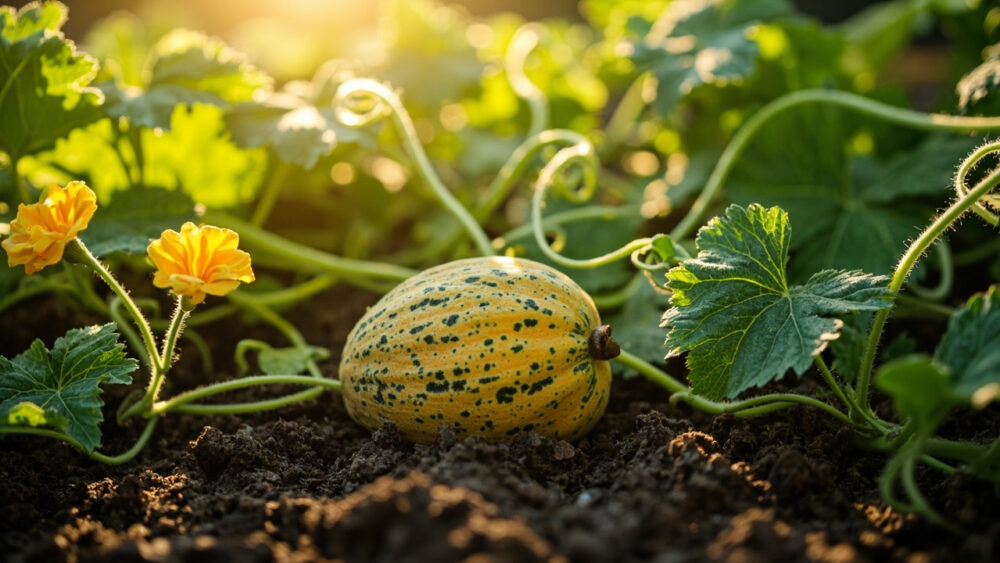
Between weeks 3 and 6, cantaloupe shifts from a tidy seedling into a sprawling vine that can run 4 to 6 feet in a season, sometimes more. The mistake is not neglect, it is overcorrection: panicking at the sprawl and pruning the vine hard or crowding plants too close to control it.
Cantaloupe wants space. Give it 3 to 4 feet between plants in every direction, or trellis it vertically with slings supporting the fruit if your space is tight.
Heavy pruning removes the very leaves that photosynthesize sugar into the fruit later. A little tip-pinching on very long runners to push branching is fine. Whacking the vine back because it looks unruly is not.
Feed lightly now with a balanced fertilizer, and keep watering deep and consistent, about 1 to 1.5 inches a week between rain and irrigation.
The vine keeps sprawling for weeks with nothing to show for it, and that is exactly when the second big misread shows up.
Flowering: Weeks 6 to 8, and the Sign Everyone Misreads
Cantaloupe plants produce male flowers first, sometimes two full weeks before a single female flower shows up. If you assumed no fruit means no flowers or a dying plant, that guess sends more people hunting for a fake fix than any actual disease does.
Look closely and the difference is easy: male flowers sit on thin, plain stems, female flowers have a small swollen bulge (the immature ovary) right behind the petals. Early on you will see mostly males. That is normal, not a failure.
Bees have to move pollen from male to female flowers for fruit to set, so this is the stage where pollinator activity matters more than anything you can spray or feed. Avoid insecticides on open flowers entirely.
Once female flowers open and get visited, the swelling behind the petal is your first real evidence of a melon coming.
Fruit Set: Weeks 7 to 9
A pollinated female flower drops its petals within a day or two and leaves behind a marble-sized green fruit. Fruit set is where the plant needs the most water and the steadiest care of the whole season, because inconsistent moisture right now causes blossom drop and misshapen fruit.
Keep watering deep, 1 to 1.5 inches weekly, and mulch around the base to hold moisture and keep developing fruit off bare wet soil, which cuts down on rot.
Not every female flower sets fruit, and a healthy vine will abort some on its own. That is normal thinning, not a problem to fix.
Once a melon is the size of a golf ball and holding steady, it is committed, and now the waiting game for size and ripeness begins.
How to Tell a Real Stall From Normal Slow Growth
Fruit sizing looks slow for weeks, which worries people who expect visible daily change. Normal growth is a melon that feels firm, has good color for its stage, and is slowly gaining weight and size week over week, even if you cannot see it happen in real time.
A real stall looks different: the fruit stays the same size for over two weeks, feels soft or spongy instead of firm, or the vine around it starts yellowing from the base up. That combination usually points to root stress, uneven watering, or vine decline from disease, not patience running out too soon.
Check soil moisture an inch down before assuming disease. Drought stress alone stalls fruit fast and is the easiest cause to fix.
If growth is genuinely stalled and the leaves are also wilting in the cool morning hours, that is the point to look at the roots, not the fruit.
Ripening: Weeks 10 to 13, and How to Know Without Guessing
Cantaloupe is one of the few melons that tells you clearly when it is ready. The reliable sign is slip: the stem where the fruit attaches to the vine develops a crack around it and the melon separates from the vine with light pressure, no cutting required.
Alongside slip, the skin color under the netting shifts from green to tan or golden, and a ripe melon gives off a sweet, musky smell right at the stem end.
Do not go by size alone, and do not go by thumping like a watermelon, cantaloupe does not reward that trick. Check stems every day or two once fruit reaches full size and netting starts to change color.
Once a melon slips clean into your hand, that is the harvest window, not a few days later.
Cantaloupe at a Glance
- When to plant: direct-sow or transplant once soil is at least 65 F and nights stay above 55 F, usually 2 to 3 weeks after your last frost.
- Spacing: 36 to 48 inches between hills or plants, wider if not trellising.
- Planting depth: half an inch to one inch for seed, three to four seeds per hill thinned to one or two.
- Days to maturity: roughly 70 to 90 days from seed, variety dependent.
- Water needs: 1 to 1.5 inches per week, most critical during flowering and fruit set.
- Ripeness sign: the fruit slips cleanly from the vine with light pressure and smells sweet at the stem end.
- Biggest mistake to avoid: pruning the vine hard during the sprawl stage or panicking over male-only flowers.
Cantaloupe rewards patience more than effort. Watch the stem, not the calendar, and it will tell you exactly when it is done.