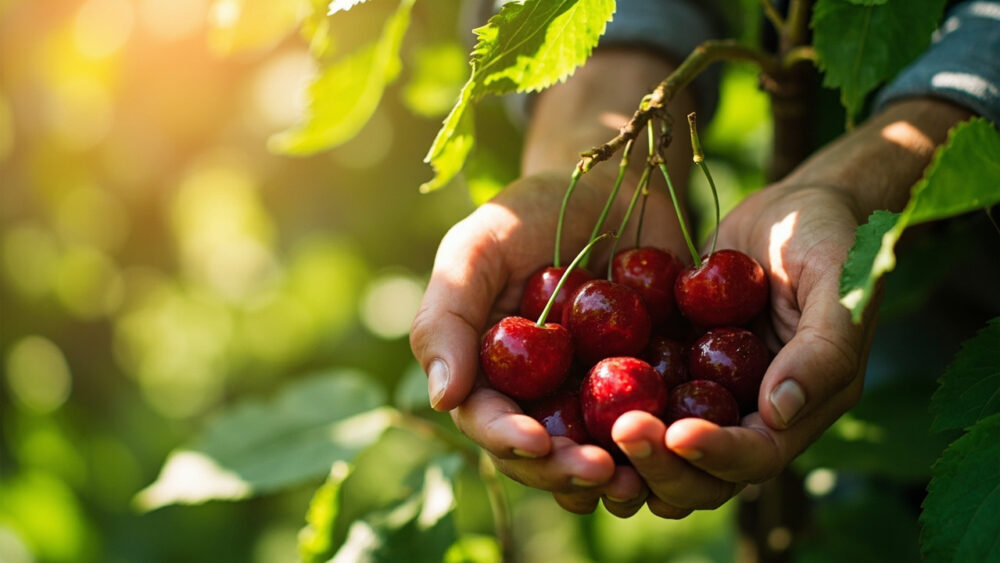
Learning how to grow cherries starts with one decision that most people get wrong before they even buy a tree: whether they have room and climate for a sweet cherry or should plant a sour (tart) cherry instead. Sweet cherries need a second tree nearby for pollination and a long, dry summer to ripen without splitting. Sour cherries are self-pollinating, tougher, and far more forgiving for a first attempt.
Get the type and site right, plant in early spring while the tree is still dormant, and you’re looking at your first real harvest in three to five years, sometimes longer for sweet varieties on standard rootstock.
There’s a mistake buried in that timeline that costs people an entire season, and it’s not about planting too late. There’s also a bloom-time sign almost everyone misreads as a problem when it’s actually the tree doing exactly what it should. Stick around for both, plus the honest answer to how long you’re really waiting for cherries, and save the Cherries at a Glance card at the bottom for the numbers you’ll want on hand this weekend.
When to Plant Cherry Trees
Plant bare-root cherry trees in early spring, four to six weeks before your last frost date, as soon as the ground can be worked and isn’t waterlogged. In mild-winter climates (roughly zone 7 and warmer), fall planting works too, giving roots a head start before spring growth.
Container-grown trees are more flexible. You can plant them anytime the soil isn’t frozen or soggy, though spring still gives the best establishment window before summer heat arrives.
Cherries need winter chill to set fruit properly, generally 600 to 1,400 hours below 45°F depending on variety, so gardeners in zones 5 through 7 have the easiest run. Zone 8 growers need to pick low-chill varieties specifically, and cherries struggle badly below zone 4 or above zone 9.
Get the timing right and the next decision, where you actually put this tree, matters just as much.
Choosing the Spot and Prepping the Soil
Cherries want full sun, six to eight hours minimum, and soil that drains fast. Standing water around the roots for even a few days can kill a cherry tree outright, faster than almost any other fruit tree mistake.
Test your drainage before you plant: dig a hole a foot deep, fill it with water, and if it hasn’t drained within a few hours, pick a different spot or build a raised mound.
Cherries prefer slightly acidic to neutral soil, pH 6.0 to 6.8, and don’t tolerate heavy clay well.
Work compost into the planting area a few weeks ahead if your soil is thin or sandy, but skip fresh manure or heavy nitrogen right at planting time. It pushes soft growth before roots are established.
Air circulation matters too: avoid low spots where cold air pools, since frost pockets can wipe out an entire bloom.
Once you’ve got the right ground picked out, it’s time to talk about the mistake that ends more cherry attempts than any pest or disease ever will.
Planting Step by Step
- Dig the hole: twice as wide as the root ball or root spread, and just deep enough that the graft union sits 2 to 3 inches above the final soil line.
- Check the roots: trim any broken or circling roots on bare-root trees, and soak them in water for an hour or two before planting.
- Set and backfill: spread roots naturally, backfill with native soil, and firm gently as you go to remove air pockets.
- Water in immediately: soak thoroughly right after planting, even if the soil looks wet already.
- Space correctly: sweet cherries need 35 to 40 feet apart on standard rootstock, or 15 to 18 feet on dwarfing rootstock. Sour cherries need 20 to 25 feet, or 8 to 10 feet dwarf.
- Stake if needed: only for the first year or two on windy sites, and remove stakes once the trunk can stand on its own.
Here’s the mistake: planting a single sweet cherry tree alone and expecting fruit. Most sweet cherry varieties are not self-pollinating and need a second, compatible variety within about 100 feet, ideally closer, or there’s a hobby orchard within bee-flying range. Plant one sweet cherry by itself and you’ll get blossoms, bees, and no cherries, year after year, and never understand why.
Sour cherries dodge this entirely since they’re self-fruitful, which is exactly why they’re the easier starting point.
Get the tree in the ground correctly and pollination sorted, and the next job is keeping it alive through its first real growing season.
Watering and Feeding Through the Season
Young cherry trees need consistent moisture for their first two growing seasons, about 1 to 2 inches of water a week if rain doesn’t provide it, tapering off once roots are established. Established trees are fairly drought-tolerant but still want deep watering during dry spells, especially as fruit is sizing up.
Check soil moisture by pushing a finger down 2 to 3 inches; if it’s dry there, water.
Hold off on fertilizer the first year beyond the initial soil prep. Starting in year two, feed in early spring with a balanced fertilizer, following label rates for tree fruit, and watch shoot growth: 12 to 18 inches of new growth a year on young trees is healthy, less than that suggests they need more nitrogen or water.
Mulch 2 to 3 inches deep around the base, but keep it a few inches back from the trunk to avoid rot and vole damage.
Feeding is straightforward, but what shows up on the leaves and bark later is where cherries get genuinely tricky.
The Problems That Actually Take Cherries Down
Birds are the single biggest threat to a ripening cropnot insects or disease. They can strip a small tree in a single morning right before harvest. Netting the tree as fruit starts to color is the only reliable fix; scare devices lose effectiveness within days.
Brown rot and bacterial canker are the two diseases worth watching for. Brown rot shows up as fuzzy tan-gray mold on fruit in humid weather. Remove and destroy infected fruit immediately and improve air circulation by pruning for an open center. Bacterial canker causes sunken, dark, oozing patches on bark and killed branches, mainly in wet, cool spring conditions. There’s no cure once it’s established, only pruning out affected wood well below the visible damage and disinfecting tools between cuts.
For either, if damage is heavy, a fungicide or copper-based bactericide labeled for cherries can help when applied on the schedule the product label specifies.
Splitting fruit is a rain problem, not a disease: heavy rain right before harvest swells fruit faster than the skin can stretch. There’s no fix once it happens, only picking promptly when ripe rather than waiting for “just one more day.”
Now here’s the sign almost everyone misreads: heavy blossom drop in spring. It looks alarming, like the tree is failing, but cherries naturally shed a large share of their blossoms and small fruitlets. It’s called June drop and it’s the tree self-thinning to a crop size it can actually support.
Only worry if nearly all fruit drops, or if drop comes with wilting leaves and cankered bark, which points to disease or a girdled trunk instead.
Head off birds and brown rot, and the only thing left standing between you and cherries is timing the harvest itself.
When and How to Harvest Cherries
Cherries ripen fast and don’t ripen further off the treeunlike apples or pears. Color is your first cue, deep red to nearly black for sweet varieties like Bing, bright red for sour varieties like Montmorency, but color alone isn’t proof.
Taste-test a few daily once color looks right. Ripe cherries are firm but give slightly and taste fully sweet or fully tart, not green or astringent.
Harvest with the stem attached when possible, pulling gently upward. Cherries picked without stems bruise faster and don’t store as long.
Most trees ripen over a one- to two-week window, sweet varieties typically in early to midsummer, sour varieties slightly later, timing shifting earlier in warmer zones and later in cooler ones.
And the honest timeline question: a dwarf sour cherry on favorable rootstock can bear a light crop in year two or three. Standard sweet cherry trees usually take four to seven years before you see a real harvest, and full production takes even longer. That’s the trade you make for a bigger, longer-lived tree.
Once you’ve picked your first real bowlful, everything above boils down to the handful of numbers below.
Cherries at a Glance
- When to plant: early spring, four to six weeks before last frost, or fall in zones 7 and warmer.
- Best zones: USDA zones 5 through 7 for most varieties, with low-chill types possible in zone 8.
- Spacing: 35 to 40 feet for standard sweet cherries, 15 to 18 feet for dwarf sweet, 20 to 25 feet for standard sour, 8 to 10 feet for dwarf sour.
- Sun and soil: full sun, six to eight hours minimum, well-drained soil with pH 6.0 to 6.8.
- Pollination: most sweet cherries need a second compatible variety nearby, sour cherries are self-fruitful.
- Watering: 1 to 2 inches a week for young trees, deep watering during dry spells once established.
- Time to first harvest: two to three years for dwarf sour cherries, four to seven years for standard sweet cherries.
If you remember one thing, remember the pollination partner and the netting.
Get those two right and the rest of this is just patience.