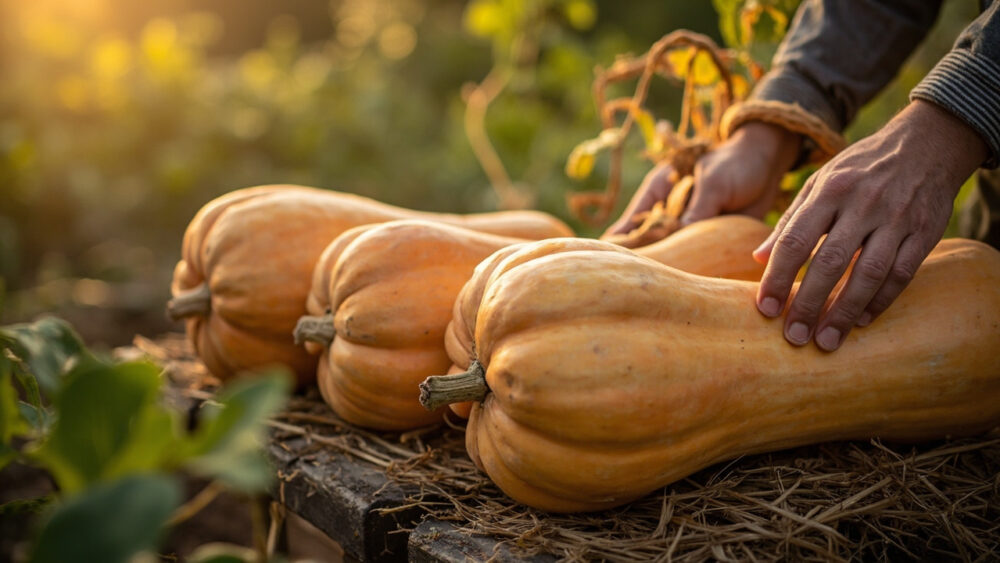
The right way to store butternut squash is to cure it first, then keep it whole, unwashed, in a cool room around 50 to 60 degrees Fahrenheit with moderate humidity, not in the fridge and not on a sunny kitchen counter. Done right, a cured butternut squash holds for two to three months in that kind of pantry spot, sometimes six months in ideal root cellar conditions. Skip the curing step, and you can watch a perfectly good squash go soft and moldy in a matter of weeks.
Most of the storage failures I see trace back to one of three things: washing the squash before it goes into storage, storing it somewhere too warm or too humid, or never curing it at all because nobody told them that step exists. There is also a sign of rot that gets misread constantly, people see a slightly dull, dusty-looking skin and panic, when that is actually normal and harmless.
I will walk through the full method, how long it actually lasts on the counter versus cured versus frozen, and the honest signs that mean it is done for. Save the “Butternut Squash at a Glance” card at the bottom for the quick version once you have read the details.
Curing: The Step That Determines Everything Else
Curing is what turns a fresh-picked butternut squash into one that stores for months instead of weeks. It hardens the skin and lets the cut stem seal over, which blocks off the entry points for rot.
To cure it, set the squash somewhere warm, around 80 to 85 degrees Fahrenheit, with decent airflow, for 7 to 10 days. A sunny porch, a greenhouse, or even a warm garage with a fan works. You are not trying to bake it, just warm and dry it.
Skip this step and your squash might still keep for a few weeks, but you have removed most of your margin for error.
The Storage Method That Actually Works
Once cured, move the squash to a cool, dry, dark spot. A basement, an unheated closet, or a pantry that stays between 50 and 60 degrees Fahrenheit is close to ideal.
Do not stack them touching if you can avoid it. Set them on a shelf, a wooden crate, or even cardboard with a little space between each one so air moves around them.
Humidity matters too. You want it moderate, somewhere around 50 to 70 percent. A damp basement that smells musty is too humid and will shorten your storage window considerably.
This is the setup that gets you the two to three months I mentioned up top, sometimes longer.
Here is where the counter comes back into the picture, and where the timing changes fast.
How Long It Actually Keeps, Method by Method
Timing depends entirely on where and how you store it, and the differences are bigger than most people expect.
- Counter, room temperature, uncured: about 2 to 4 weeks before quality drops.
- Cool pantry or basement, cured: 2 to 3 months typically, up to 6 months in a true root cellar around 50 to 55 degrees Fahrenheit.
- Refrigerator, whole squash: not recommended long-term, the cold and humidity actually encourage soft spots within a few weeks.
- Refrigerator, cut or cooked squash: 4 to 5 days in an airtight container.
- Freezer, cooked and cubed or pureed: 8 to 12 months, well past what fresh storage can offer.
If you were about to ask whether the fridge is a safe fallback for a whole squash, the answer is no, it does the opposite of what you want.
That leaves freezing as the real long-game option, and it comes with its own rules.
Freezing: The Move for Squash You Cannot Use in Time
If you have more butternut squash than you will eat in three months, freezing is the honest answer, not root cellar wishful thinking. Peel it, cube it, and either steam or roast it until just tender, then cool completely before freezing.
Spread the cubes on a tray to freeze individually first, then bag them, this keeps them from turning into one solid block. Pureed squash freezes just as well and is often more useful for soups.
Raw squash does not freeze well, the texture turns watery and mushy once thawed.
Skipping the pre-cook step is the single most common freezing mistake, and it is an easy one to fix.
Do You Wash It First? The Answer That Surprises People
Do not wash your squash before storing it. This trips people up because washing feels like the responsible, clean thing to do, but water left on the skin invites mold and softens the surface you are relying on to keep rot out.
Brush off loose dirt with a dry cloth or soft brush instead. Save the actual washing for right before you cook it, not before you store it.
That dusty, slightly faded look on the skin during storage is normal too, it is not mold, just the natural bloom and the effect of curing.
Knowing what is normal matters just as much as knowing what is a warning sign, which brings us to the signs that actually mean trouble.
The Real Signs Your Squash Has Turned
A butternut squash that has gone bad tells you clearly, you do not have to guess.
- Soft spots that give under light pressure, especially near the stem or blossom end.
- A sour or fermented smell when you pick it up, healthy squash has almost no smell at all.
- Wet, sunken patches on the skin, sometimes with a darker discoloration underneath.
- Visible mold, usually white or black, often starting at the stem scar.
A little surface scarring or a scratch that has dried and calloused over is not a problem, squash skin heals itself in storage the same way a cut on a potato does.
If you catch a soft spot early, before it spreads, you can often cut it away and cook the rest that day, but do not try to save it for later storage.
Now let us cover the mistakes that turn a good crop into a bad month.
The Mistakes That Ruin an Entire Batch
Most storage failures come down to a short list of repeatable mistakes, and once you know them they are easy to avoid.
- Storing bruised or damaged squash alongside good ones, one bad squash speeds up rot in its neighbors.
- Skipping curing entirely, which cuts your storage window down to weeks instead of months.
- Harvesting too early, before the skin has hardened, it will not cure or store well no matter what you do afterward.
- Storing in a cold, humid basement that is really meant for root vegetables, not winter squash.
- Piling squash in a bin where they touch and trap moisture against each other.
Harvesting timing matters more than most people realize, and it happens well before storage ever comes into play.
A squash picked with a soft or greenish stem was never going to store well, regardless of how well you cure it.
Butternut Squash at a Glance
- Curing time: 7 to 10 days at 80 to 85 degrees Fahrenheit with good airflow before long-term storage.
- Best storage spot: cool, dark, dry area between 50 and 60 degrees Fahrenheit, humidity around 50 to 70 percent.
- Storage life, cured and cool: 2 to 3 months typically, up to 6 months in ideal root cellar conditions.
- Storage life, uncured on the counter: 2 to 4 weeks before quality drops.
- Refrigerator use: skip it for whole squash, use only for cut or cooked squash, 4 to 5 days.
- Freezer life: 8 to 12 months for cooked, cubed, or pureed squash, never freeze it raw.
- Never wash before storing: brush off dirt dry, wash only right before cooking.
Cure it, keep it cool and dry, and leave the skin alone until you are ready to cook.
Get those three things right and the squash does the rest of the work on its own.