The right way to store garlic is whole, unpeeled bulbs kept somewhere cool, dry, and dark with air moving around them, never in the fridge and never sealed in plastic. Cured garlic stored this way lasts 4 to 8 months depending on the variety. Peeled or chopped garlic is a different animal entirely, and it will not last anywhere near that long no matter what you do.
Here is what trips people up. Most bad garlic storage isn’t a mistake made in month three, it’s a mistake made on day one, before the bulb ever hits the pantry. There’s also a sign of spoilage almost everyone misreads as “still fine,” and a very reasonable-sounding storage instinct that actually rots garlic faster than doing nothing at all.
Stick with me through the prep, the timelines, and the failure signs, because the save-and-screenshot Garlic at a Glance card is waiting at the bottom with every number in one place.
The Method That Actually Works
Store cured, unwashed, unpeeled garlic bulbs loose in a single layer or in a breathable container: a mesh bag, a paper bag with holes, a shallow basket, or braided and hung.
Target conditions are 60 to 65°F with 45 to 60 percent humidity, out of direct light. A pantry shelf, a closed cabinet away from the stove, or a cool basement corner all work.
Don’t refrigerate whole bulbs. Cold triggers sprouting and turns the cloves rubbery and bitter within weeks.
Skip the sealed jar or ziplock bag too, even though it feels like the tidy, protective move.
That instinct to seal garlic up airtight is the one that quietly rots it from the inside.
Why “Airtight” Backfires
Garlic bulbs are alive. They’re still respiring slowly, releasing a small amount of moisture even after curing.
Trap that moisture in a sealed container and it has nowhere to go. It condenses, softens the papery wrapper, and invites mold and rot from the inside cloves outward, exactly where you can’t see it until you break the bulb open.
Airflow is the actual preservative here, more than darkness or even cool temperatures. That’s why mesh bags and open baskets consistently outperform anything with a lid or a zip seal.
If you’ve been storing garlic in a jar on the counter and wondering why it goes soft in a month, this is almost always the reason.
Good airflow only pays off, though, if the garlic was cured properly before it ever reached the jar.
Curing: The Step Everyone Skips or Rushes
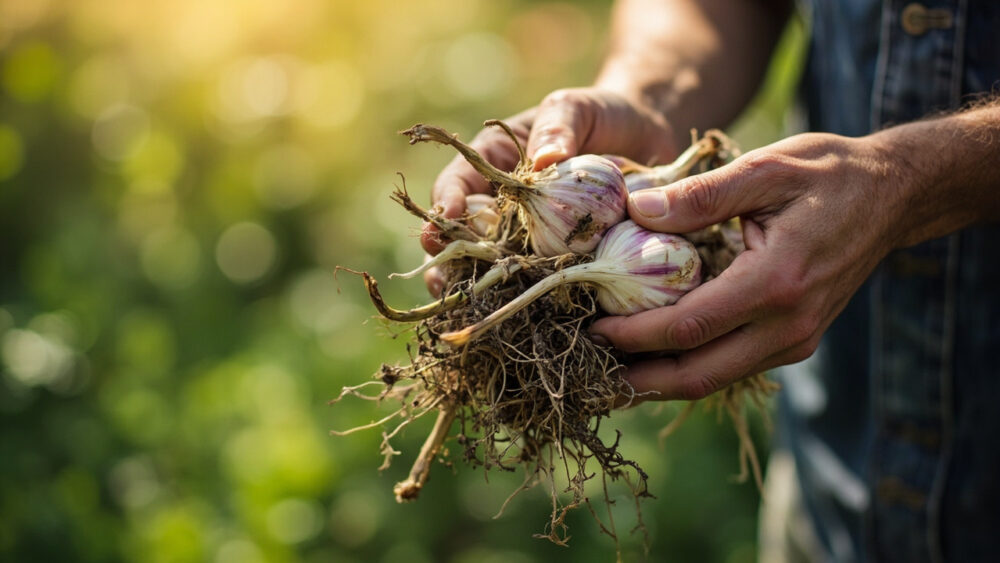
Curing is not optional, and it’s the step most people either skip entirely or cut short. If your garlic came straight from the garden, it needs 2 to 4 weeks curing before long-term storage, not 2 to 4 days.
Hang whole plants or lay bulbs in a single layer somewhere warm, dry, and shaded with decent airflow, out of direct sun. A garage, covered porch, or shed all work.
You’ll know it’s cured when the outer wrapper is fully papery and dry, the neck above the bulb is tight and dry rather than soft or green, and the roots have shriveled.
Grocery store garlic has already been cured for you, so you can skip straight to storage.
Curing is also where the washing question gets settled, and the honest answer surprises a lot of gardeners.
Do You Wash Garlic Before Storing It
No. Do not wash garlic before storing it, even to knock off garden soil.
Water on the bulb during curing or storage is exactly what invites mold under that papery skin, and once mold starts there it’s usually invisible until you slice into a rotten clove weeks later.
Brush off loose dirt with your hands or a soft brush once the bulb is fully dry and cured. That’s the full extent of the cleaning it needs.
Blanching, for the record, is a technique for freezing peeled cloves, not for whole-bulb storage, and it has no place in the curing process at all.
Once garlic is properly cured and dry, how long it actually keeps depends entirely on which storage method you choose next.
How Long Garlic Lasts by Storage Method
- Whole cured bulbs, cool pantry: 4 to 8 months, with softneck varieties generally outlasting hardneck.
- Whole bulbs, room temperature counter: 3 to 5 months, shorter in a warm kitchen near the stove.
- Peeled whole cloves, refrigerated: 7 to 10 days in a container that isn’t fully airtight.
- Chopped or minced garlic, refrigerated: 3 to 5 days, and it fades in flavor fast after day two.
- Peeled cloves, frozen: 10 to 12 months, texture turns soft on thawing so it’s best for cooked dishes.
- Garlic in oil, refrigerated: use within about a week, and only ever refrigerated, never left at room temperature.
That last one deserves its own warning, because it’s where storage mistakes stop being about quality and start being about safety.
The Garlic-in-Oil Mistake That Isn’t Just About Spoilage
Garlic submerged in oil at room temperature can create the low-oxygen conditions that allow botulism-causing bacteria to grow, and you often can’t smell or see the problem before it’s dangerous.
Always refrigerate homemade garlic-in-oil mixtures and use them within about a week, or freeze in small portions instead.
If you ever suspect spoiled garlic or garlic-in-oil has been eaten and something feels off, don’t wait it out at home. Contact a doctor or poison control and let them guide you.
That’s the one genuinely serious risk in this whole topic, and it’s avoidable with a simple refrigerator habit.
Most garlic storage failures are far less dramatic, just quietly disappointing, and they show up as one of a handful of predictable signs.
The Signs Garlic Has Turned (and the One People Miss)
Soft spots, a strong sour or musty smell, visible mold, and cloves that have gone brown and mushy all mean toss it.
A single green sprout poking through the top is not automatically a death sentence. Sprouted garlic is still edible, just milder and best used quickly, though the sprout itself tastes bitter and is worth trimming out.
The sign most people misread is a bulb that still looks firm and papery on the outside but feels light, hollow, or slightly squishy when you press the base.
That’s a clove drying out and collapsing inside its own skin, and by the time you peel it you’ll often find a shrunken, chalky, or yellowed clove that’s past its best even though nothing looked wrong from the outside.
Check bulbs by feel every few weeks, not just by sight, and pull anything questionable before it spreads to its neighbors.
Garlic at a Glance
- Best storage method: whole, unpeeled, uncured-nowhere-but-cured bulbs in a mesh bag or open basket, never sealed.
- Ideal conditions: 60 to 65°F, 45 to 60 percent humidity, dark, with airflow.
- Curing time before storage: 2 to 4 weeks in a warm, shaded, airy spot for homegrown garlic.
- How long it keeps: 4 to 8 months whole and cured, 3 to 5 months at room temperature uncured, 7 to 10 days peeled in the fridge, 10 to 12 months peeled and frozen.
- Never do this: refrigerate whole bulbs, wash before curing or storing, or seal garlic airtight in a jar or bag.
- Garlic in oil: refrigerate always, use within about a week, never store at room temperature.
- Check by feel: a light or hollow-feeling bulb is often further gone than it looks from the outside.
Cure it right, store it loose with airflow, and keep it out of the fridge. That one combination solves more garlic storage problems than anything else you’ll try.