The real window for mustard greens is 2 to 3 weeks before your last spring frost through about 4 weeks after it, and again in late summer, 6 to 8 weeks before your first fall frost. Mustard wants cool soil, somewhere between 45 and 75°F, with 55 to 65°F being the sweet spot for fast, even germination. Miss that window in either direction and you get a plant that either stalls in the cold or bolts to seed the second it gets hot.
Here is where most people go wrong, and it is not the date on the calendar. It is planting mustard like it is a summer crop because it shows up next to the tomatoes at the garden center.
Mustard is a cool-season brassica through and through, closer in temperament to spinach than to peppers. Below I will show you how to read your own yard instead of guessing off a seed packet, what actually happens if you jump the gun or plant too late, and the prep that makes germination close to automatic. Save-able details, spacing, depth, days to harvest, all of it, are waiting in the at-a-glance card at the very bottom.
The Actual Planting Window, Anchored to Frost and Soil
Mustard greens tolerate a light frost once established, which is why the spring window opens before your last frost date, not after it. Start seeds outdoors 2 to 3 weeks before your average last frost, as soon as soil temperature holds at 45°F or above. You can keep sowing every couple weeks until about a month past that frost date, before daytime highs settle into the 75°F-plus range that pushes mustard toward bolting.
The fall window is the more forgiving one and, honestly, the one experienced growers lean on. Count back 6 to 8 weeks from your first expected fall frost and start sowing there. Soil is already warm from summer, germination is fast, and the plants mature right as the weather cools into the flavor they actually want.
Your soil thermometer is doing more work than your calendar ever will.
How to Find Your Window, Not Someone Else’s
If you assumed you just need to know your zone number and plant on some fixed date, that guess is what causes most of the failed sowings. Zone tells you your average frost dates in broad strokes. It does not tell you what your specific bed is doing this particular spring.
Check soil temperature directly, 2 to 4 inches down, at the same time of day for a few days running. A basic soil thermometer, or even a meat thermometer you don’t mind getting dirty, tells you more than any planting calendar. Morning soil that reads 50°F for three days straight, with no hard freeze in the seven-day forecast, is your green light.
South-facing beds, raised beds, and anything with dark mulch warm up 1 to 2 weeks ahead of open ground or heavy clay. Two gardeners in the same town can have legitimately different windows.
Once you know your bed’s actual number, the mistakes on either side of that window get easy to spot.
Too Early, Too Late: What Each Mistake Actually Costs You
Plant into soil colder than 40°F and seeds mostly just sit there. Some will rot before they ever germinate, especially in heavy or waterlogged ground. This is not a plant that punishes you dramatically, it just quietly fails to show up, and you waste 2 to 3 weeks waiting on nothing.
Plant too late into rising heat and you get the opposite problem, one gardeners misread constantly. The plant does not wilt or look stressed in an obvious way. It bolts, sends up a flower stalk, and the leaves that were tender a week ago turn thick, bitter, and sharp almost overnight. That is not a disease and it is not fixable. Once mustard bolts from heat, harvest what you can and pull it.
The honest fix for a late-spring planting is usually not to fight it, it is to switch your remaining seed to the fall window instead.
Bed Prep to Do Before the Window Even Opens
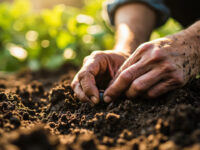
Mustard germinates and grows fastest in loose, fertile soil with good drainage, so get that ready ahead of time rather than scrambling the day you sow. Work in an inch or two of compost and rake the bed to a fine, clump-free texture, since mustard’s small seeds struggle to push through crusted or rocky soil.
Sow seeds a quarter inch to half inch deep, spaced 1 to 2 inches apart, in rows 12 to 18 inches apart. You will thin later, so dense seeding now is fine and actually helps with even coverage.
Keep the top inch of soil consistently moist until germination, which usually takes 5 to 10 days depending on soil temperature. Warmer soil within that 55 to 65°F range germinates noticeably faster than the cold end of the range.
Get this part right and the actual sowing day takes about ten minutes.
Regional Notes Worth Knowing Before You Sow
In warm-winter zones, roughly zone 8 and south, skip the spring gamble almost entirely and grow mustard as a fall-through-winter crop instead. Sow in early fall and keep harvesting right through mild winter weather, since mustard shrugs off light frost and even a hard freeze rarely kills established plants outright.
In cold-winter zones, north of about zone 6, you genuinely get two solid windows, spring and late summer into fall, with a hot dead zone in between where mustard just is not worth planting.
In hot, humid summer regions like much of the Southeast, that spring window slams shut fast. Get seed in the ground the moment soil is workable, because you may only have 3 to 4 usable weeks before heat and humidity end the run and invite downy mildew along with it.
Know which of these three patterns your climate actually follows, and the rest of the calendar sorts itself out.
Mustard Greens at a Glance
- When to plant: 2 to 3 weeks before your last spring frost, or 6 to 8 weeks before your first fall frost.
- Soil temperature target: 45 to 75°F, with 55 to 65°F for the fastest, most even germination.
- Depth and spacing: sow a quarter to half inch deep, 1 to 2 inches apart, in rows 12 to 18 inches apart, then thin.
- Germination time: 5 to 10 days depending on soil temperature.
- Days to harvest: 30 to 45 days for baby greens, 40 to 60 days for full-size leaves.
- Watch for: quiet non-germination in cold soil, sudden bitterness and flower stalks as a sign of heat-driven bolting.
- Best fallback: if spring heat arrives early, hold remaining seed for the fall window instead of forcing a summer sowing.
Soil temperature beats the calendar every time mustard greens are involved. Get that one number right and the rest of the season mostly takes care of itself.